Enduring
The Hoodie
A good hoodie is more than a sweatshirt with a hood: it has enough fabric body, structural integrity and proportion to hold its own as a real layer, while the cuffs, hem and neckline still recover cleanly after wear.

Why it matters
The hoodie is easy to underestimate because weak versions are everywhere. Thin fleece, stretched rib and an uncertain cut can make it feel like something worn only because it is comfortable. A strong one earns a broader role. Its softness breaks the formality of a wool coat or blazer. Its hood interrupts a clean neckline. Its weight can steady denim, tailoring or a fluid skirt without demanding attention through colour or branding. That is why material and proportion matter so much. The hoodie has few structural details to hide behind: when the fabric loses body or the rib stops holding, the entire garment begins to look tired. Understanding those details turns an ordinary second-hand category into a much more precise search.
Form and function
The hoodie is a hooded knitted sweatshirt, usually made in fleece or loopback sweatshirt fabric and produced either as a pullover or with a centre-front zip. Its identity belongs to the form rather than to one maker.
What defines the form
At its simplest, the hoodie combines the sweatshirt body with an attached hood and knitted stretch trims at the wrist and often the hem. Pullover versions frequently add a kangaroo pocket; zip-through versions split the front and usually use separate hand pockets.
The hood changes more than function. It gives additional volume around the neck and shoulder, which is why the proportion of the hood, neckline and upper body has such an effect on how the garment layers.
The modern hooded sweatshirt developed as American athletic clothing in the 1930s. Champion documents its early hooded sweatshirts as warm layers for athletes between training and competition, while MoMA also identifies Champion with the development of the modern hoodie during that period.
Original function and context
Warmth and movement came first. Adding a hood to a sweatshirt offered athletes and outdoor workers extra protection without requiring a separate outer layer. From there, the hoodie moved through university dress, sport, music and street cultures until it became one of the most widely understood casual garments of the twentieth and twenty-first centuries.
For Relover, that cultural breadth is background rather than the buying criterion. The deciding question is what remains when graphics, logos and associations are removed: fabric, proportion, finish and the way the piece behaves in an outfit.
Silhouette and proportion families
A regular hoodie follows the body without much excess and works best when the fleece has enough substance to prevent the garment from collapsing around the torso.
A relaxed hoodie adds room through the chest, armhole and sleeve. This is often the most adaptable proportion for layering because the garment still reads clearly beneath a coat while allowing a shirt or fine knit underneath.
An oversized hoodie relies on deliberate scale. Width, dropped shoulder and sleeve volume need enough fabric weight to look intentional; oversized thin fleece can simply look stretched.
Length matters just as much. A hem sitting around the hip or just below the waistband tends to preserve a clear relationship with trousers and skirts. Very long bodies can overwhelm the layers above and below them; aggressively cropped versions solve a different styling problem.
Neither raglan nor set-in sleeves automatically indicate a better-made garment. What matters is whether the shoulder line, armhole and sleeve give it the movement and proportion intended.
Material and construction variations
Most hoodies sit somewhere between brushed fleece, with a soft raised interior, and loopback or French-terry-like structures, where loops remain visible inside. The difference changes warmth, hand and surface character, but neither type is automatically superior.
Fabric weight helps predict body and warmth, but it is not a quality score on its own. Contemporary makers show how widely good sweatshirt fabric can vary: some use substantial brushed cotton fleece, others cotton-rich heavyweight blends, and others lighter loopback structures intended for a different drape.
The more important question is how that fabric behaves after wear and washing. Cotton knits are susceptible to dimensional change, and fibre, yarn, knit structure, processing tension and finishing can all influence shrinkage and stability.
The search language
- heavyweight cotton hoodie
- vintage hooded sweatshirt
- heavyweight zip hoodie
- cotton fleece hoodie
- vintage Champion Reverse Weave hoodie
- heavyweight sweatshirt hoodie
Brands worth knowing
These labels offer strong starting points for finding well-made second-hand hoodies. They are not a ranking of the best brands, and a maker name is never a substitute for judging the individual garment.
Each search lane teaches something different about fabric, finish, proportion or durability. The goal is to understand what the example reveals, which versions deserve attention and what still needs to be checked on the actual second-hand piece.
Champion developed Reverse Weave around the practical problem of sweatshirt shrinkage. Its cross-grain method shows how fabric orientation and side-panel engineering can influence dimensional stability rather than simply adding weight.
Start with Reverse Weave hoodies and sweatshirts where the dense body fabric, side panels and substantial rib remain clearly visible. Older examples can be especially interesting when the fleece has softened without becoming depleted. Make sure the body still sits square rather than twisting, the rib has retained recovery and the fleece has not become thin at the elbows, cuffs, hem or pocket edges. The Reverse Weave name narrows the search, but does not prove that an individual garment remains in sound condition.
Camber is a benchmark for substantial American sweatshirts. Its heavyweight lines show what dense fabric, robust trims and a direct make-up can do when durability and warmth are the priority.
Search for Cross-Knit and other heavyweight Camber hoodies in both zip-through and pullover forms. Terms such as heavyweight, Cross-Knit, 12 oz and USA-made can narrow the results when supported by the actual garment label. Request measurements and detailed photographs of the cuffs, waistband, hood seam, pocket corners and inner surface. Heavy fabric does not protect a hoodie from hard abrasion, poor laundering or stretched trims.
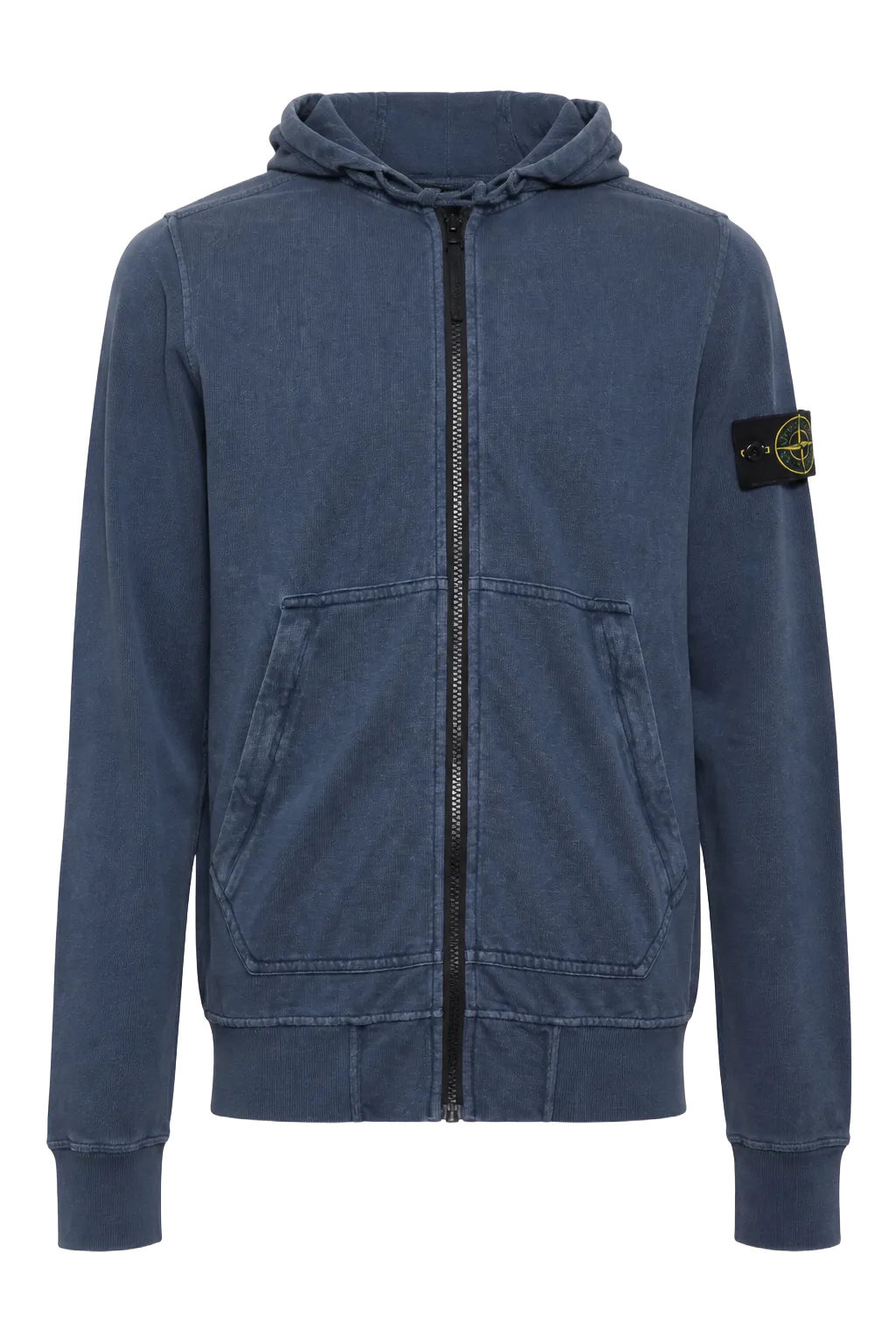
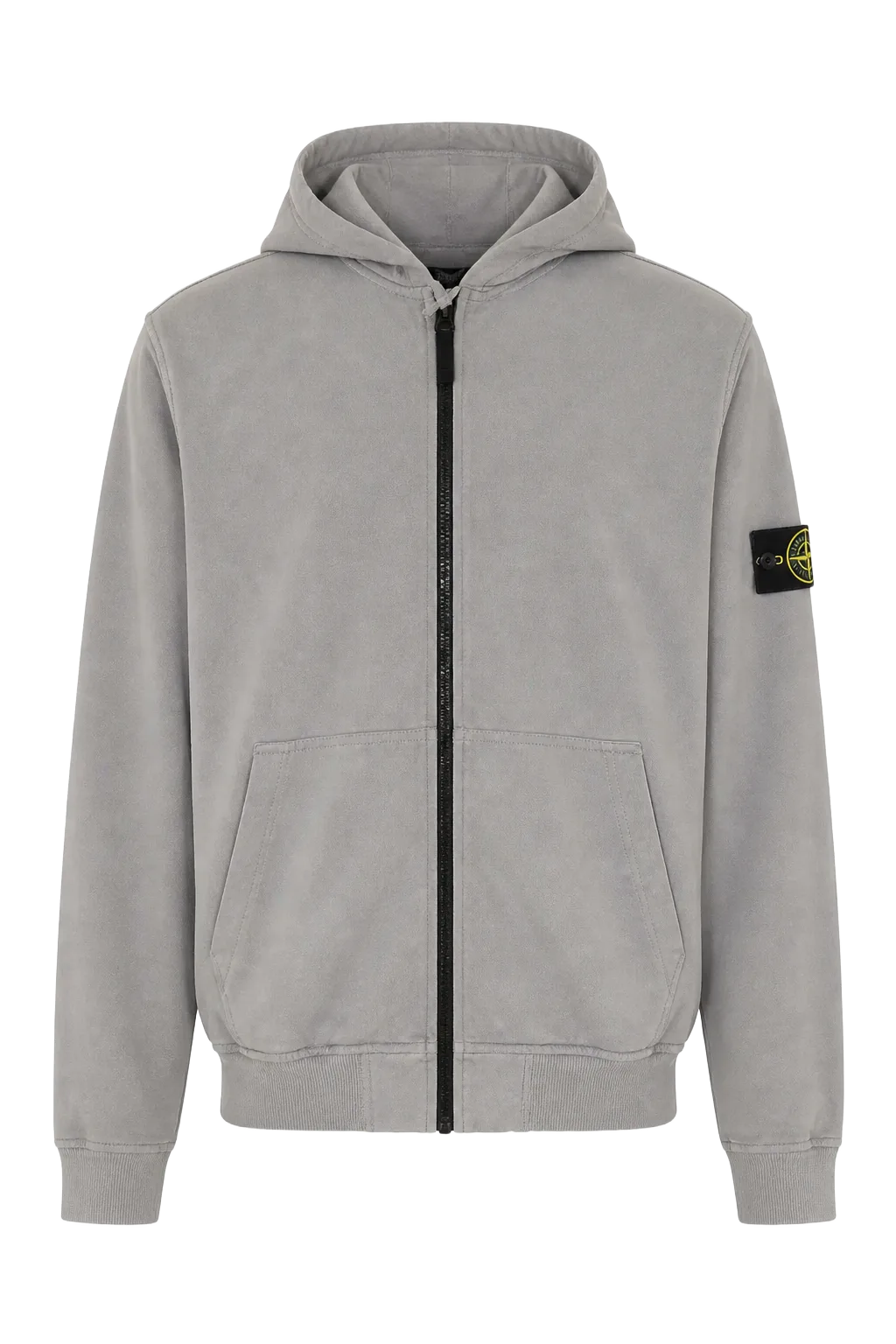
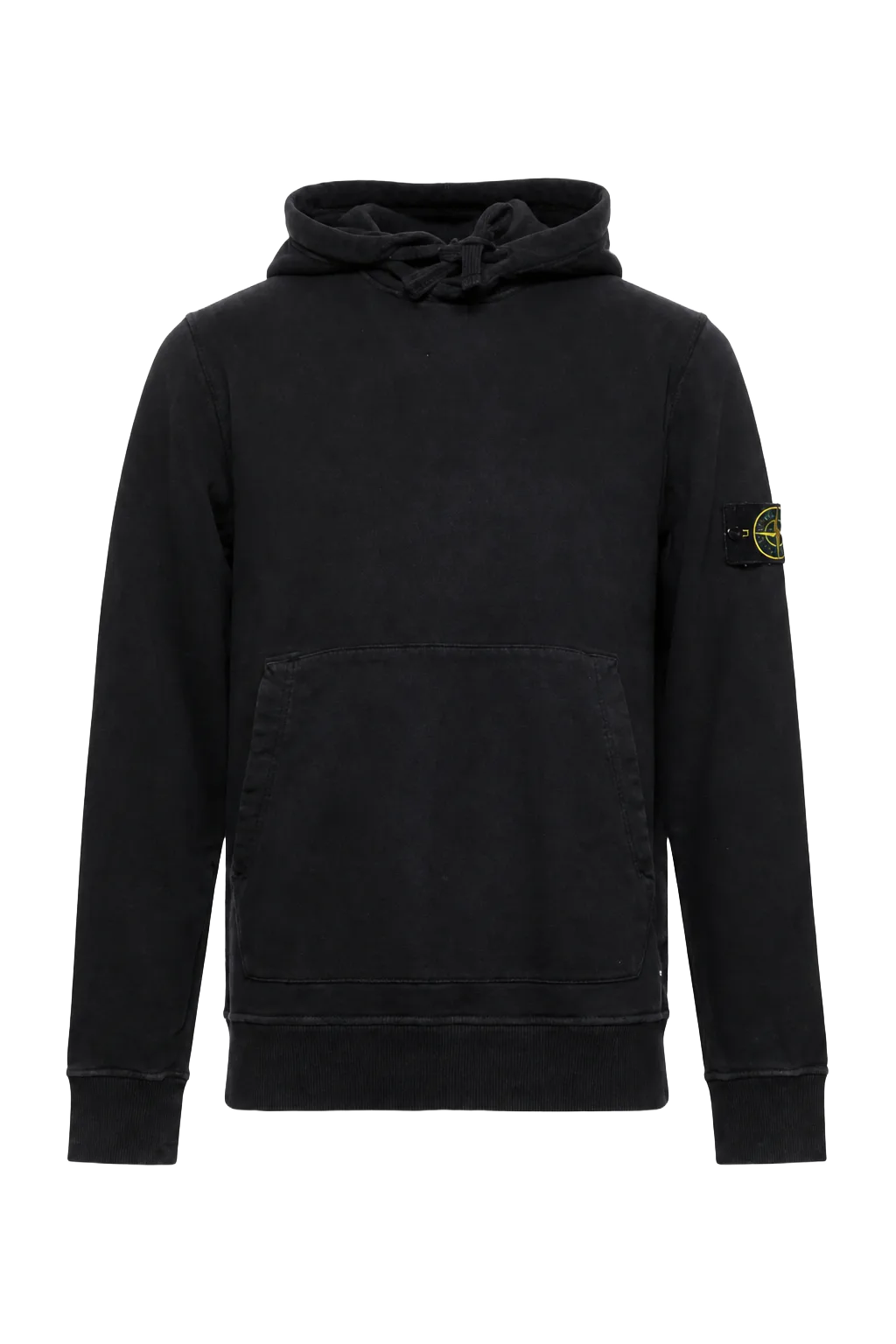
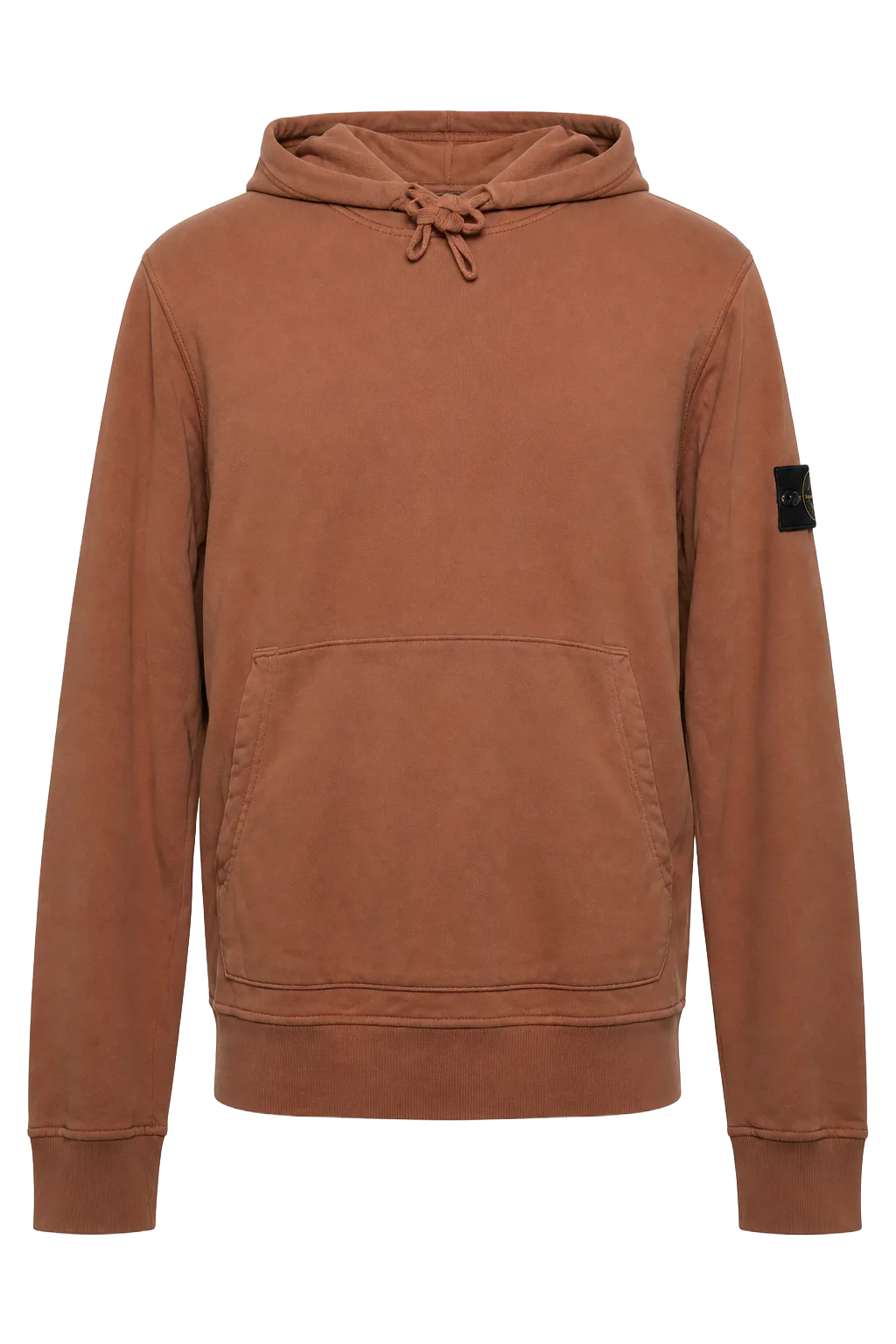
Stone Island demonstrates how fleece weight, garment dyeing, surface treatment and seam detail can change the character of a familiar hoodie. It also provides the quality language underneath The Borrowed Hood: structure, fabric body, wash and proportion before branding.
Prioritise cotton-fleece zip hoodies and pullovers with restrained detailing, substantial fabric and a proportion that works beyond overt streetwear styling. Garment-dyed pieces and clean older sweatshirts are especially compelling search lanes when their condition holds up. Treat the badge as identity to verify, not evidence that the hoodie itself is well made. Check composition and care labels, measurements, rib condition, hood structure, seams, zip function and whether fading is even rather than patchy. The Drop's own principle remains the right one: buy the weight, wash and intact seams, not the badge.
Lady White Co. offers a contemporary study in how dense sweatshirt fabric can shape a silhouette. Its heavyweight fleece shows how fabric mass, a double-layer hood and restrained design can give a relaxed hoodie structure without relying on graphics or branding.
Focus on heavyweight cotton-fleece hoodies, including the brand's heavier pullover and zip-through designs. Pay attention to fabric weight, double-layer hoods and deliberately boxier proportions when those details are identified by the seller or label. Confirm that the fleece has retained its density, that the hood still has body and that the width-to-length relationship suits the intended fit. Use the brand to learn the vocabulary: dense fleece, resilient rib, substantial hood and clear proportion, then apply that vocabulary to other makers too.
Unsigned and boutique-made
Brands and makers can narrow a search, but they do not guarantee quality. A recognised name can direct you towards particular materials, finishes or versions worth knowing, but the final judgement belongs to the individual garment: material, make, proportion, measurements, condition and repairability. A lesser-known hoodie with dense stable fleece, resilient rib, secure seams and a balanced cut can outperform a famous version that has thinned, twisted or stretched. The Library should therefore teach both sides of the search: where quality is often found, and how to recognise it without depending on the label.
Why it keeps working
Its Enduring status comes from a wardrobe function that does not require a comeback. The combination of warmth, casual structure and easy layering has survived repeated changes in fashion.
Original design logic
The original logic was practical: take the warm knitted sweatshirt and extend its coverage with a hood. Champion's documented 1930s development placed it within athletic warm-up clothing rather than fashion novelty.
That simplicity is precisely why the garment has travelled so widely. There are relatively few fixed design codes, leaving proportion, fabric, colour and context to change its meaning.
Fashion evolution
From sport, the hoodie moved into campus dressing and later became closely connected to hip-hop, skateboarding, streetwear and designer fashion. The history is culturally complex enough that no single later movement owns the garment.
For a permanent wardrobe, this breadth gives the hoodie range. It does not have to be styled as sportswear simply because that is where the modern form began.
Present relevance
The strongest modern version is often less about making the hoodie more elaborate and more about giving a simple version better company.
Dense fleece beneath a wool coat creates one clean vertical line with a softer interruption at the neck. A relaxed hoodie beneath tailoring makes the precision feel less finished. Against silk or a fluid skirt, its mass gives the outfit friction.
That is the permanent lesson underneath The Borrowed Hood: casualness gains purpose when the garment itself has enough substance to support the contrast.
Relover's staying-power judgement
The longest-lived version is not necessarily the loudest, rarest or heaviest.
Choose enough body to hold the silhouette, a proportion you can genuinely layer, sound trims and a surface that will age rather than simply deteriorate. Muted colour and restrained detailing make that job easier, but quality still comes first.
The version to avoid is the hoodie trying too hard to announce what it is: oversized without control, logo-led without fabric quality, or distressed beyond the point where the garment can recover.
Construction and material
Fleece body
The body fabric determines whether the hoodie hangs, collapses or holds.
A strong heavyweight fleece should feel dense without becoming board-like. When lifted, it should have enough mass to fall cleanly rather than crumple into itself. Brushing can create warmth and softness inside, but extensive wear can also flatten the nap and eventually thin the underlying knit.
Do not judge by grams or ounces alone. Fabric structure, yarn, finishing and dimensional stability all influence performance.
Dimensional stability
A hoodie can begin with excellent fabric and still age badly if it twists, shortens dramatically or grows out of shape.
Knitted fabrics are more susceptible to dimensional movement than woven fabrics. Fibre choice, yarn, knitting structure, dyeing, finishing and laundering all affect how stable the finished garment remains.
Second-hand clothing gives you one advantage: much of this behaviour has already happened. Look at whether the side seams still fall vertically, whether the hem is level and whether the body has become disproportionately short relative to the sleeve.
Ribbed cuffs and hem
The cuff and waistband are small areas doing a disproportionate amount of work. They control sleeve length, contain the body and give a soft knitted garment an edge.
For second-hand buying, recovery matters more than fibre purity. Inspect whether the cuff still returns towards the wrist or has permanently expanded. Wavy, bell-shaped or exhausted rib can make an otherwise substantial hoodie look tired.
Small areas of fraying can sometimes be repaired if the surrounding knit remains sound. Extensive loss of elasticity is harder to correct discreetly.
Hood, neckline and seams
Hood scale should match the body. A very thin single-layer hood can look deflated on heavy fleece; an excessively large double-layer hood can overwhelm a lighter garment.
Inspect the seam joining hood to neckline, especially at the centre back and front crossover points. Pulling, holes and distorted eyelets often reveal repeated stress.
Overlock, flatlock and conventional seams can all perform well. Stitch type alone is not evidence of quality. Secure tension, clean joins and fabric integrity matter more.
Zip, eyelets and repairability
On a zip-through hoodie, confirm that the zip opens and closes smoothly and that the base, slider and teeth remain intact.
Some slider problems can be repaired without replacing the complete zip. Full replacement is also possible, although labour and difficulty depend on how the garment is assembled.
Missing drawcords are relatively minor. Damaged hood eyelets can also be replaced when the surrounding fabric remains strong enough.
Widespread thinning through the fleece is different. Once the body fabric itself has lost strength over large areas, repair becomes reconstruction rather than maintenance.
Shop the drop
The Borrowed Hood
Stone Island hoodies keep surfacing at the top of resale searches, but the drop here is not the badge. It is the fleece itself: heavyweight cotton with real structure, worn under a coat until the layer reads as yours.
How to recognise a great second-hand version
What a strong version shows
- Start with measurements, not the tagged size. Record chest width, body length, shoulder or raglan measurement and sleeve length. On a deliberately relaxed hoodie, confirm that extra width is balanced by a usable body length.
- Look for remaining fabric body. The fleece should appear dense and even rather than thin, shiny or transparent at the elbows, cuffs, pocket edge and lower back.
- Check whether the garment has stayed square. Side seams should not spiral noticeably and the front and back hems should sit evenly. Severe distortion can indicate shrinkage, poor stability or hard laundering.
- Inspect the rib. Cuffs and hem should still contract visibly rather than hanging open, waving or folding away from the body.
- Inspect high-stress joins. Hood seam, pocket corners, underarms, zip base and drawcord eyelets deserve close photographs because small failures often begin there.
- Separate honest patina from fabric fatigue. Even fading and a softened surface can improve a sweatshirt. Extensive pilling combined with thinning, stretched trims or holes spreading from seams indicates wear rather than character.
- For branded pieces, verify identity and garment quality separately. Request care and composition labels, interior seams, hardware and seller provenance where relevant. A convincing label does not prove good condition; good condition does not prove authenticity.
What to avoid
- Fleece that has become thin or shiny through friction, particularly at elbows, forearms, pocket edges and the lower back.
- Permanent twisting or severe shrinkage that leaves the body unusually short, the seams spiralling or the hood sitting off-centre.
- Ribbing with no recovery, especially cuffs that flare and waistbands that remain stretched.
- Structural damage around the hood, zip, eyelets or pocket corners where the surrounding fabric is already tearing.
- Heavy pilling combined with loss of body. Surface pills alone may be cosmetic; widespread fibre wear alongside thinning is a different problem.
- A listing built almost entirely around the logo, supposed rarity or resale value while hiding composition, measurements and condition photographs.
How to wear it
How to style it
Treat the hoodie as a layer of controlled informality. Its strongest role is not making an already casual outfit more casual. It is breaking something cleaner: the long line of a wool coat, the precision of a blazer, the grain of worn leather or the movement of a fluid skirt. The fabric needs enough body to survive that contrast. If the hoodie collapses, the outfit loses its tension. Keep the palette restrained when the proportion is generous. Let the hood sit visibly outside a coat collar or keep it folded quietly beneath tailoring. Show a little cuff or ribbed hem rather than exposing every sportswear code at once.
What it does in a wardrobe
A grounding layer. It adds warmth without the formality of knitwear, gives tailoring a more personal edge and lets traditionally polished pieces move into ordinary daywear. The right one can cover the space between T-shirt and outerwear for years precisely because it does not need to be the focus of the outfit.
Questions, answered
No. Weight can create body, warmth and a controlled drape, but it does not tell you whether the knit is stable, the yarn is good, the rib will recover or the garment has been finished well. A medium-weight hoodie with good stability and resilient trims can outlast a much heavier one that twists, pills or stretches.
No. Fibre content answers a different question from quality. All-cotton fleece can feel substantial, dry and natural; cotton-rich blends can use another fibre to change stability, resilience or wear. Quality therefore has to be judged at garment level rather than through a single fibre rule. Composition matters. It just does not make the decision by itself.
Champion Reverse Weave, Camber, Stone Island and well-made heavyweight specialists such as Lady White Co. offer clear examples of different sweatshirt approaches. But treat those names as search lanes, not guarantees. The better second-hand buy can easily be the lesser-known hoodie with denser fleece, cleaner measurements, sounder rib and better condition.
The width should look intentional rather than simply too large. Look for room through the chest and armhole, then check that body length and sleeve length still work on you. Heavy or structured fleece helps generous proportions hold their shape. If width, length and sleeve volume all overwhelm the body while the fabric collapses, the effect is usually accidental rather than considered.
Often, yes. Small cuff damage can be stabilised before it spreads, drawcords and eyelets are comparatively simple interventions, and some zip failures involve only the slider rather than the entire fastening. Large areas of worn-thin fleece are less attractive repair candidates because the underlying material itself has lost strength.
Change its surroundings rather than decorating the hoodie. Put substantial plain fleece beneath a wool coat, trench or soft blazer; pair it with dark straight denim, tailored trousers or a fluid midi skirt; then keep trainers restrained or use loafers and slim boots. The point is tension: soft sportswear language against something with a cleaner line.
Related garment studies

Revival
The 90s minimalist blazer
The quietly oversized tailored jacket whose authority comes from proportion, fabric and a deliberately restrained line.
Read the study
Enduring
The shearling coat
A protective outerwear archetype defined by dense fleece, substantial leather and the kind of proportion that can carry an entire outfit.
Read the studySources
- Champion, Inventor of the Hoodie
Maker archive for Champion's account of developing hooded athletic sweatshirts in the 1930s and their early warm-up function.
- MoMA, Champion Hooded Sweatshirt
Museum collection record for the modern hoodie, Champion's 1930s athletic context and later university, hip-hop and skate adoption.
- Champion, Reverse Weave
Maker documentation for Reverse Weave history, its cross-grain method and the intention to address sweatshirt shrinkage.
- CottonWorks, Shrinkage & Skewing
Technical reference for dimensional behaviour in cotton knits and the influence of fibre, yarn, knit structure, processing, finishing and care.
- CottonWorks, Mechanical Finishing
Technical reference for relaxation and compaction in managing residual shrinkage in knitted fabric.
- CottonWorks, Quality Testing
Technical reference for dimensional stability, pilling, skew and other garment-performance considerations.
- CottonWorks, Digital Cotton Basics
Technical reference for rib-knit behaviour and its use in stretch cuffs, waistbands and necklines.
- Stone Island, 6100063 Organic Cotton Fleece
Maker documentation for cotton fleece, garment dyeing, sleeve and seam treatments and ribbed trims.
- Stone Island, 6100062 Organic Cotton Fleece Hoodie
Maker documentation for organic cotton fleece, garment dyeing, raglan detail, overlock seams and ribbed trims.
- Camber Sportswear, Cross-Knit Heavyweight Sweatshirts
Maker documentation for the heavyweight Cross-Knit method and cotton-rich sweatshirt fabric specifications.
- Lady White Co., Super Weighted Hoodie
Maker documentation for heavyweight all-cotton brushed fleece, a double-faced hood and substantial sweatshirt structure.
- Lady White Co., Zip Hoodie
Maker documentation for substantial brushed fleece, relaxed proportions and the relationship between fabric weight and shape.
- iFixit, Repair a Frayed Sweatshirt Cuff
Repair reference for limited sweatshirt-cuff damage and hand-sewn stabilisation.
- iFixit, Sweatshirt Hoodie Grommets Replacement
Repair reference for replacing hood eyelets and evaluating the integrity of the surrounding fabric.
- Patagonia, How to Fix a Zipper
Repair reference for diagnosing zipper failures and determining when slider, fastening or professional repair is possible.
- The Borrowed Hood, Relover
Primary source for Relover's current Drop interpretation, material priorities and styling logic.