Enduring
The shearling coat
A shearling coat is worth buying second-hand when the leather remains supple, the fleece is dense and secure, the seams can carry the garment's weight and the proportion feels intentional rather than simply oversized.
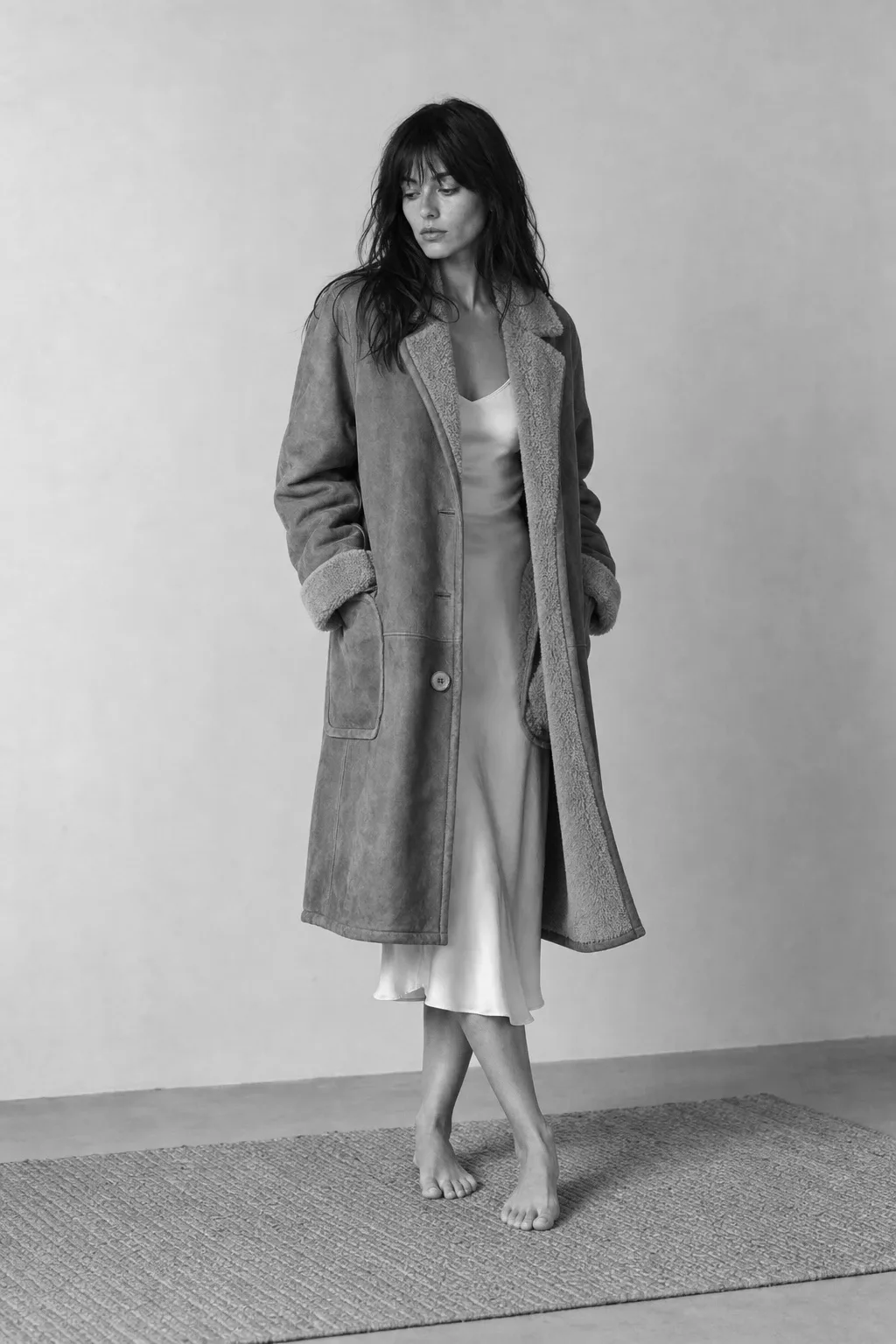
Recognition and variations
Shearling makes material and silhouette inseparable. The leather exterior gives structure and protection, while the fleece creates warmth, volume and a visible edge around collars, cuffs and seams. A strong coat needs little decoration because its surface and proportion already shape the outfit. Second-hand is especially relevant here: earlier pieces often carry softened leather, generous cuts and construction details that become more convincing with age, provided the skin has remained flexible and sound.
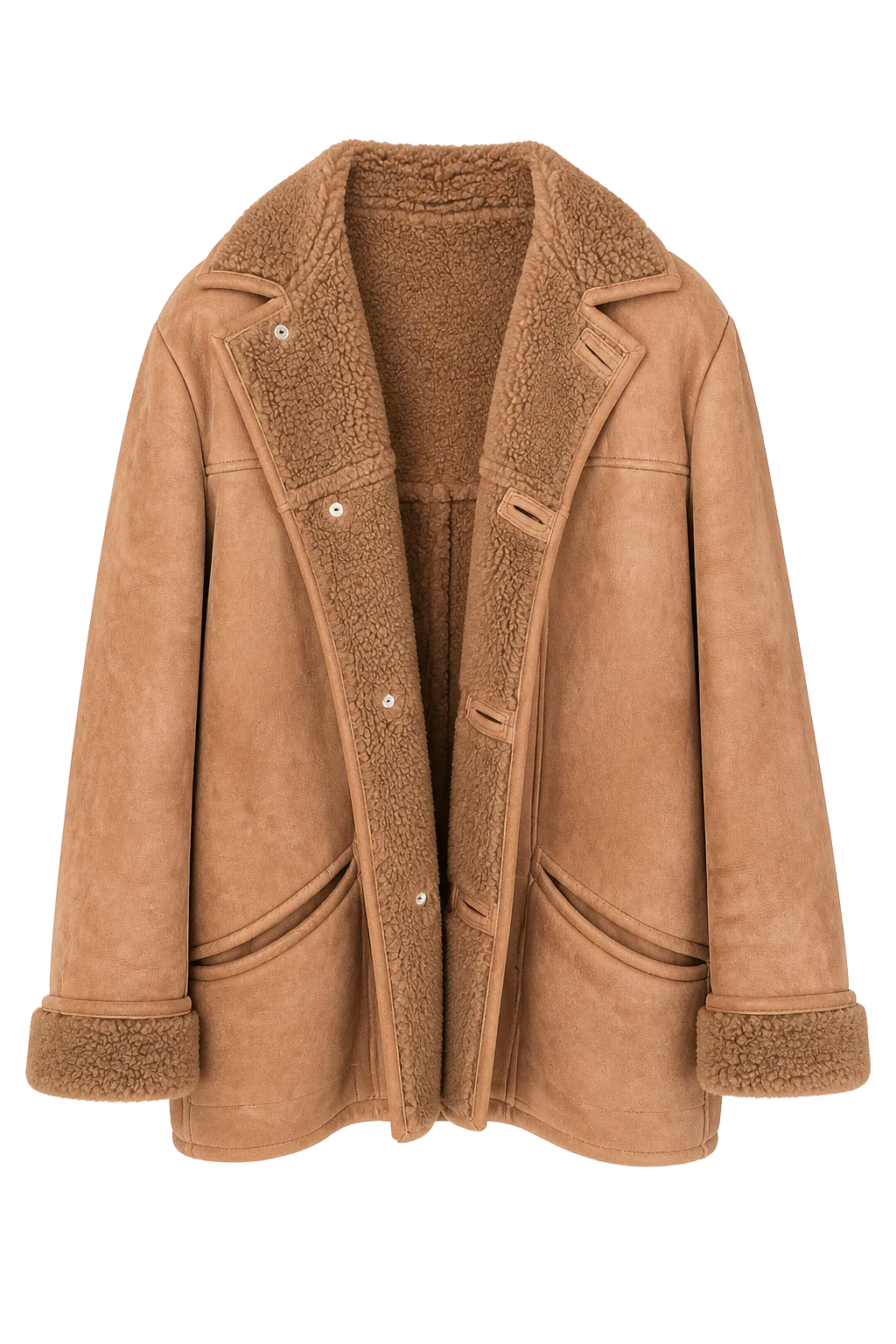
As a Garment Archetype, the shearling coat is not one named design. It is a family of jackets and coats made from sheepskin with the fleece retained, ranging from short aviation forms to long 1970s and 1980s outerwear. The common logic is protection through one substantial material, with the hide forming the exterior and the wool forming the interior or visible trim.
One skin, two working surfaces
The material is the design. The leather side resists wind and holds shape; the fleece side traps warmth and softens the contact with the body. Turned-back cuffs, broad collars and exposed front edges reveal that double construction instead of adding a separate decorative trim.
From flight jacket to full-length coat
Early aviation shearling prioritised insulation, movement and protection in cold cockpits. Short bodies, high collars, strong fastenings and adjustable cuffs were functional decisions. Fashion later extended that logic into hip-length, three-quarter and full-length coats with larger lapels, patch pockets and more expressive volume.
Proportion changes the character
A compact aviator jacket feels direct and energetic. A straight knee-length coat reads calmer and more architectural. A dropped shoulder or borrowed-from-menswear fit can work beautifully for women, but only when sleeve length, armhole depth and overall weight still allow the wearer to move.
Surface is not decoration
Patina, nap, fleece density and the contrast between leather and wool determine the coat's presence. The best versions have enough variation to feel lived in without looking dry, patchy or structurally tired. Age is valuable only when the material still performs.
Wardrobe role and The Relover Eye
How to style it
Let the coat carry the volume and texture. Build a clean column underneath with straight trousers, a long skirt, a fine knit or a crisp shirt, then finish with simple leather shoes or discreet cowboy boots. A lighter shearling works with winter cream and washed denim; dark brown, black or charcoal benefits from one uninterrupted base. When the coat began as menswear, keep the styling unmistakably women-first through proportion, movement and the line beneath it rather than adding decorative femininity.
What it does in a wardrobe
A high-impact winter anchor that replaces several smaller styling decisions. It brings warmth, structure and material depth to simple clothes, moving between denim, tailoring and softer evening layers while keeping the outfit coherent.
Choosing a good second-hand version
Leather and fleece integrity
The leather should bend without producing a network of fresh cracks, powder or flakes. The fleece should feel securely rooted, with no large bald zones, active shedding or brittle skin beneath it. Natural variation is expected; structural weakness is not.
Panel logic and seams
Sheepskin size naturally limits panel width, so several seams are not automatically a weakness. What matters is whether the panels lie evenly and whether stitching remains stable under the garment's weight. Inspect shoulders, underarms, pocket corners, cuffs and the base of the opening first.
Collar, cuffs and exposed edges
These high-contact areas reveal quality and wear quickly. Dense fleece should retain enough spring to frame the face and wrist, while the leather at fold lines should remain pliable rather than polished thin, split or hardened.
Fastenings and pockets
Buttons, toggles, zips and pocket openings must be strong enough for a heavy coat. Pulling around buttonholes, stretched leather behind a zip or torn pocket corners can indicate that the surrounding skin no longer carries tension safely.
Women's oversized fit
Marketplace gender is secondary to measurements. For a convincing borrowed-from-menswear shape, check shoulder width, chest, upper arm, sleeve length, back length and coat weight. Volume should create a deliberate line, not place the cuff over the hand or force the armhole too low to move.
What a strong version shows
- Clear close photographs of the leather grain, fleece, underarms, cuffs, hem, pockets and every fastening.
- Leather that still folds and rebounds without fresh cracking, powdering, stickiness or a plastic-looking surface coating.
- Fleece with coherent density and secure attachment, allowing for honest wear at the cuff and collar without broad bald patches.
- Stable seams at the shoulder, armhole, pocket corners and panel joins, with no tearing around old repairs.
- Complete fastenings that sit flat and do not pull sharply against weakened leather.
- Measurements and garment weight that support the intended women's fit, especially when the listing is labelled men's or unisex.
- A seller who can describe odour, storage and any professional cleaning instead of masking uncertainty with vintage condition.
What to avoid
- Dry leather that cracks when folded, sheds powder or has widespread surface flaking.
- Large hard water marks, tide lines or stiff zones that suggest previous saturation or unsuitable cleaning.
- Active fleece loss, moth damage, webbing, larvae traces or unexplained bald areas.
- Persistent damp, smoke or animal odour that the seller cannot account for.
- Glue-heavy repairs, adhesive patches or paint-like recolouring across stress points.
- Tears radiating from pockets, buttons, zips, shoulders or underarms where the coat carries weight.
- An oversized label without full measurements, especially when sleeve length and upper-arm width determine whether the coat works for a woman.
Versions, brands and how to search
Shearling is a material-led category, so the label is a useful search route but never the final proof of quality. Designer archives show how differently the same material can behave, from fluid 1970s colour and movement to military references and later sculptural layering.
A 1977 shearling coat in The Met collection shows the material inside the designer's fluid, body-aware 1970s vocabulary.
Look for a silhouette with movement as well as warmth. Weight should not erase the line of the body or make the hem collapse.
Shearling appears in Gaultier's archive as part of material collision, combining toughness, tailoring and subcultural references.
Complexity must remain wearable. Check mixed-material seams, trims and hardware closely because repairs become harder when several surfaces meet.
Rick Owens uses leather and shearling to build elongated, protective and sculptural silhouettes with a dark modern edge.
Judge the cut on the body rather than on a hanger. Strong volume should still create a clear shoulder, opening and hem line.
Unsigned and boutique-made
Many excellent 1970s and 1980s shearling coats were made by regional leather specialists, furriers and small manufacturers. An unfamiliar or missing label is not a rejection reason. Ask for the material label, internal construction, measurements and close images of the leather, fleece, seams and stress points, then price any uncertainty honestly.
Shop the drop
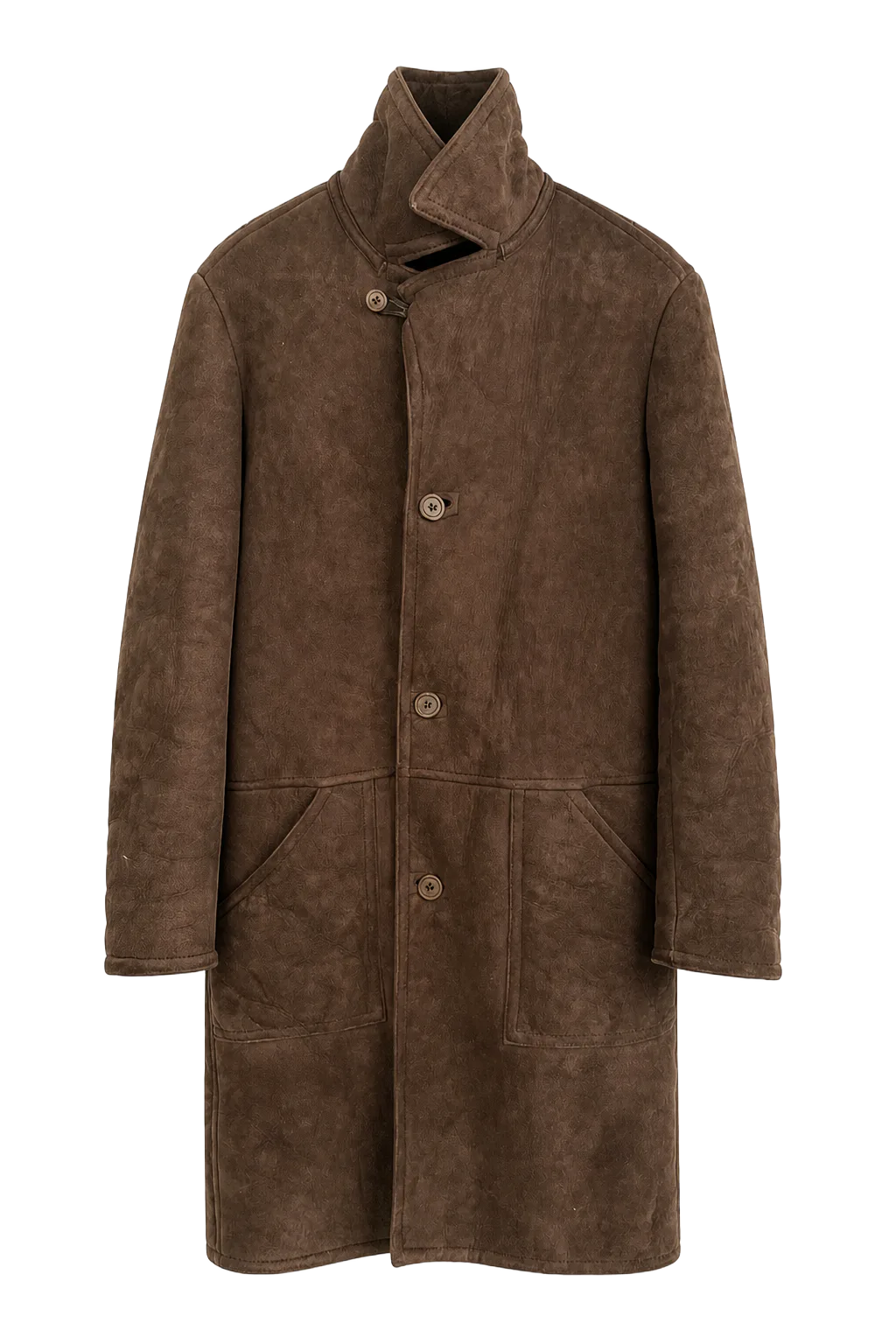
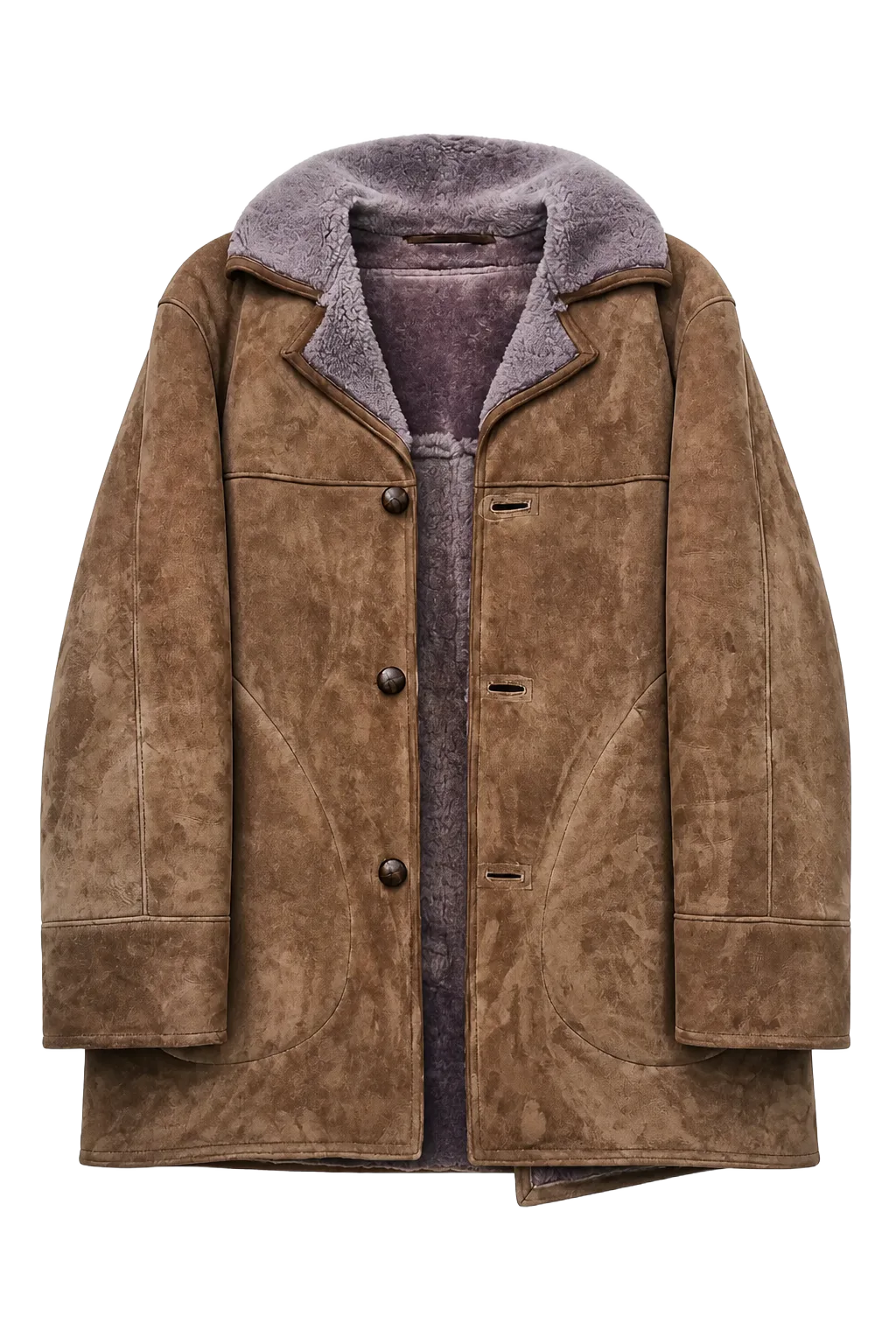
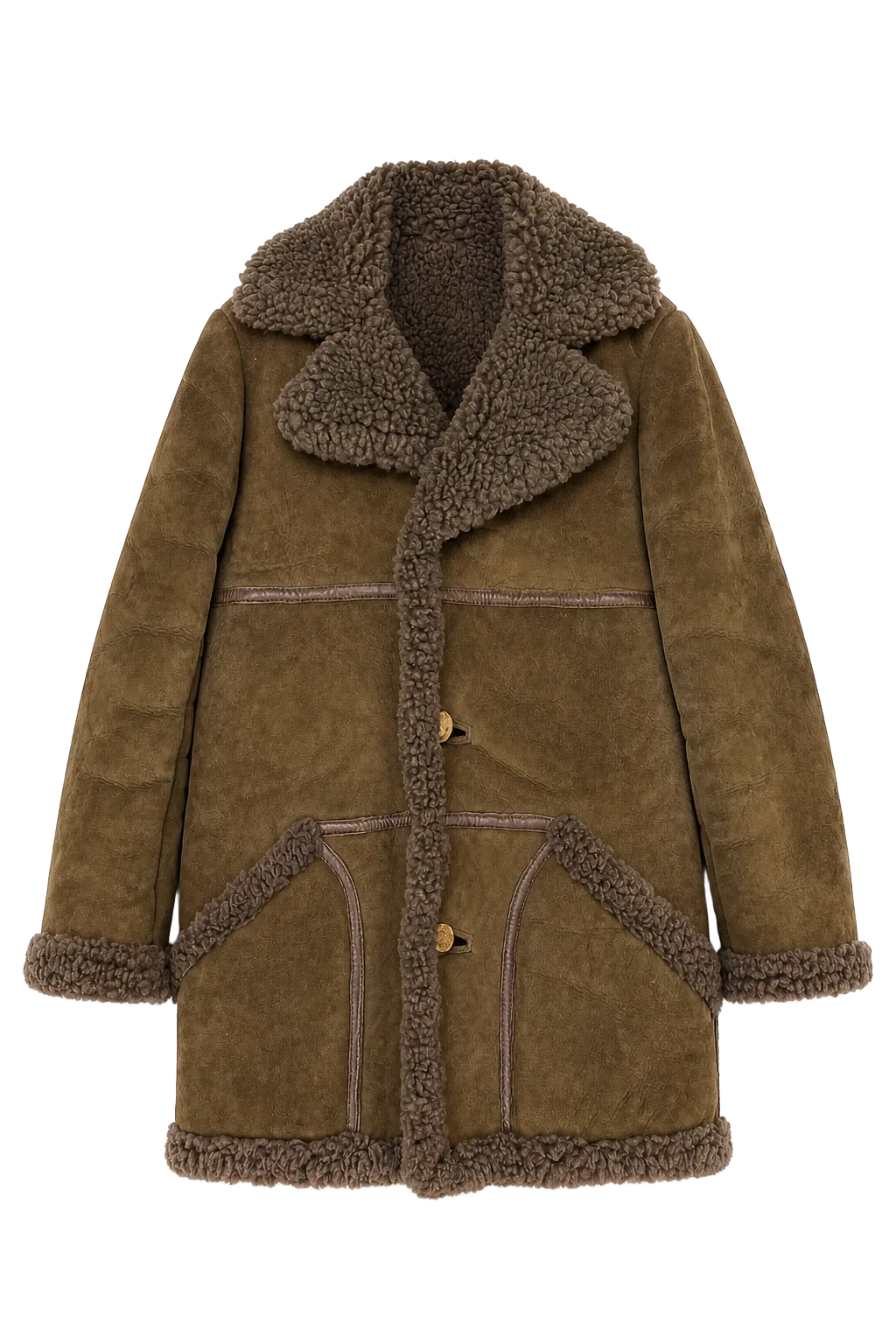
The Weight of Winter
Winter asks one real question: do you have the coat. This edit answers with genuine vintage sheepskin, softened by decades of wear, in six tonal positions from cream through black, each one already looking like it belongs to someone with taste.
Questions, answered
What is the difference between shearling and a shearling-lined coat?
True shearling uses processed sheepskin with the fleece retained, so the leather and wool belong to the same skin. A shearling-lined coat may use a separate outer material or only add shearling to selected areas. Ask for composition and internal photographs because listing language is inconsistent.
Can a men's shearling coat work for a woman?
Yes. The marketplace label matters less than the measurements and proportion on the body. Shoulder, chest, upper-arm, sleeve and length measurements must support a deliberate oversized silhouette without restricting movement or hiding the hands.
Is a heavier shearling coat always better quality?
No. Weight can reflect dense material, but quality also depends on suppleness, fleece integrity, balanced panels and a cut that distributes the load. A very heavy coat with brittle leather or collapsing shoulders is not a better investment.
How can I judge vintage shearling condition online?
Request close, well-lit images of the cuffs, collar, underarms, pocket corners, hem, fastenings and inside fleece. Ask the seller to describe flexibility, shedding, odour, storage and previous cleaning, and treat missing information as uncertainty in the price.
How should a shearling coat be cleaned and stored?
Avoid soaking or improvised home treatments. Follow the care label and use a specialist familiar with leather and sheepskin. Store the coat dry, supported on a broad hanger with room around it, away from direct heat, strong light and sealed plastic.
Can dry or cracked shearling be restored?
Minor surface dryness may improve with specialist care, but deep cracking, powdering, hardened areas or tears at stress points indicate structural damage. Ask a leather specialist before buying; conditioner cannot rebuild degraded skin.
Don’t miss a Drop
Two curated Relover Drops a month, with styling ideas for every edit. Sign up for early access to each new selection.
One more step: confirm your email
To receive Early Access emails, you need to confirm your subscription.
Look for the confirmation email from Relover and click the confirmation link. If you don’t see it, check your spam or junk folder.
Mark it as “Not spam” and add Relover to your contacts to make sure you get our emails :)
Related garment studies

Revival
The 90s minimalist blazer
The quietly oversized tailored jacket whose authority comes from proportion, fabric and a deliberately restrained line.
Read the study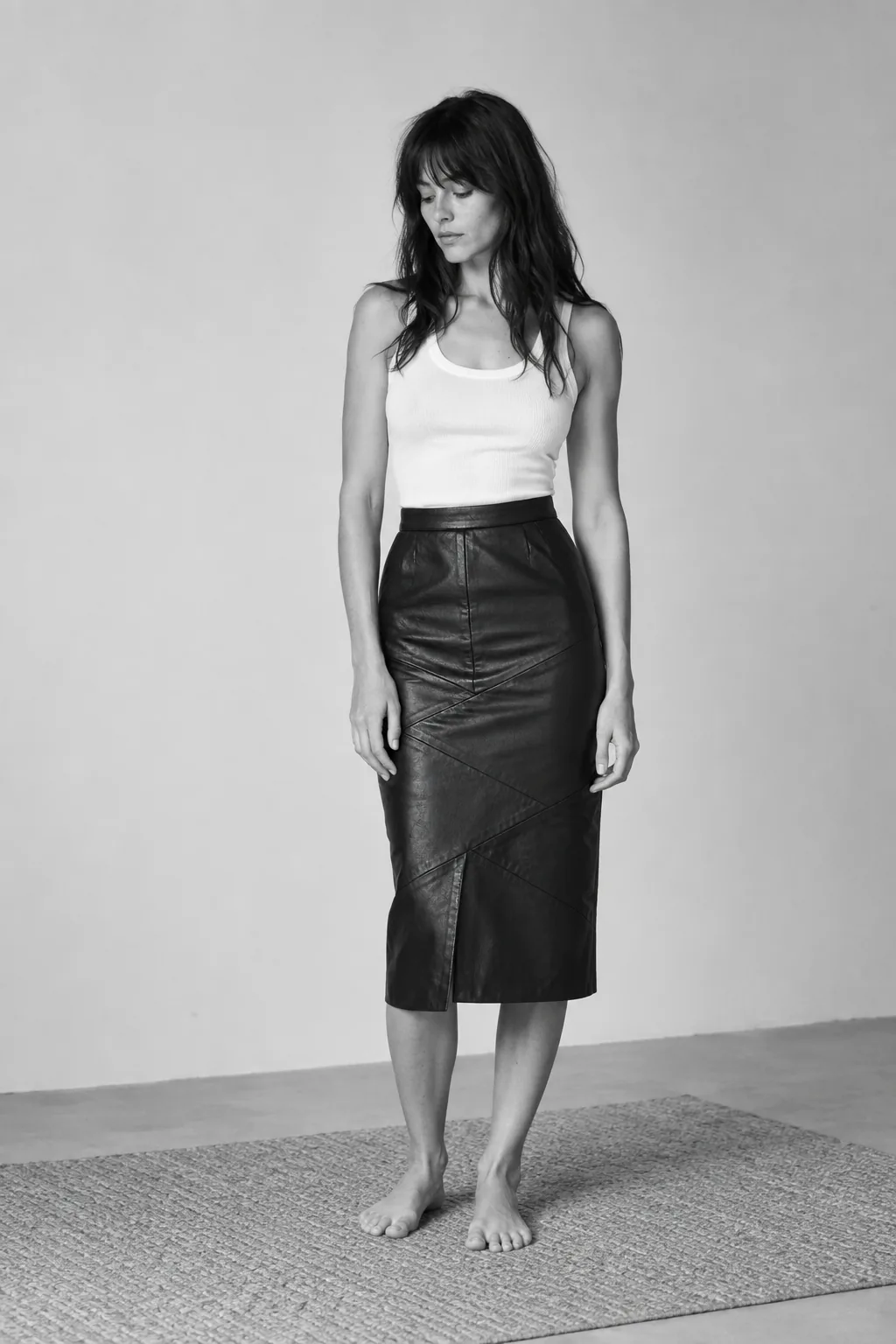
Enduring
The pencil skirt
The narrow skirt whose effect comes from proportion, movement and where the hem meets the leg.
Read the studyContext and relevance
The shearling coat is Enduring because warmth, protection and visual authority are built into its material. Its fashion context changes, but its wardrobe function does not need a comeback to make sense.
Function came first
The aviation lineage established the most recognisable codes: substantial sheepskin, a protective collar, secure fastening and a shape that preserved movement. Those details still explain why even a fashion-led shearling coat feels grounded rather than ornamental.
The long-coat translation
During the 1970s, leather and fur outerwear moved through longer, more expressive silhouettes. Shearling could now frame tailoring, denim or a dress, not only refer back to flight clothing. The extended form turned insulation into an entire-body proportion.
Street authority
In late 1970s and 1980s New York, shearling jackets became part of early hip hop style. Their warmth, cost, volume and recognisable surface gave an everyday garment social presence without requiring a luxury logo.
Why it keeps working now
Contemporary styling removes the period costume around the coat. A long black skirt, straight trousers, fine knit or simple boot gives the material a clean frame. The result feels current because the coat does the visual work while everything else stays precise.
Sources
- Canadian Conservation Institute, Caring for leather, skin and fur
Primary conservation guidance for skin structure, tanning, flexibility, water damage, physical stress, pests, dust and the deterioration of leather and fur objects.
- Imperial War Museums, the Irvin sheepskin flying jacket
IWM account of the Irvin jacket's 1930s aviation purpose, heavyweight sheepskin construction, protective collar, cuffs and movement requirements.
- The Met, Stephen Burrows shearling coat, 1977
Costume Institute object record documenting a 1977 American designer coat made in shearling.
- The Museum at FIT, Fresh, Fly, and Fabulous
Museum exhibition record connecting shearling jackets to the earliest key looks of 1970s hip hop style and their later cultural reach.
- The Met, Jean Paul Gaultier shearling ensemble, 1994-95
Costume Institute object record showing shearling within a late twentieth-century French fashion context.
- The Met, Rick Owens leather and shearling ensemble, 2007-08
Costume Institute object record documenting a modern use of leather and shearling in an elongated designer silhouette.