Enduring
The silk blouse
A strong silk blouse combines a living, fluid fabric with a balanced cut, stable seams and enough structure at the collar, shoulder or cuff to make its softness feel intentional.

Recognition and variations
The silk blouse brings colour, movement and surface to a wardrobe without requiring a complicated silhouette. It can soften tailoring, sharpen denim or replace an occasion top, while vintage and second-hand examples offer prints, proportions and finishing that are difficult to reproduce through ordinary new-season shopping.
As a Garment Archetype, the silk blouse is defined by the relationship between a separate upper-body form and the drape, lightness and surface of silk. It belongs to no single designer and can range from a precise shirt to a softly gathered blouse.
Form and wardrobe function
The archetype may be collared, collarless, buttoned, tied or pulled over the head. What connects the variations is a light, fluid upper layer that can create either softness or graphic presence depending on its cut and print.
Silk is the fibre, not the finish
Silk can appear as crepe de chine, twill, chiffon, satin, georgette or other constructions. Crepe tends to feel softly matte, twill has more body, chiffon is sheer and delicate, and satin reflects more light. The weave changes the blouse's behaviour as much as the silhouette does.
Print as design
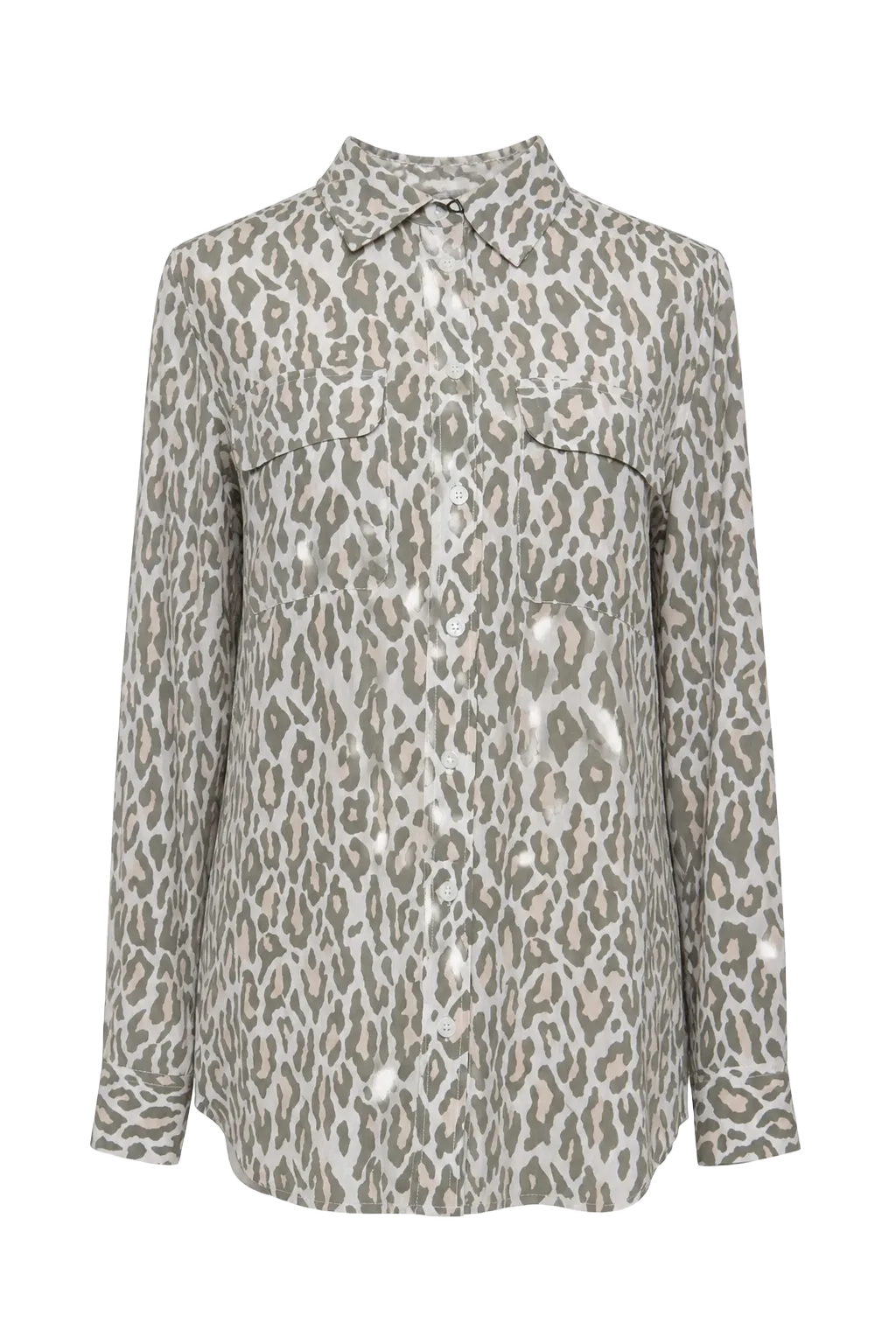
On a printed blouse, scale, placement and colour rhythm become part of the cut. A strong print follows the garment rather than disguising it: the collar remains clear, the sleeves have purpose and the pattern has enough space to be read when worn.
Shirt or blouse
A silk shirt usually borrows more directly from tailored shirting through a collar, placket and cuff. A blouse can be softer or more decorative. In second-hand listings the terms overlap, so material, construction and measurements are more reliable than the product name.
Wardrobe role and The Relover Eye
How to style it
Let the blouse provide movement and colour, then give it a clear frame. Use denim, restrained tailoring, a narrow skirt or one compact layer to ground the print. Tuck it, wear it open over a simple base or let an oversized cut fall cleanly, but avoid adding several competing vintage references.
What it does in a wardrobe
A high-impact, low-effort upper layer. It can make everyday denim feel considered, soften a tailored outfit or provide evening colour without requiring a formal dress.
Choosing a good second-hand version
Fibre and fabric
Check the composition label before accepting a listing described only as silky. Silk should feel appropriate to its weave: crepe can be softly pebbled, twill should have controlled body and chiffon should remain light without feeling brittle.
Cut and balance
Shoulder seams, armholes and side seams should hang without twisting. On fluid fabric, a small imbalance becomes visible quickly, especially around the placket, hem and sleeve head.
Seams and finishing
Fine enclosed seams, narrow hems and neatly finished buttonholes are valuable signals, although construction varies by era and price level. Inspect the inside for fraying, pulled stitches and repairs that add stiffness to an otherwise fluid garment.
Colour and print condition
Compare exposed areas with the inside collar, placket or hem. Uneven colour may reveal fading, while pale stress lines, small white pulls or loss of surface can indicate abrasion or weakening rather than an intentional print effect.
What a strong version shows
- A photographed composition and care label rather than reliance on the word silky.
- Fabric that still drapes freely without brittle areas, powdery surface loss or permanent sharp creases.
- Clean, stable underarms, collar edges, cuffs, buttonholes and placket ends.
- Side seams and sleeve seams that hang straight without strong twisting.
- Colour that remains coherent across exposed and protected areas.
- Complete, secure buttons and enough room in the measurements for the intended fluidity.
What to avoid
- Listings described as silk-feel or satin-look without a fibre label when you specifically want true silk.
- Splitting along folds, seams or underarms, which can indicate weakened silk rather than a simple repair.
- Large tide marks, oxidised perspiration stains or colour bleeding around previous spot cleaning.
- Heavy abrasion, whitening at seam edges or multiple pulled threads across the front.
- A costume-coded novelty print whose only value is age, with weak fabric and no useful modern wardrobe role.
- Strong odour or undocumented cleaning when the care label and colourfastness are uncertain.
Versions, brands and how to search
Silk blouses appear across couture houses, specialist shirt labels and small manufacturers, so the maker can guide a search but cannot confirm fibre or quality. Composition, weave, cut and condition remain the real hierarchy.
A deep archive of silk blouses and shirts that move between precise masculine shirting, fluid colour and expressive evening pieces.
Check whether the drama comes from cut and silk quality or only decoration, then inspect cuffs, underarms and covered buttons.
A specialist reference for pared-back, menswear-inspired silk shirts with an easy androgynous silhouette.
Confirm the fibre label because the brand also uses blends and other materials; relaxed fit should still hang squarely from the shoulder.
Silk expertise expressed through controlled colour, scarf-derived prints and finely resolved shirt and blouse details.
Authentication matters, but so does condition. Compare exposed colour with protected areas and inspect fine silk for pulls or dry cleaning damage.
A strong vintage source for fluid silk, vivid print, ruching and romantic volume with purposeful pattern rhythm.
Let the print breathe when worn and check gathered seams carefully, where lightweight silk can split under tension.
Abundant 1980s and 1990s printed silk blouses, often with bold colour, generous sleeves and strong wardrobe presence.
Ignore styling that feels dated and isolate the garment itself: fibre content, shoulder balance and print scale decide its relevance now.
Unsigned and boutique-made
Unsigned silk blouses are common, especially from small boutiques, local makers and garments whose labels were removed. Do not invent provenance. A clear fibre label helps, but when it is absent, price the uncertainty and judge the fabric, internal seams, balance and condition with extra care.
Shop the drop
The Dressy Silk Blouse
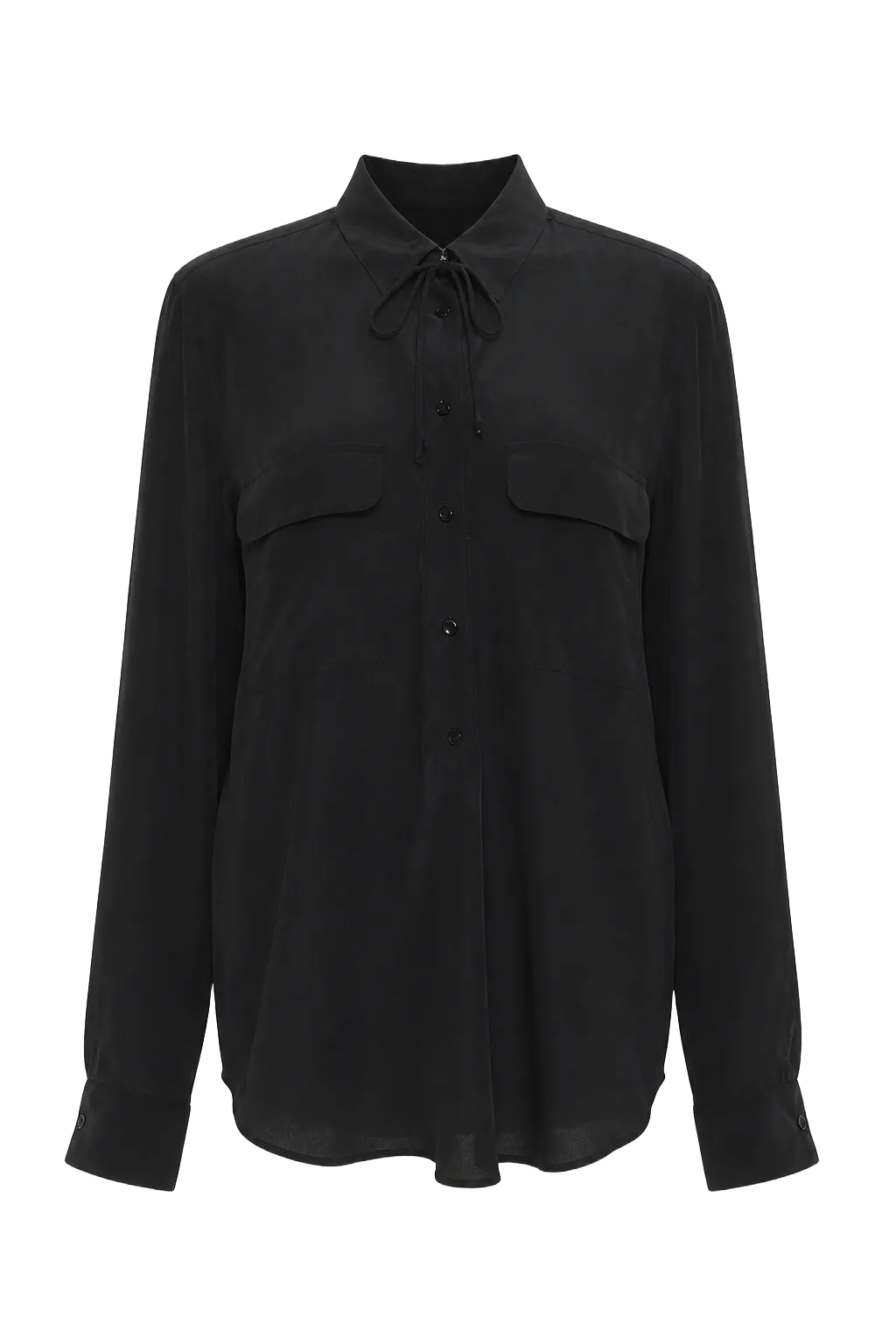
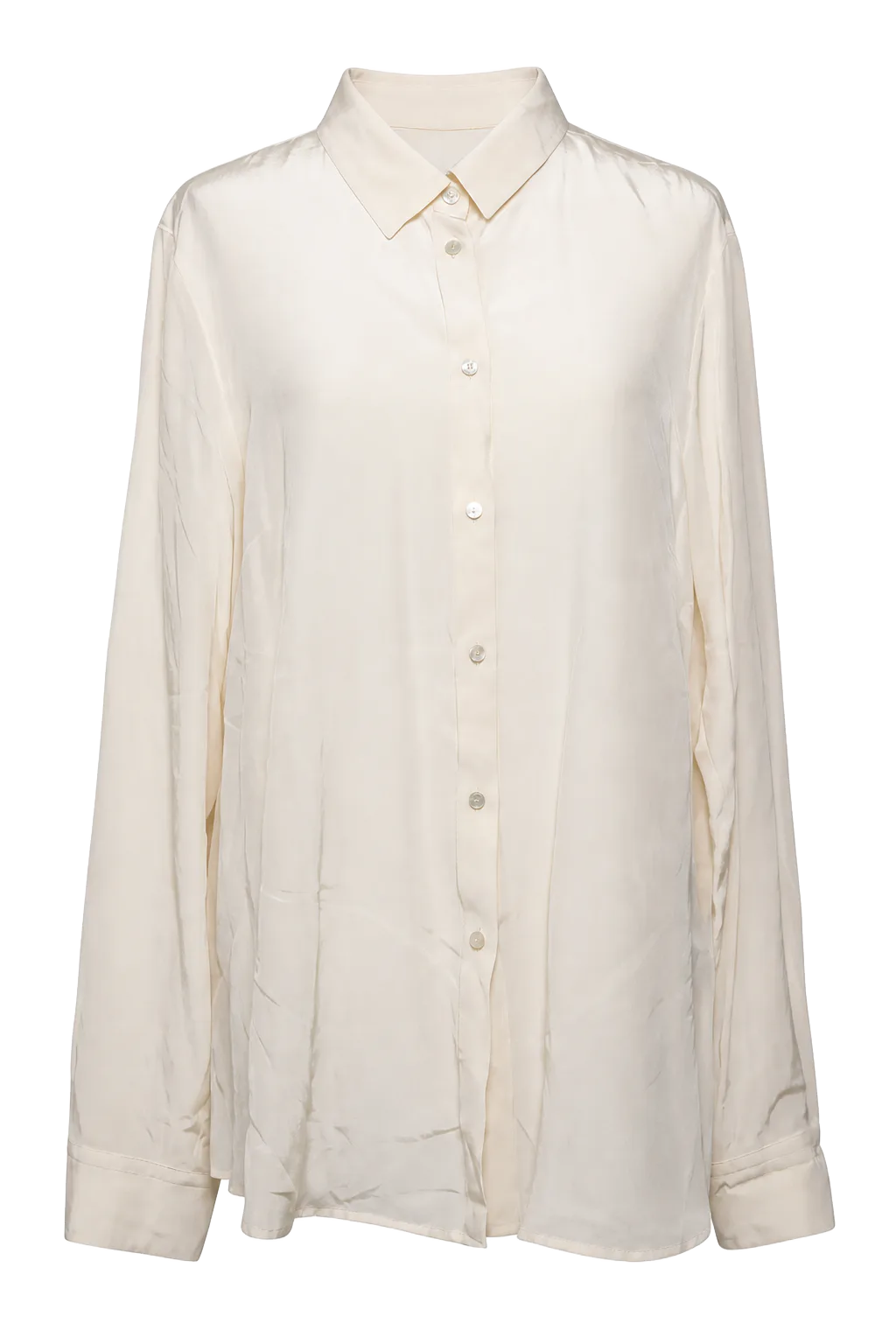
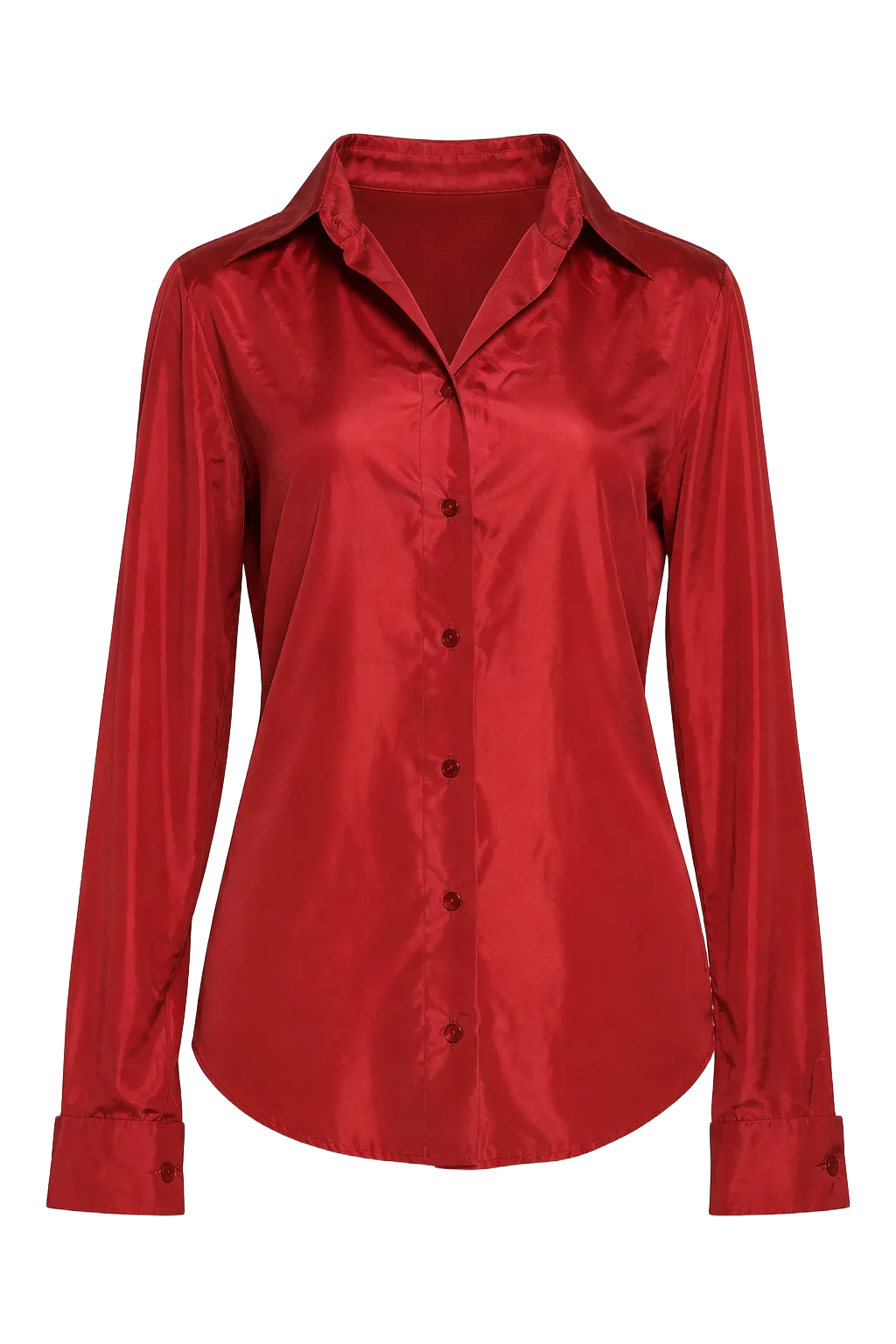
A true silk blouse, in matte crepe, bodied twill, light-catching satin or airy georgette, needs nothing added. Tucked into dark denim or tailored trousers, it carries the colour and the movement, so the rest of the evening can stay simple.
Questions, answered
How can I tell whether a second-hand blouse is real silk?
Ask for a clear photograph of the composition label. Shine, softness and seller descriptions are not reliable proof because viscose and polyester can imitate several silk finishes.
Does the designer label matter?
It can add provenance, but it should not replace judgement. Fibre, condition, cut, print and finishing determine whether the blouse is worth wearing; a lesser-known label can outperform a famous one on all five.
What damage matters most in vintage silk?
Brittleness, splitting, pale abrasion, weakening at folds and oxidised underarm marks matter more than a loose button or open seam. Structural fibre damage is difficult to reverse.
How should a vintage silk blouse be cleaned?
Follow the garment's care label and treat older dyes, trims and prints cautiously. Do not assume every silk is washable; ask a specialist cleaner when colourfastness, age or construction is uncertain.
How do I wear a colourful vintage blouse without looking costume-like?
Keep the rest of the silhouette direct. Faded denim, simple trousers, a pencil skirt or a restrained jacket lets the print feel like a deliberate modern choice rather than a full period recreation.
Don’t miss a Drop
Two curated Relover Drops a month, with styling ideas for every edit. Sign up for early access to each new selection.
One more step: confirm your email
To receive Early Access emails, you need to confirm your subscription.
Look for the confirmation email from Relover and click the confirmation link. If you don’t see it, check your spam or junk folder.
Mark it as “Not spam” and add Relover to your contacts to make sure you get our emails :)
Related garment studies
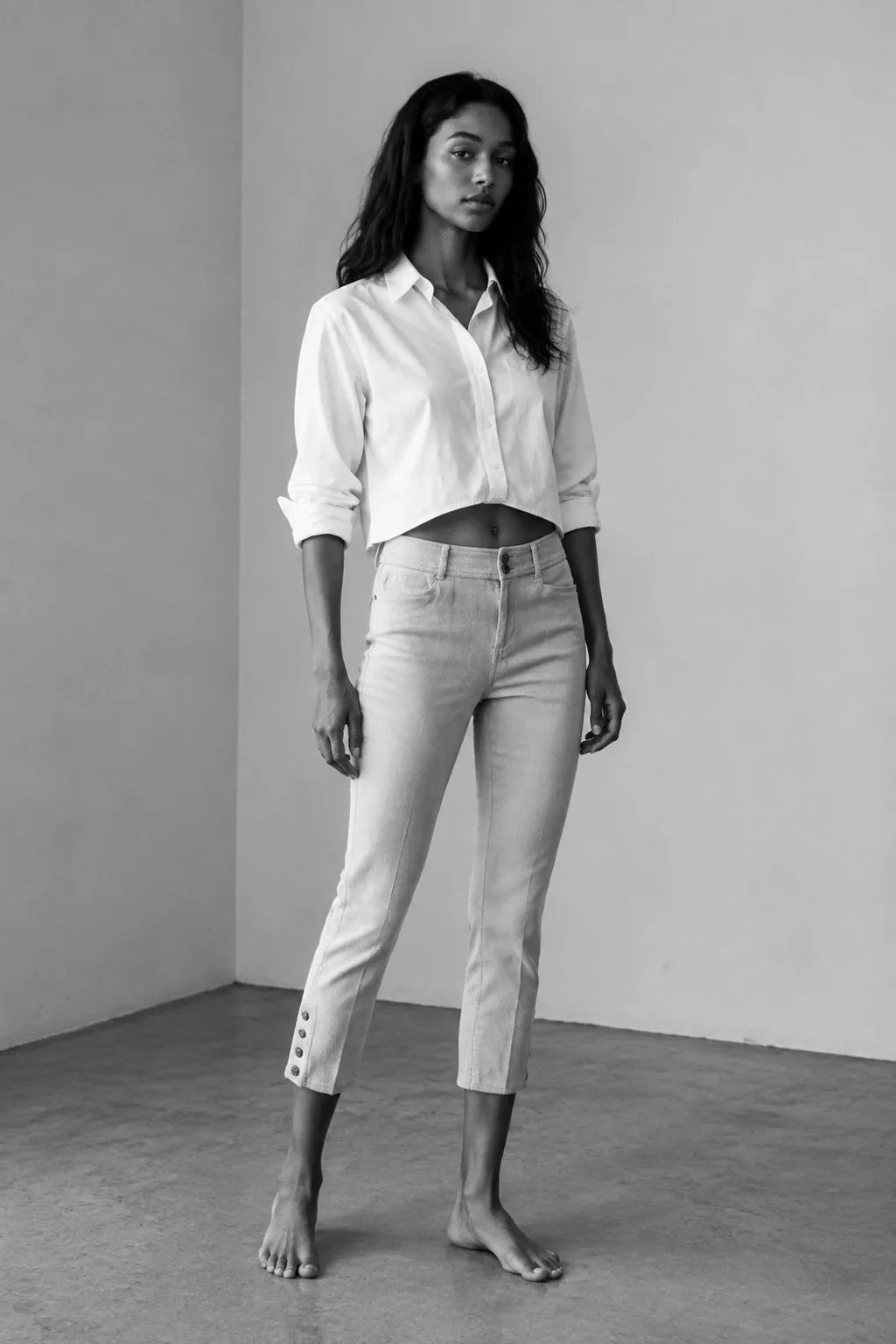
Revival
Capri trousers
The cropped trouser returning through rise, taper and the exact point where the hem stops.
Read the study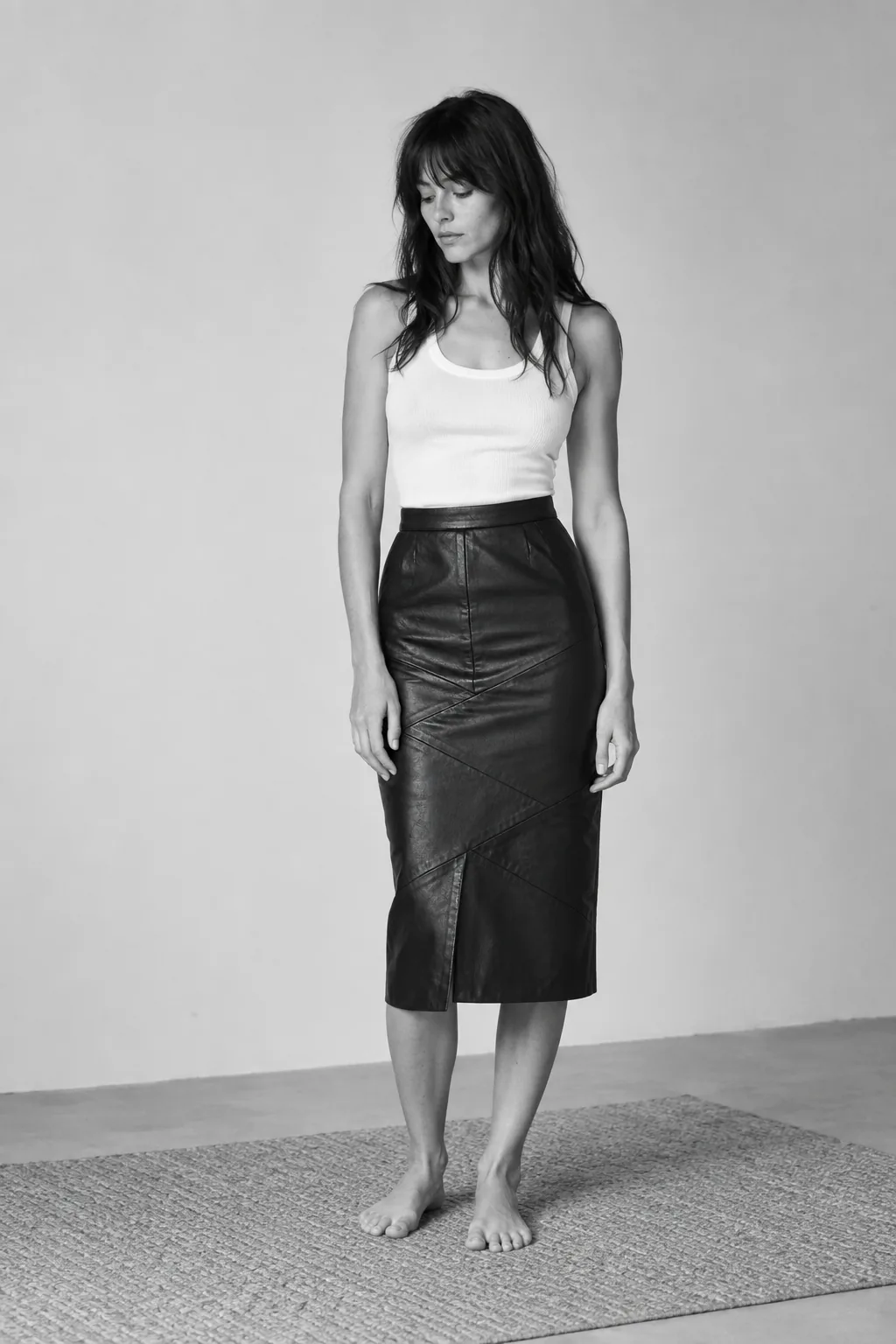
Enduring
The pencil skirt
The narrow skirt whose effect comes from proportion, movement and where the hem meets the leg.
Read the studyContext and relevance
The silk blouse is Enduring because its wardrobe role survives changes in print, collar, sleeve and proportion. It does not need a comeback to remain useful.
A separate garment with several histories
The modern blouse did not emerge from one design alone. The late nineteenth-century shirtwaist helped establish the blouse as a separate upper garment, while later designers repeatedly used silk to explore softer construction, print and expressive sleeves.
Why it persists
Silk gives even a simple top movement and depth. The blouse can hold a vivid print without becoming structurally complicated, or remain quiet while adding softness and light to a restrained outfit.
Second-hand opportunity
Designer and lesser-known vintage labels can be equally compelling here because the decisive evidence is visible in the fabric, cut and finish. Earlier collections also offer print languages and colour combinations that do not follow the current retail palette.
Modern translation
The most wearable versions let one element lead. A vivid print feels current with faded denim, a narrow skirt or clean trousers; a fuller sleeve benefits from a quieter collar and an uncomplicated lower half.
Sources
- FIT Fashion History Timeline, Shirtwaist
Fashion-history reference for the late nineteenth-century shirtwaist, its silk examples and the development of the blouse as a separate garment.
- The Met, French silk blouse, early 1970s
Costume Institute object record documenting a French silk blouse from the early 1970s.
- The Met, Issey Miyake and Tadanori Yokoo printed silk shirt
Museum record illustrating silk shirting as a surface for vivid graphic print and designer-artist collaboration.
- The Met, Yves Saint Laurent silk evening overblouse, spring/summer 1962
Costume Institute object record documenting an early Yves Saint Laurent silk overblouse.
- Equipment, About
House source for Equipment's 1976 Paris origin, classic minimalism and androgynous approach to noble fibres.
- Canadian Conservation Institute, Caring for textiles and costumes
Conservation guidance for recognising light damage, fading, fibre weakening, stains and the particular vulnerability of silk.