Enduring
The cowboy boot
A cowboy or Western boot is defined by a pull-on shaft, shaped instep, distinct heel and riding-derived construction, while toe shape, stitching, leather and inlay can vary widely.

Why it matters
Few shoes change the line of an outfit so quickly. The shaft gives weight below the knee, the heel changes posture and the toe stays visible under denim, tailoring or a long skirt. Because the form is so recognisable, the difference between a useful boot and a costume effect comes down to proportion, material and restraint.
Form and function
As a Garment Archetype, the cowboy boot is a family of pull-on riding boots rather than one fixed model or maker. Its working logic developed through the ranching cultures of Mexico and the American West, then expanded into rodeo, music, film and fashion without losing its basic anatomy.
What defines the form
Look for a pull-on shaft, a fitted instep, a separate heel and a vamp shaped over the foot. A scalloped top, pull straps, piping, shaft stitching and a small spur ridge are common signals, but not every authentic Western boot carries all of them.
Functional and cultural origins
The boot belongs to a wider riding culture shaped by Spanish and Mexican horsemanship and leatherwork, then adapted by a diverse ranching workforce across the American West. By the 1870s, cowboys were using tall pull-on boots with raised heels: the shaft protected the lower leg and kept debris out, while the heel helped hold the foot in the stirrup.
Decoration became more elaborate as specialist bootmaking grew around the working form. Contrast stitching, coloured shafts, tooling and inlay turned practical equipment into personal identity long before fashion adopted the boot as a recurring symbol.
Toe and heel families
Round and almond toes feel closest to an everyday riding boot. Pointed and snip toes create a sharper fashion line; square toes add width and visual weight. Heels range from an underslung riding heel to a lower walking or roper heel. These choices change stance and mood, but none proves quality by itself.
Shaft, stitching and inlay
A classic shaft reaches the mid-calf, though shorter roper and taller fashion versions are part of the wider family. Multi-row stitching can help a soft shaft keep its shape as well as provide decoration. Inlay sets pieces of contrasting leather into or beneath cut panels; overlay places shaped leather on top. Clean, flat edges matter more than the number of colours.
Leather and surface
Cowhide and calfskin are common because they balance structure with wear. Suede softens the outline; goat can crease finely; specialist skins create distinct grain and need more careful condition checks. A glossy finish, heavy distressing or an exotic texture is an aesthetic choice, not an automatic quality grade.
The search language
- vintage cowboy boots
- leather Western boots
- roper boots
- snip toe Western boots
- two-tone cowboy boots
- Goodyear welted Western boots
Brands worth knowing
Western boots come from American, Mexican and European workshops, from factory production to fully custom pairs. A respected name can help identify construction and sizing, but the individual pair still has to prove its leather, balance, condition and fit.
A Texas bootmaking lineage dating to 1883, with hand-lasting, shaped insteps and traditional pegged construction on many styles.
Identify the exact line before judging value because materials and construction vary. Check the pegged waist, sole edge and heel for earlier repair work.
An El Paso maker founded in 1911 with a deep archive of practical, decorative and dress Western boots.
Vintage pairs are plentiful across eras. Use the interior stamps and size markings as clues, then judge the actual leather, lining, sole and heel rather than the age claim alone.
Spanish bootmaking with strong Western silhouettes, leather uppers and Goodyear-welted construction across many lines.
A useful European search lane. Confirm the model, width and shaft measurements, and inspect the welt and heel stack closely on heavily worn pairs.
Mallorcan bootmaking that has produced handmade boots since 1918, including Western forms developed for European wardrobes.
Look for clean lasting through the waist, an even heel and sound leather at the ankle flex point. Older pairs may use sizing that needs measurement rather than conversion alone.
A maker established in 1959 whose classic Western boots are a frequent second-hand source for slim shafts, shaped toes and decorative leatherwork.
Because vintage model information can be sparse, ask for clear interior labels, sole photographs and measurements before relying on a seller's date or size conversion.
Unsigned and boutique-made
An unsigned pair can still be excellent. Prioritise real leather, balanced lasting, a firm counter, a stable shank, sound sole attachment and repairable components. Unknown branding should lower the price and raise the evidence required, not rule the boot out.
Why it keeps working
The cowboy boot is Enduring because the working form has outlived every fashion cycle built around it. What changes is not the archetype, but how much Western reference the rest of the outfit carries.
From equipment to fashion language
Ranch work established the form; rodeo, music and screen culture amplified its symbolism. Fashion repeatedly borrows the shaft, stacked heel and shaped toe because they can add toughness, polish or friction to otherwise familiar clothes.
What keeps it useful
The boot works as a practical visual anchor. It gives long denim a point, steadies a fluid skirt and makes a simple dress feel considered without needing more accessories.
The modern proportion
A low or moderate heel, an almond, pointed or restrained square toe, and a shaft that sits cleanly under clothing make the archetype easiest to repeat. Two-tone leather or embroidery works best when the clothing around it stays quiet.
The current shoppable interpretation
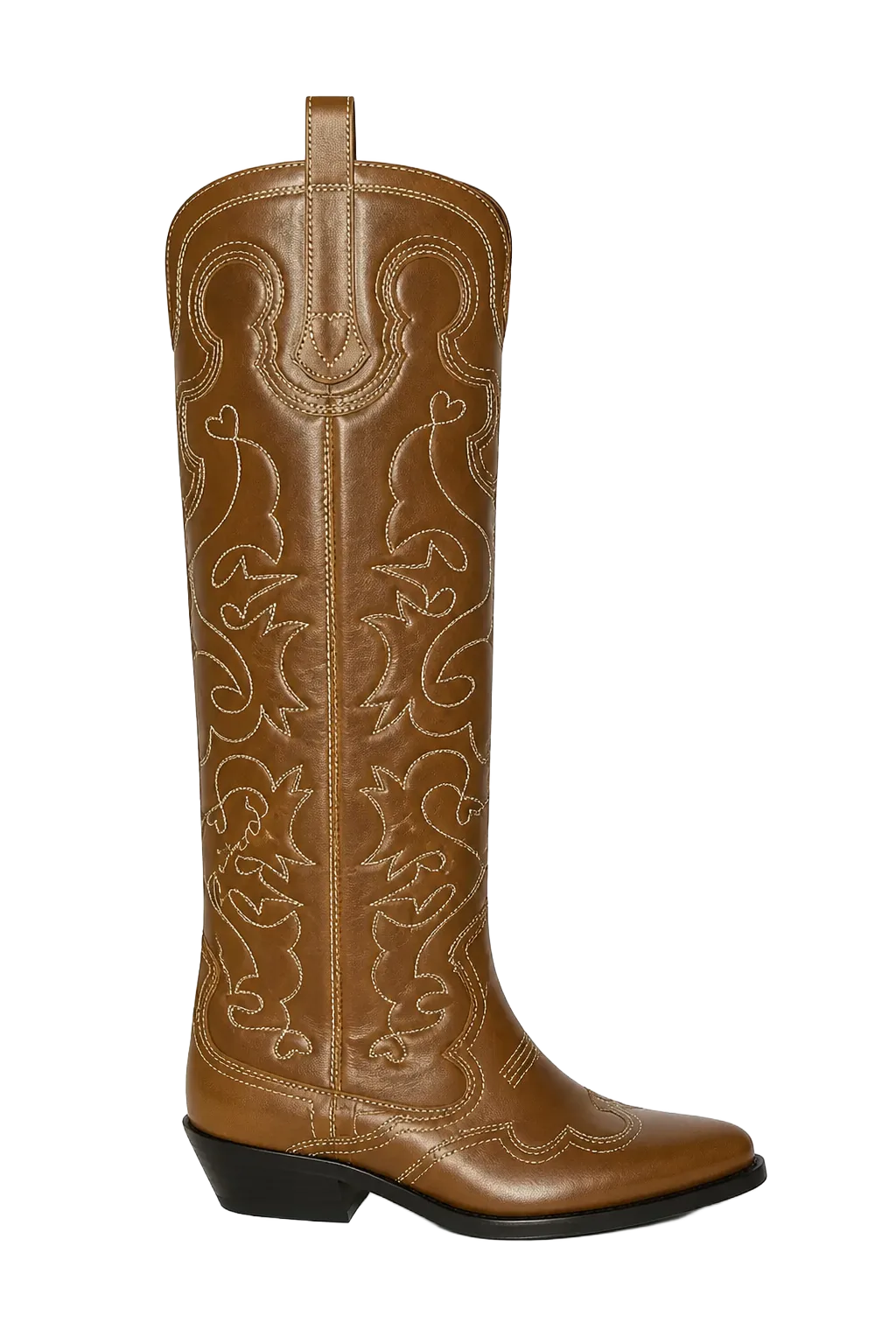
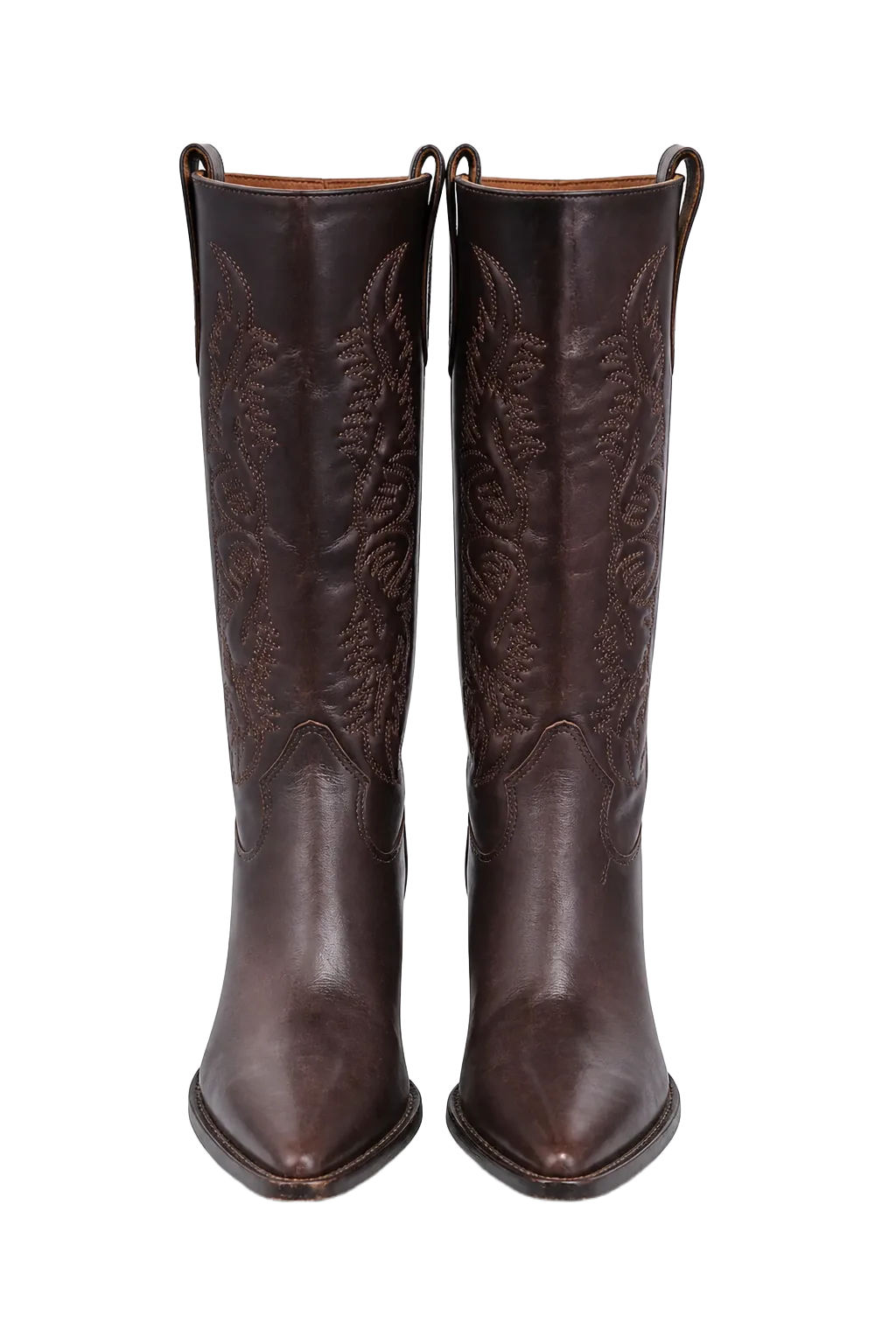
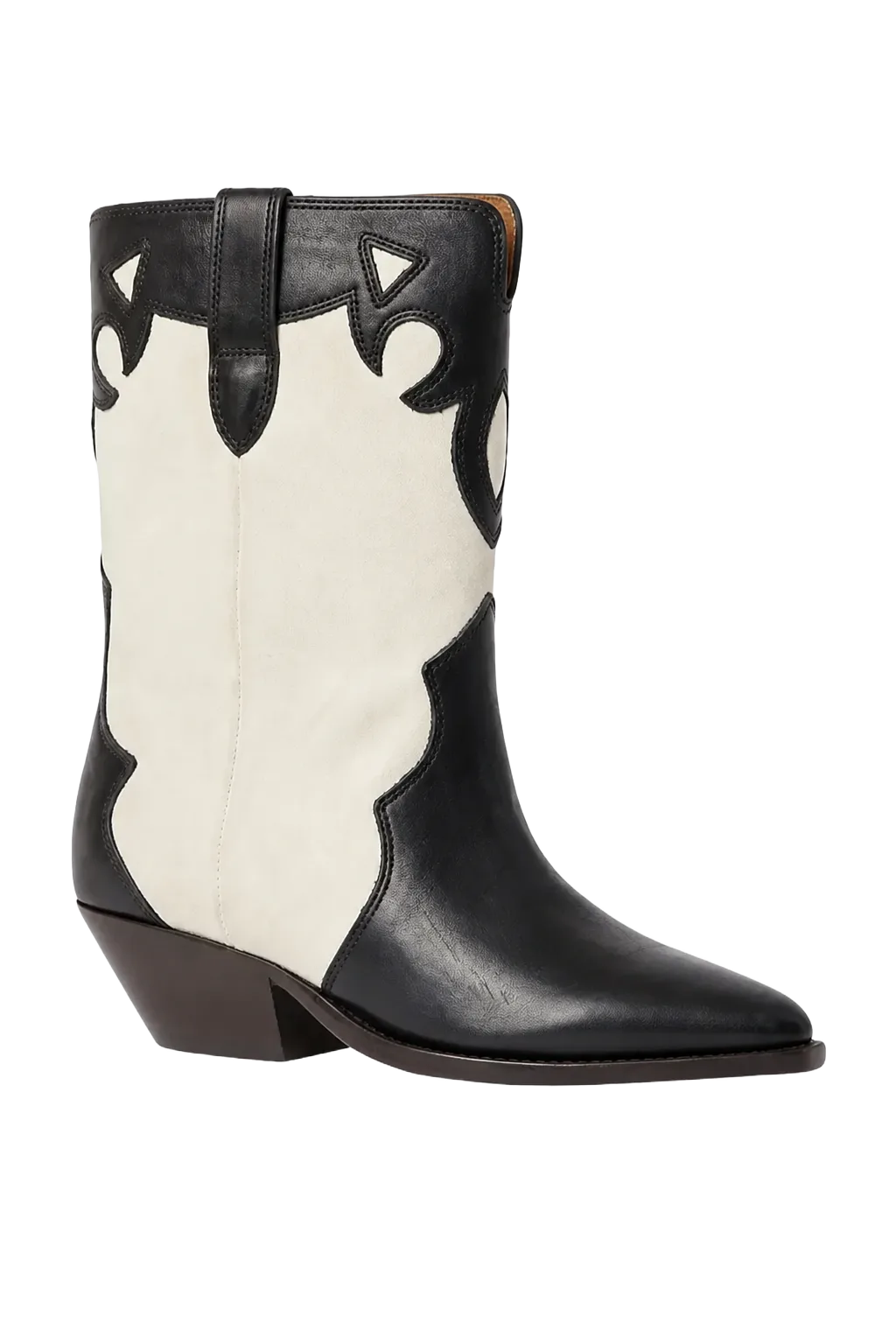
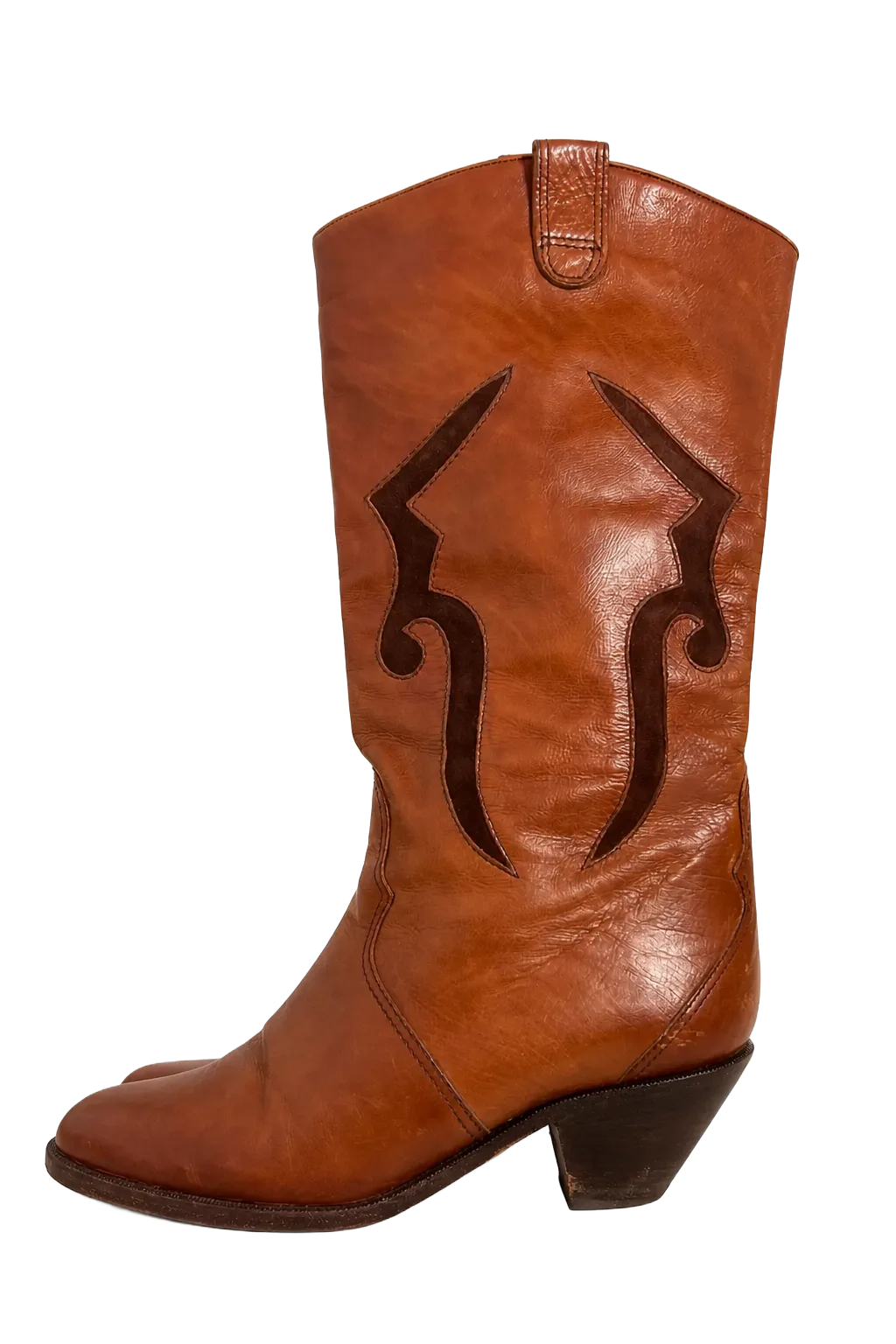
The Long Way West is Relover's current edit of the archetype: real leather and suede, low stacked heels, shaped toes and wearable shafts in black, brown, tan and controlled two-tone combinations. It treats the boot as the one decisive element in a late-summer-to-autumn wardrobe, not as a full Western look.
Construction and material
Last, instep and waist
A pull-on boot is held primarily through the instep and heel rather than laces. The last should create a close waist and a secure instep without crushing the top of the foot. Left and right boots should show the same curve and sit at the same angle.
Vamp, toe box and counter
The vamp takes most of the visible flex and should be cut and lasted without puckering. The toe box holds the chosen profile; the heel counter keeps the rearfoot stable. Deep cracks at the vamp or a collapsed counter are more serious than ordinary surface creasing.
Shaft and lining
Piping should run cleanly at the side seams, pull straps should feel secure and the shaft should stand or fold according to its intended softness without twisting. A leather lining usually handles wear well; whatever the material, inspect it for splitting at the heel and the top of the foot.
Welt, pegs and repairability
Stitched welt construction and traditional pegging are useful quality signals when executed cleanly, and both can support future repair. They are not the only valid methods. The practical question is whether the sole is securely attached, the waist is stable and a competent cobbler can replace worn components without dismantling the boot.
Sole, heel and shank
Leather soles give a traditional profile and can show wear clearly; rubber improves grip and weather tolerance. The heel stack should be even, the top lift should meet the ground squarely and the shank should keep the arch from feeling soft or unstable.
Stitching, tooling and inlay
Rows should be even, thread ends secure and mirrored motifs reasonably aligned. On inlaid or overlaid shafts, check every narrow point and colour boundary for lifting, tearing or shrinkage. Decoration is good construction only when it ages with the boot.
Shop the drop
The Long Way West
Late August still smells like linen, but the light is already turning amber. Somewhere between the last bare-legged evening and the first cold morning, one pair of boots carries the whole wardrobe across the line.
How to recognise a great second-hand version
What a strong version shows
- The marked size and width, plus shaft height, shaft opening and heel height.
- A snug but comfortable instep and secure heel, with room for the ball of the foot to sit at the boot's widest point.
- Real leather with flexible creasing rather than dry cracking at the vamp and ankle.
- An even heel stack and top lift with no sideways lean or separation.
- A firm counter and stable arch, with both boots standing at the same pitch.
- Secure welt, sole stitching or pegging, and enough remaining outsole for repair rather than emergency replacement.
- Intact lining, pull straps, piping, inlay edges and shaft stitching.
- Clear photographs of the soles, heel caps, interior markings and both sides of both boots.
What to avoid
- Dry cracks across the vamp or ankle flex point that open when the leather bends.
- A heel worn heavily to one side, a loose heel block or a top lift worn through.
- A collapsed counter, soft shank or boot that rocks when placed on a flat surface.
- Split lining at the heel or instep, especially when the rough edge catches the foot.
- Lifting inlay, broken decorative stitching or brittle exotic skin at the scales.
- A strong mould, smoke or storage odour that the seller cannot explain.
- A seller who converts the size confidently but will not provide width or measurements.
How to wear it
How to style it
Treat the boot as structure, not theme. One pair under straight or wide denim, a pale slip skirt, a narrow wool midi, a simple dress or a long coat is enough. If the leather is two-tone or heavily stitched, remove competing motifs and let the boot carry the detail.
What it does in a wardrobe
A transitional anchor that adds weight, direction and weather coverage below the knee. The right pair can move from bare legs and light fabrics into denim, knitwear and coats without changing its role.
Questions, answered
In everyday use the terms overlap. Cowboy boot usually points to the riding-derived form; Western boot can also include fashion interpretations, shorter ropers and decorative variants. Judge the anatomy rather than the listing title.
A small amount of heel lift is normal in a new or lightly worn pull-on boot because the instep, not laces, holds the foot. Excessive lift, rubbing or the heel leaving the cup suggests the size, width or instep volume is wrong.
Not automatically. Sizing varies by maker, era, width and last. Start with the marked size, then compare the width, instep, shaft opening and seller measurements with a boot that already fits.
A round, almond or gently pointed toe is easiest to repeat across denim, skirts and dresses. A snip or broad square toe is more directional and needs the rest of the outfit to stay cleaner.
Often, especially when the welt or pegged waist is sound and the upper has not cracked. Ask a cobbler before buying if the sole is very thin, the welt is cut, pegs are missing or the heel has shifted.
Keep the boot as the only explicit Western cue. Use quiet colour, simple fabric and one clear silhouette, then avoid stacking it with a matching hat, ornate belt, fringe and themed jewellery.
Related garment studies

Enduring
The pencil skirt
The narrow skirt whose effect comes from proportion, movement and where the hem meets the leg.
Read the study
Enduring
The shearling coat
A protective outerwear archetype defined by dense fleece, substantial leather and the kind of proportion that can carry an entire outfit.
Read the study
Revival
The 90s minimalist blazer
The quietly oversized tailored jacket whose authority comes from proportion, fabric and a deliberately restrained line.
Read the studySources
- Smithsonian National Museum of American History, spur made in Mexico
Museum context for the Spanish and Mexican roots of Western riding culture, vaquero practice and leather equipment in North America.
- UTSA Institute of Texan Cultures, Cowboys and Cattle Drives
Museum education source for the shift to tall pull-on boots with higher heels by the 1870s and the practical role of shaft and heel.
- Kansas Historical Society, Hyer Boot Company records
State archive source documenting one important 1870s bootmaking lineage and the adaptation of riding boots to cowboy work.
- Lucchese Boot 101, boot anatomy
Specialist terminology for the shaft, vamp, toe box, welt, heel, spur ridge, piping and pull straps, plus fit guidance.
- Lucchese, the making of a cowboy boot
Bootmaker source for hand-lasting, outsole attachment, brass and lemonwood pegging, and the repair value of resolable construction.
- Museum at FIT, Boots: The Height of Fashion
Museum exhibition source for the movement of equestrian and labour boot forms into modern fashion and women's wardrobes.
- Tecovas, how cowboy boots should fit
Specialist fit source for instep pressure, normal initial heel lift and the limits of size conversion.
- Sendra Boots, our history and Goodyear process
European bootmaker source for welted construction, cork filling, lasting and decorative leather processes.