Revival
The bandage dress
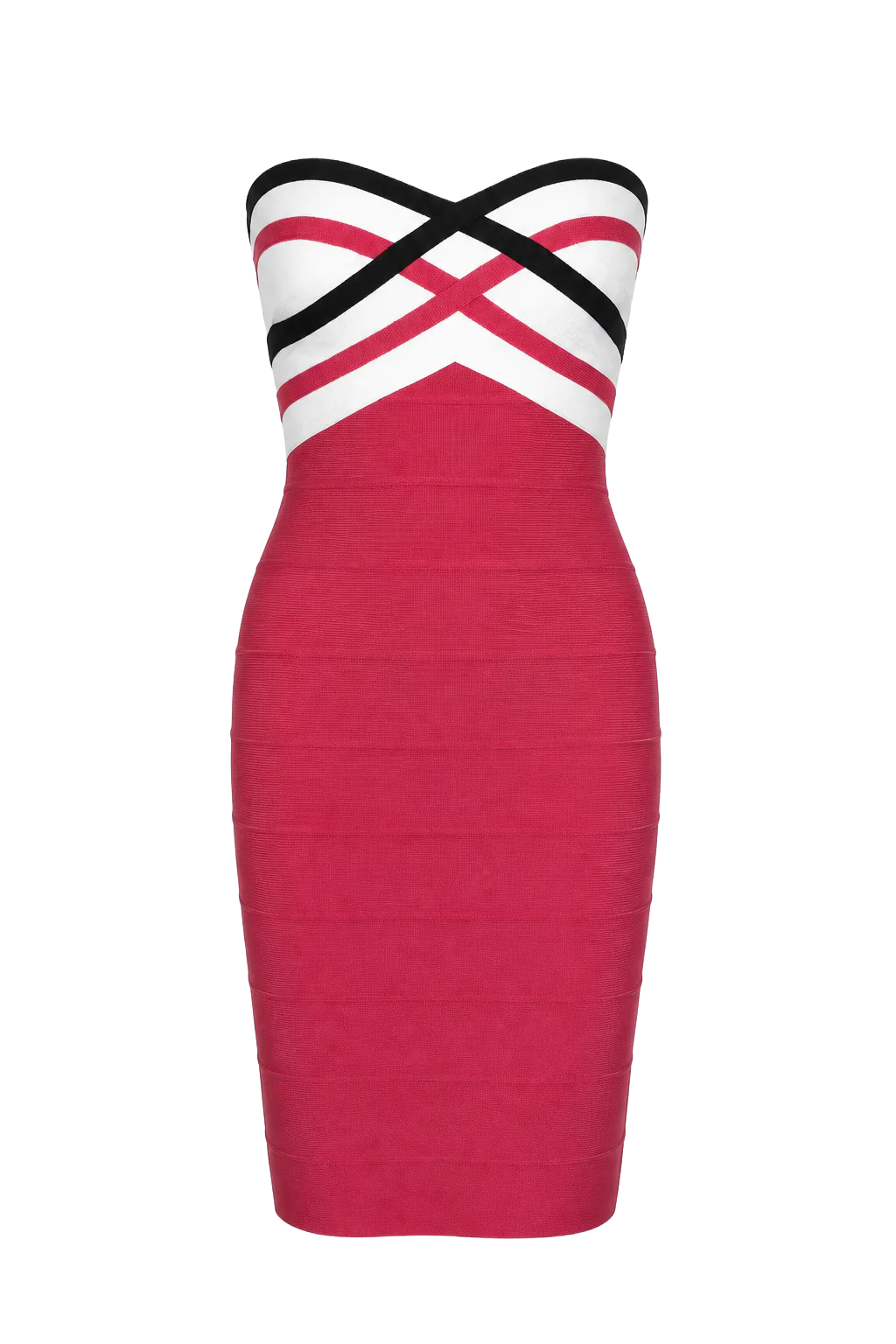
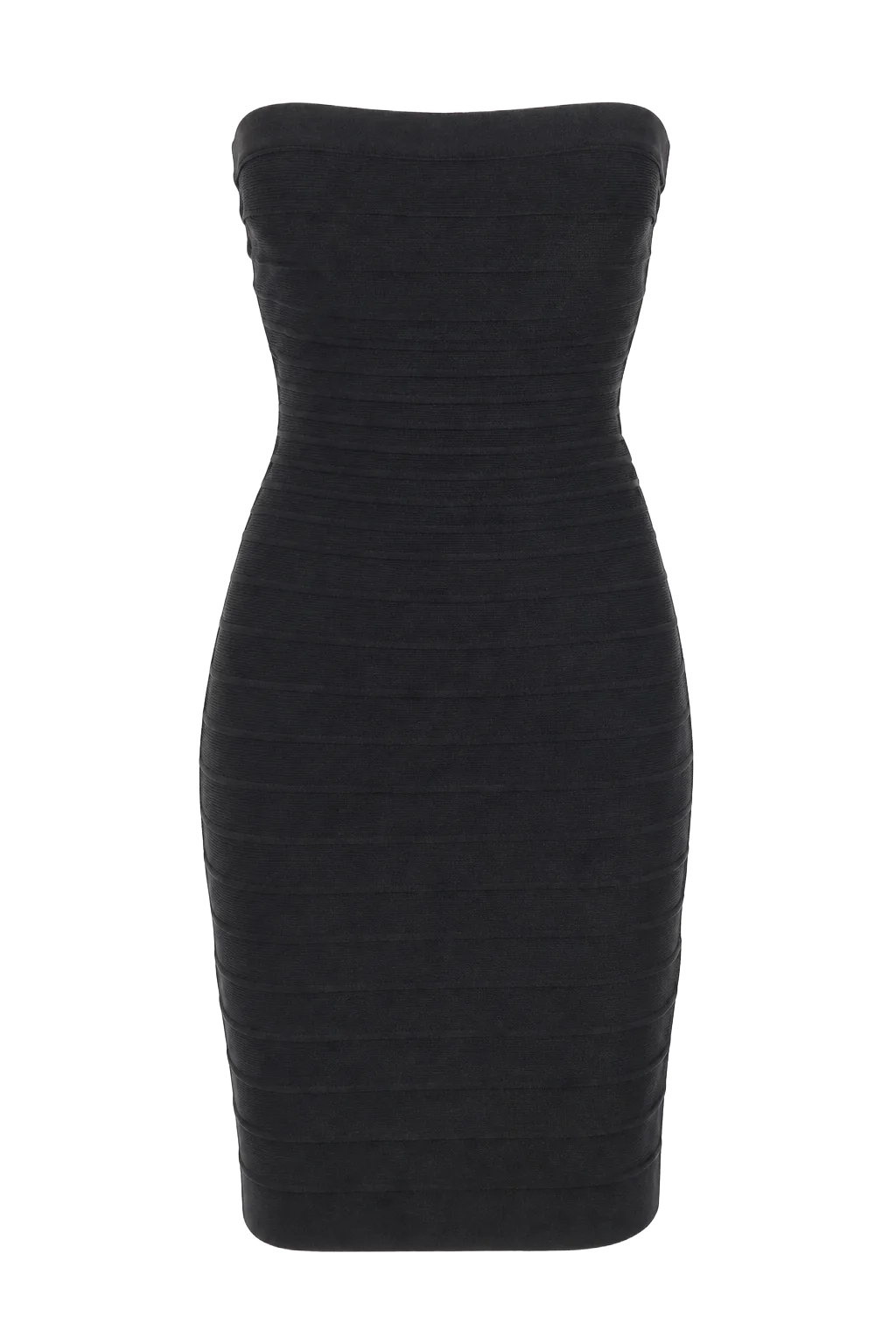
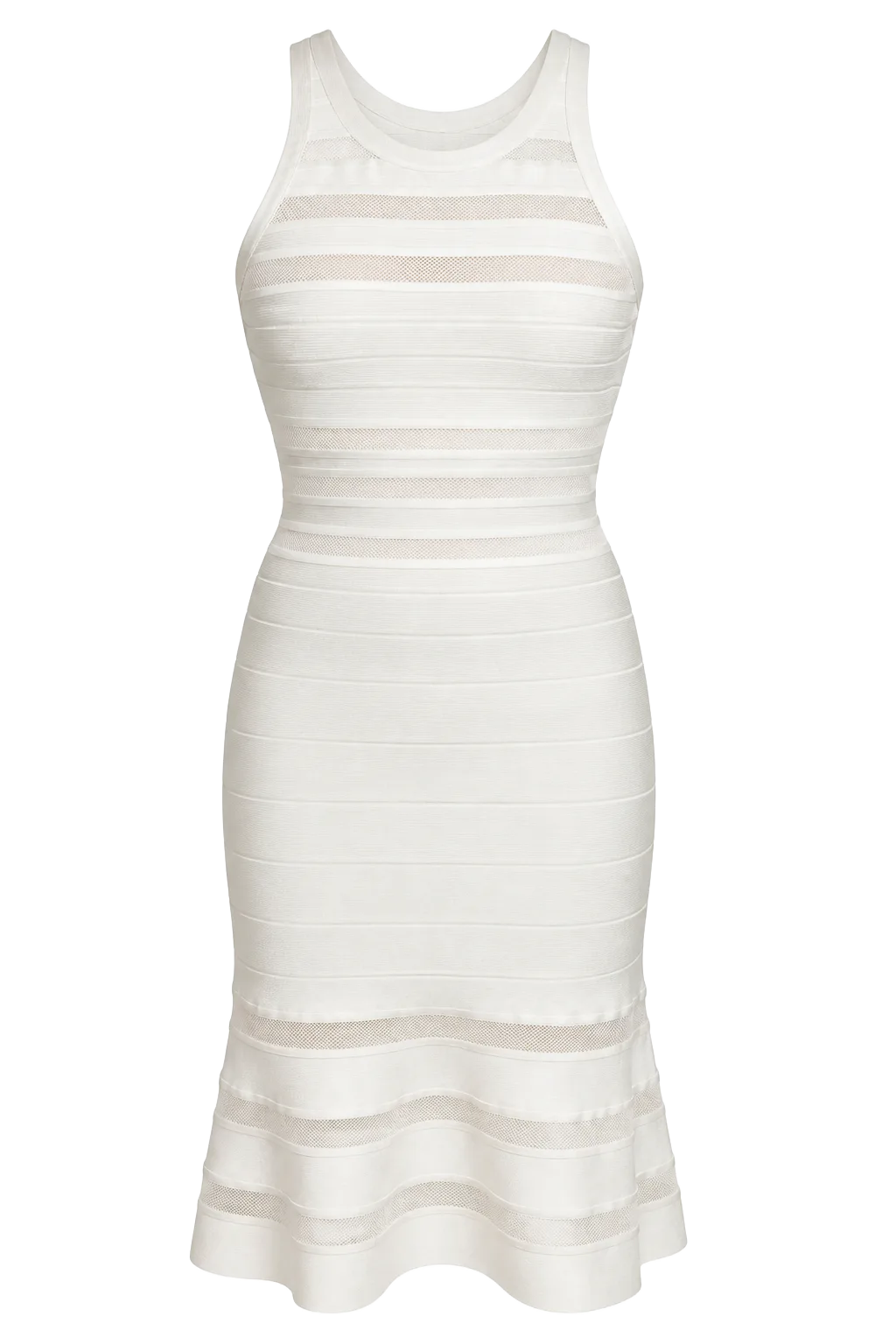
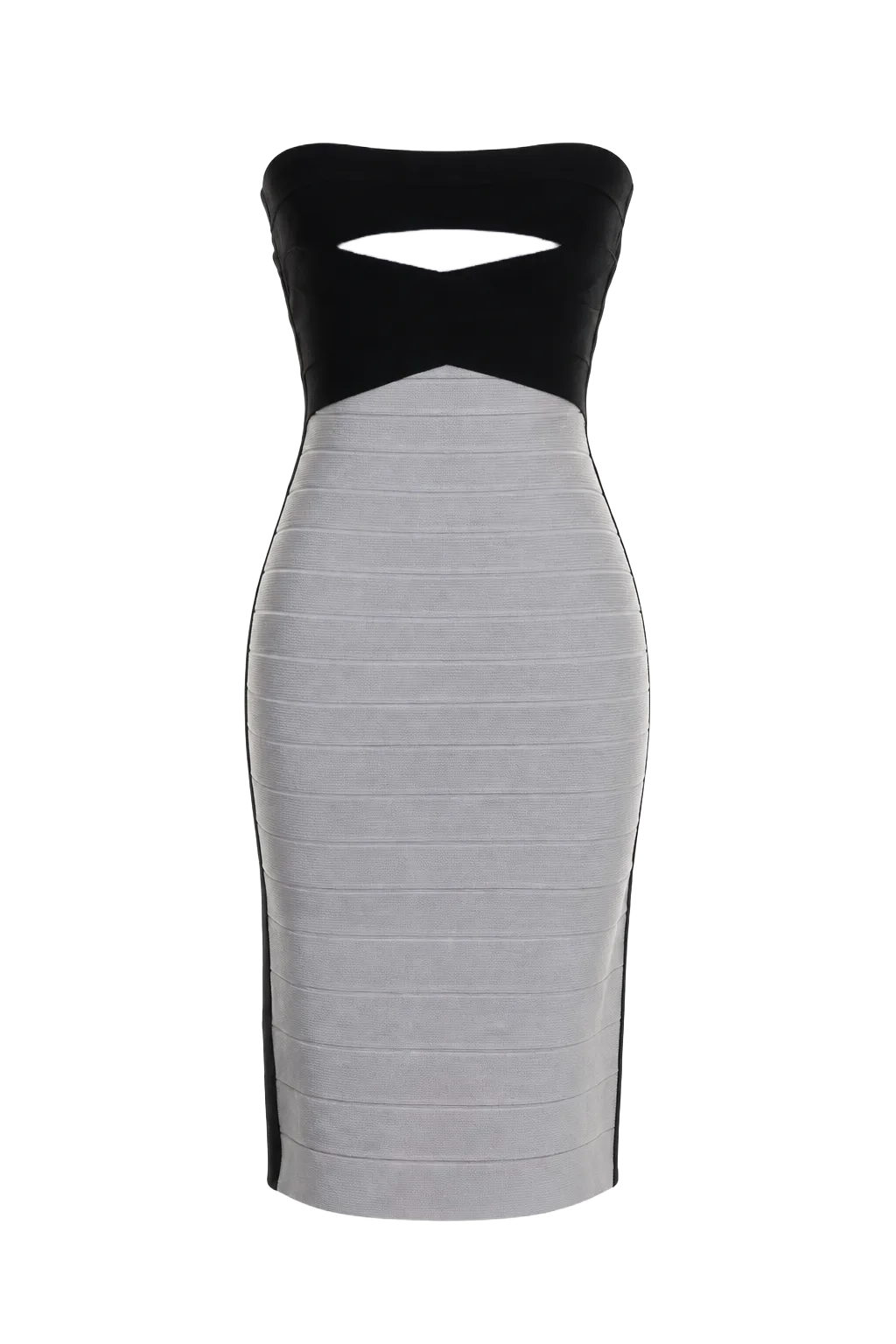
A true bandage dress is shaped by dense stretch construction, mapped seams and enough recovery to hold a clean, controlled line.

Recognition and variations
The bandage dress makes construction visible. Its effect does not come from closeness alone, but from the way dense stretch, panel direction and proportion create a controlled silhouette. A strong version can bring precision and presence to a wardrobe; a weak one simply feels tight.
As a Garment Archetype, the bandage dress is defined by engineered stretch and a deliberately mapped body line rather than by one maker alone.
What makes it a bandage dress
The archetype follows the torso and hips closely, using tension and seam placement to hold a continuous line. A bodycon dress may only be close-fitting; a bandage dress should also feel structurally considered.
Proportion map
Neckline, strap width, waist placement and hem length decide whether the compression looks balanced. The strongest versions give the body one clear outline without pulling every area equally tight.
Material variants
Dense stretch knits, engineered panels and band-like constructions can all deliver the archetype. What matters is recovery, stability and a surface that stays smooth when worn.
Wardrobe role and The Relover Eye
How to style it
Treat the dress as the line of the outfit, not as one statement among many. A long coat, compact jacket, quiet shoe or one contrasting texture gives the silhouette context without competing with it.
What it does in a wardrobe
A focused evening or event piece that can also work under tailoring when the neckline, hem and colour are restrained. Its role is controlled impact, not everyday neutrality.
Choosing a good second-hand version
Stretch and recovery
The fabric should feel substantial and return quickly after being gently extended. Recovery keeps the dress supportive and prevents knees, seat and waist from bagging.
Panels and seams
Seams should lie flat and guide the eye rather than twist around the body. Curved or angled panels can shape the line; rippling usually signals strain, stretching or weak construction.
Closure and finish
A zip should sit flat without buckling. Check neckline and armhole edges for stretched binding, and inspect the inside for stable seam allowances and repairs.
What a strong version shows
- Dense fabric with quick, even stretch recovery.
- Flat seams with no broken stitches or pulling at panel joins.
- A zip that closes smoothly and lies flat on the body.
- A neckline, waist and hem that remain level when the dress is relaxed.
- Measurements that allow the intended close fit without relying on aggressive sizing down.
What to avoid
- Permanent rippling, bubbling or shiny stress marks in the fabric.
- Loose elastic fibres, brittle stretch or panels that no longer recover.
- Distortion around the zip, side seams, seat or underarms.
- A seller description that gives only a size label and no garment measurements.
- Strong perfume or storage odour when the care label limits cleaning options.
Versions, brands and how to search
Hervé Léger defines the true bandage lineage, while several other labels are useful for adjacent sculpting-knit or panelled dresses. Those traditions should not be collapsed into one: construction decides whether a dress is genuinely bandage, bodycon or simply close-fitting.
The defining reference for dresses built from dense elasticated bands that map and support the body.
Check the full label, seam mapping, zip and elastic recovery. Heavy wear can leave even an authentic dress permanently stretched.
Exceptional body-sculpting knitwear shaped through engineered tension, flat seams and sophisticated cut rather than classic bandage strips.
Treat it as a related construction tradition, not automatic proof of a bandage dress. Inspect knit recovery and repairs at the seams.
Structured stretch and panelled occasion dresses that offer an accessible route into the controlled body-conscious silhouette.
Composition varies. Choose dense, resilient fabric and aligned panels rather than relying on the style name in the listing.
A broad archive of 2000s and 2010s bodycon, stretch-panel and evening dresses adjacent to the bandage revival.
Some versions are true engineered panels and others are ordinary stretch jersey. Interior construction will tell you which one you found.
Unsigned and boutique-made
Unsigned clubwear and boutique dresses can still be strong finds, especially when labels have been removed. Because fibre ageing is critical here, buy only when the dress still has even recovery, flat seams and a stable zip; anonymity should lower certainty, not automatically lower quality.
Shop the drop
The Body Line
Dusk on the Riviera, skin still warm from the day, one piece of gold catching the last light. The dress does the work. Nothing else needs to.
Questions, answered
What is the difference between a bandage dress and a bodycon dress?
Bodycon describes a close fit. A bandage dress should also use substantial stretch, panel direction or band-like construction to shape and support the line.
Should I size down in a bandage dress?
Usually no. The dress should be close by design, but sizing down can overstress seams, distort the zip and make the proportion less controlled. Compare garment measurements instead.
How can I check stretch condition online?
Ask for close photographs of the waist, seat, underarms, zip and panel joins, plus relaxed garment measurements. Rippling and loose surface fibres are warning signs.
How should a second-hand bandage dress be cleaned?
Follow the care label because fibre blends and finishes differ. Avoid unverified high heat, which can damage stretch fibres, and ask how the dress was previously stored and cleaned.
Don’t miss a Drop
Two curated Relover Drops a month, with styling ideas for every edit. Sign up for early access to each new selection.
One more step: confirm your email
To receive Early Access emails, you need to confirm your subscription.
Look for the confirmation email from Relover and click the confirmation link. If you don’t see it, check your spam or junk folder.
Mark it as “Not spam” and add Relover to your contacts to make sure you get our emails :)
Related garment studies

Enduring
The pencil skirt
The narrow skirt whose effect comes from proportion, movement and where the hem meets the leg.
Read the studyContext and relevance
The current Revival moves the bandage dress away from the highly accessorised party uniform of the early 2000s and back toward a cleaner, more architectural reading.
Earlier cycle
The silhouette became closely associated with Hervé Léger and the sculpted stretch dresses worn through the 1990s, then reached wider red-carpet and nightlife visibility in the 2000s.
What changed
Contemporary versions work through quieter colour, stronger necklines, longer hems and less decorative styling. The dress feels modern when its structure is allowed to carry the look.
Second-hand opportunity
Earlier branded and unbranded versions are widely searchable, but condition matters more than the label. Stretch recovery and seam stability are the value test.
Staying-power judgement
The most extreme party versions may recede again. The precise midi, restrained mini and clean column interpretations have a stronger life beyond the revival peak.
Sources
- Hervé Léger, The Original Bandage Dress
Brand source for the signature sculpting-stretch construction and current house description.
- Hervé Léger history interview
Interview with the brand's senior vice president on the silhouette's construction, name and cultural cycle.
- The Met, Azzedine Alaïa dress, fall/winter 1986 to 1987
Costume Institute analysis of Alaïa's engineered flat seams, elastic rayon knit and body-supporting construction.