Revival
The 90s minimalist blazer
A true 90s minimalist blazer is slightly relaxed but precisely cut, with a controlled shoulder, an elongated line and fabric strong enough to make simplicity feel intentional.

Recognition and variations
The 90s minimalist blazer turns tailoring into an everyday layer rather than a formal uniform. Its value lies in what has been edited out: the shoulder is present without becoming theatrical, the body is relaxed without collapsing and the surface is quiet enough for cut and material to lead. A strong version can sharpen denim, steady a fluid dress or replace light outerwear while remaining useful beyond the current revival.
As a Garment Archetype, the 90s minimalist blazer is defined by a shared approach to proportion and restraint across designers rather than by one maker or named model.
The controlled shoulder
The shoulder may be natural or slightly extended, but it should establish one calm horizontal line. Light padding can give authority without recreating the broad, sharply built power shoulder of the 1980s.
Length and ease
The jacket usually reaches the hip or slightly below it, with enough room to layer over a tank, shirt or fine knit. The strongest versions feel easy through the body while retaining a clear relationship between shoulder, waist and hem.
A quiet front
Single-breasted fronts, one or two discreet buttons, clean notch lapels and integrated pockets let proportion do the work. Pinstripes and subtle checks can belong when they remain fine enough to read as texture rather than decoration.
Material carries the idea
Fine wool, worsted wool, gabardine, wool crepe and supple wool blends give the blazer its line. A minimalist cut exposes weak fabric quickly, so drape, recovery and surface quality matter more than visible detail.
Wardrobe role and The Relover Eye
How to style it
Let the blazer establish the upper line, then keep the rest direct. A white tank, ankle-length straight denim and quiet flats make the slight volume feel intentional; a slip dress, narrow skirt or fluid trouser can create the same balance. Use one tactile accessory rather than adding several formal tailoring codes.
What it does in a wardrobe
A structural third piece that moves between casual and polished dressing. It can sharpen denim, give a soft dress a frame or serve as light outerwear while keeping the outfit calm.
Choosing a good second-hand version
Shoulder and collar balance
The shoulder line should sit deliberately rather than droop without control. The collar should remain close to the back of the neck, and the lapels should lie flat without lifting or breaking unevenly.
Internal structure
Canvas, interfacing and light padding shape the front even when they are invisible. A strong jacket holds its chest and lapel roll while still moving naturally; bubbling or a stiff fused plate undermines the quiet line.
Sleeve and body alignment
Sleeves should fall cleanly from the shoulder without twisting. Side seams, vents and front edges should hang vertically when the jacket is open, because an apparently simple cut makes imbalance easy to see.
Wool, lining and finish
The outer fabric should recover from gentle pressure and the lining should allow the jacket to slide over layers. Inspect underarms, cuffs, pocket edges, buttonholes and vent corners, where wear appears first.
What a strong version shows
- Shoulder width, chest, total length and sleeve measurements supplied together.
- A collar that sits close to the neck and lapels that lie flat on both sides.
- Wool or a convincing tailored cloth with enough body to preserve the line.
- Straight front edges, balanced vents and sleeves that do not twist forward.
- A clean lining with stable armholes, underarms, pocket bags and vent joins.
- Enough ease for a light layer without turning the jacket into an uncontrolled oversized shape.
What to avoid
- Shoulders that collapse, ripple or extend so far that the fit reads as accidental.
- Bubbling across the chest or lapels, which can indicate failing fused interfacing.
- A collar that stands away from the neck or a front that pulls diagonally when buttoned.
- Heavy shine at elbows, cuffs, pocket edges or seat in dark wool.
- Lining splits, underarm damage or moth activity that the listing does not document.
- A very thin synthetic fabric whose lack of structure turns minimalism into shapelessness.
Versions, brands and how to search
No single house owns the 90s minimalist blazer. These names are useful because each developed a distinct route into restrained tailoring; the best search is still led by shoulder, cloth and proportion rather than logo.
A foundational womenswear tailoring reference, especially for smoking-derived jackets, sharp lapels and controlled masculine codes.
For this archetype, favour the quieter wool and fine-pinstripe day jackets over ornate evening versions, then check collar and shoulder balance.
One of the clearest 1990s references for exact proportion, discreet luxury and tailoring with very little visible noise.
Look for 1990s wool jackets with a calm shoulder, long line and clean internal finish; verify measurements because the ease varies by season.
American 1990s minimalism translated into spare wool suiting, neutral colour and unfussy single-breasted lines.
Search the higher-quality Collection and vintage mainline labels, and inspect fused fronts for bubbling before buying.
Softened authority: supple cloth, relaxed internal structure and tailoring designed to move rather than stand rigidly away from the body.
A gently dropped or extended shoulder can be intentional, but the collar must still meet the neck and the front edges should hang straight.
A leaner, more urban version of 1990s restraint, often with precise lines and an understated utilitarian edge.
Original-era pieces can be scarce and altered. Confirm sleeve, body length and fabric condition instead of paying for the label alone.
Unsigned and boutique-made
This is also a strong unsigned category. Tailor-made jackets, old menswear-derived pieces and small European boutique labels can deliver the same quiet line. Missing provenance matters less than a composed neck, shoulder and front edge, good cloth and sound internal structure.
Coming soon
Be first to discover our next edit of this piece. Sign up to hear when it’s ready and get early access to two curated Relover Drops a month.
One more step: confirm your email
To receive Early Access emails, you need to confirm your subscription.
Look for the confirmation email from Relover and click the confirmation link. If you don’t see it, check your spam or junk folder.
Mark it as “Not spam” and add Relover to your contacts to make sure you get our emails :)
Questions, answered
What makes a blazer look 1990s and minimalist?
Look for an elongated but controlled line, restrained colour, clean lapels, discreet fastenings and a shoulder that is present without becoming theatrical. Material and proportion should carry the design.
How oversized should this blazer be?
Slightly. It should allow a light layer and fall away from the body, but the collar should stay close, the shoulder should look deliberate and the sleeves should remain wearable without swallowing the hands.
Which measurements matter most when buying one second-hand?
Shoulder width, pit-to-pit chest, total back length and sleeve length. Compare them with a blazer whose proportion you already like rather than relying on the labelled size.
How can I tell if the tailoring is still in good condition?
Ask for front, back and side photographs with the jacket hanging naturally. Check for a close collar, level shoulders, flat lapels, straight front edges, balanced vents and no bubbling through the chest.
How should a vintage wool blazer be cleaned and stored?
Follow the care label and use a trusted specialist when the cloth, lining or internal structure is uncertain. Store a sound jacket on a broad supportive hanger and avoid prolonged pressure, damp or harsh home washing.
Related garment studies

Enduring
The silk blouse
A fluid separate whose value rests in fibre, drape, cut and the way colour moves across the body.
Read the study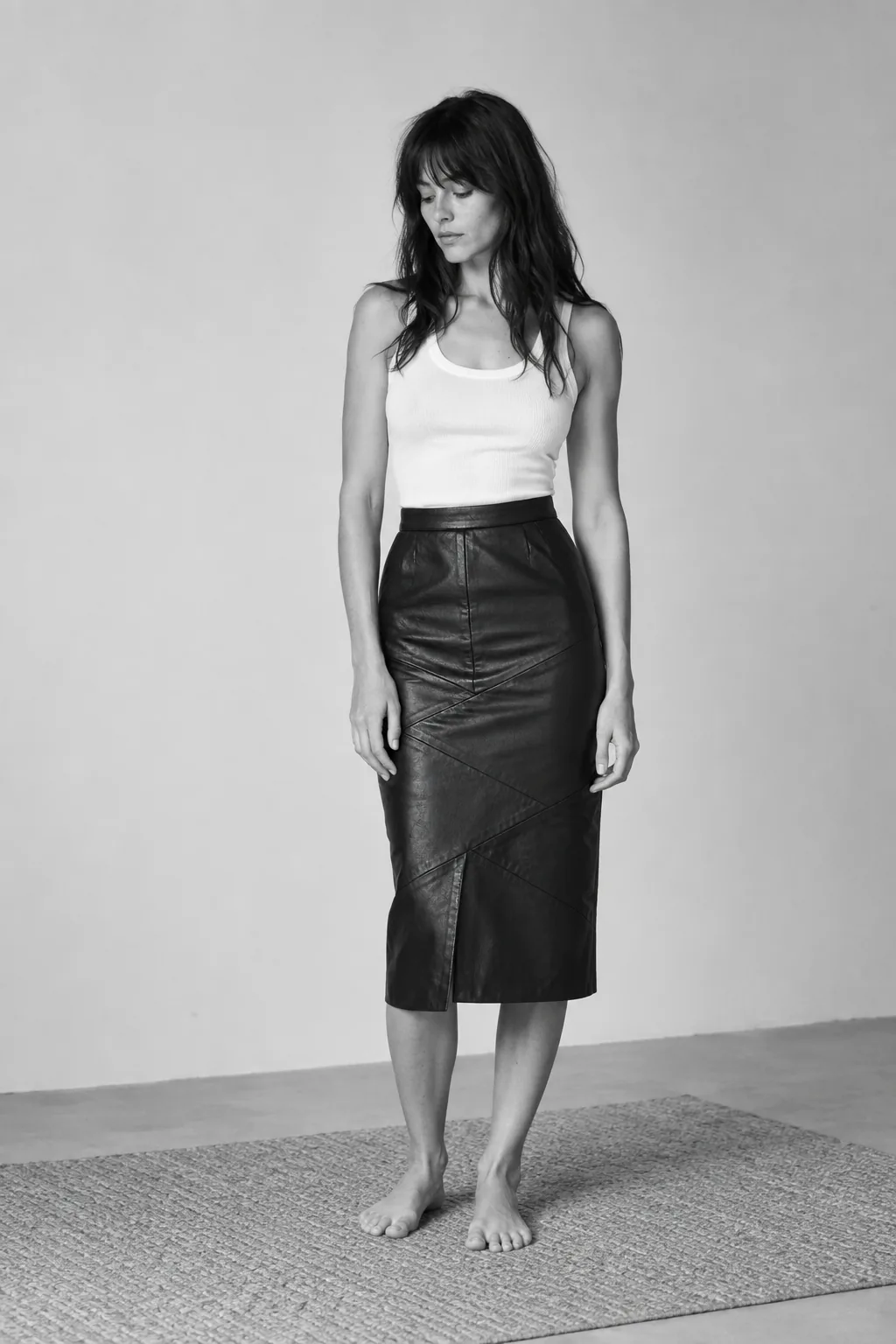
Enduring
The pencil skirt
The narrow skirt whose effect comes from proportion, movement and where the hem meets the leg.
Read the study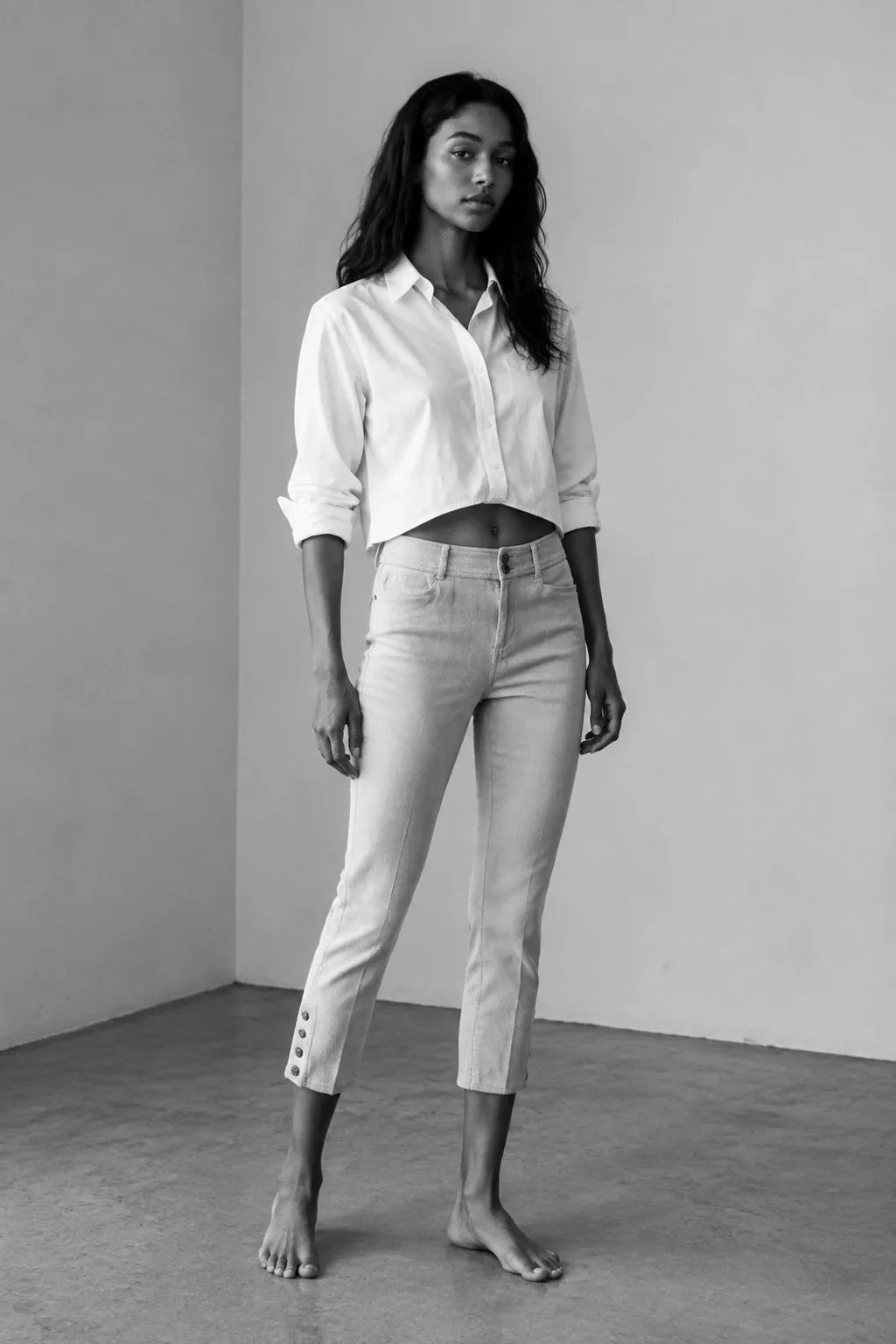
Revival
Capri trousers
The cropped trouser returning through rise, taper and the exact point where the hem stops.
Read the studyContext and relevance
The current Revival keeps the 1990s clarity but softens the fit: the blazer is a little roomier, more lived in and easier to wear outside a matching suit.
Reaction through restraint
1990s minimalism offered a counterpoint to the conspicuous glamour and exaggerated tailoring associated with the previous decade. Designers including Calvin Klein, Jil Sander, Prada and Helmut Lang made clean lines, muted colour and material quality feel directional.
What returns now
The renewed version favours a lightly extended shoulder, an elongated body and enough ease for natural movement. It is less rigid than office tailoring and more precise than an intentionally huge borrowed jacket.
The second-hand advantage
Vintage examples often combine substantial wool, full linings and considered internal structure at prices that make close evaluation worthwhile. The opportunity extends beyond famous minimalist labels when the cut, cloth and condition are convincing.
Staying-power judgement
Extreme shoulder width and very long boyfriend proportions may date faster. A blazer with moderate ease, a clean hip-covering length and a controlled shoulder can remain a wardrobe anchor after the revival peak.
Sources
- The Museum at FIT, Reinvention and Restlessness: Fashion in the Nineties
Museum exhibition source for 1990s minimalism, its pared-down silhouettes and neutral palette, and its relationship to the excess of the previous decade.
- The Museum at FIT, Minimalism/Maximalism: 1980s to 1990s
Curatorial reference for invisible luxury, clean structure and understated fabrics and colours across Calvin Klein, Jil Sander, Prada, Helmut Lang and Martin Margiela.
- The Met, Jil Sander suit, fall/winter 1998 to 1999
Costume Institute object record documenting a late-1990s Jil Sander suit in wool and cotton.
- The Met, Calvin Klein suit, fall/winter 1992 to 1993
Costume Institute object record for an early-1990s Calvin Klein wool suit.
- Musée Yves Saint Laurent Paris, The first tuxedo
House museum source for Saint Laurent's adaptation of masculine tailoring codes and the enduring role of le smoking in womenswear.
- The Met, Giorgio Armani wool suit, circa 1990
Costume Institute object record documenting a Giorgio Armani wool suit from around 1990.
- Canadian Conservation Institute, Caring for textiles and costumes
Conservation guidance on textile distortion, creasing, surface wear, handling and storage.