Enduring
The pencil skirt
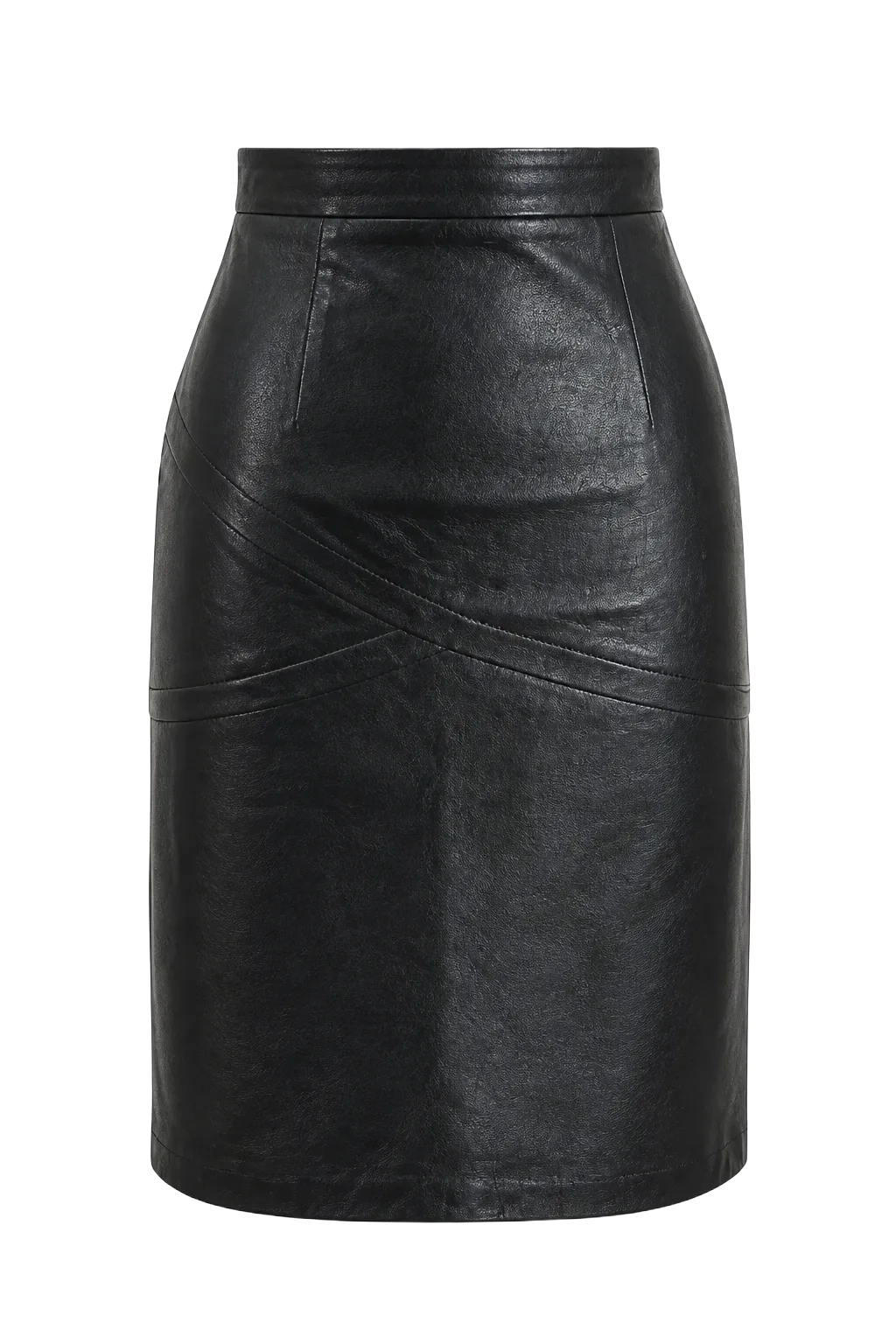
A pencil skirt works when the waist, hip line and hem create one continuous shape, with enough structure to stay sharp and enough ease to move.
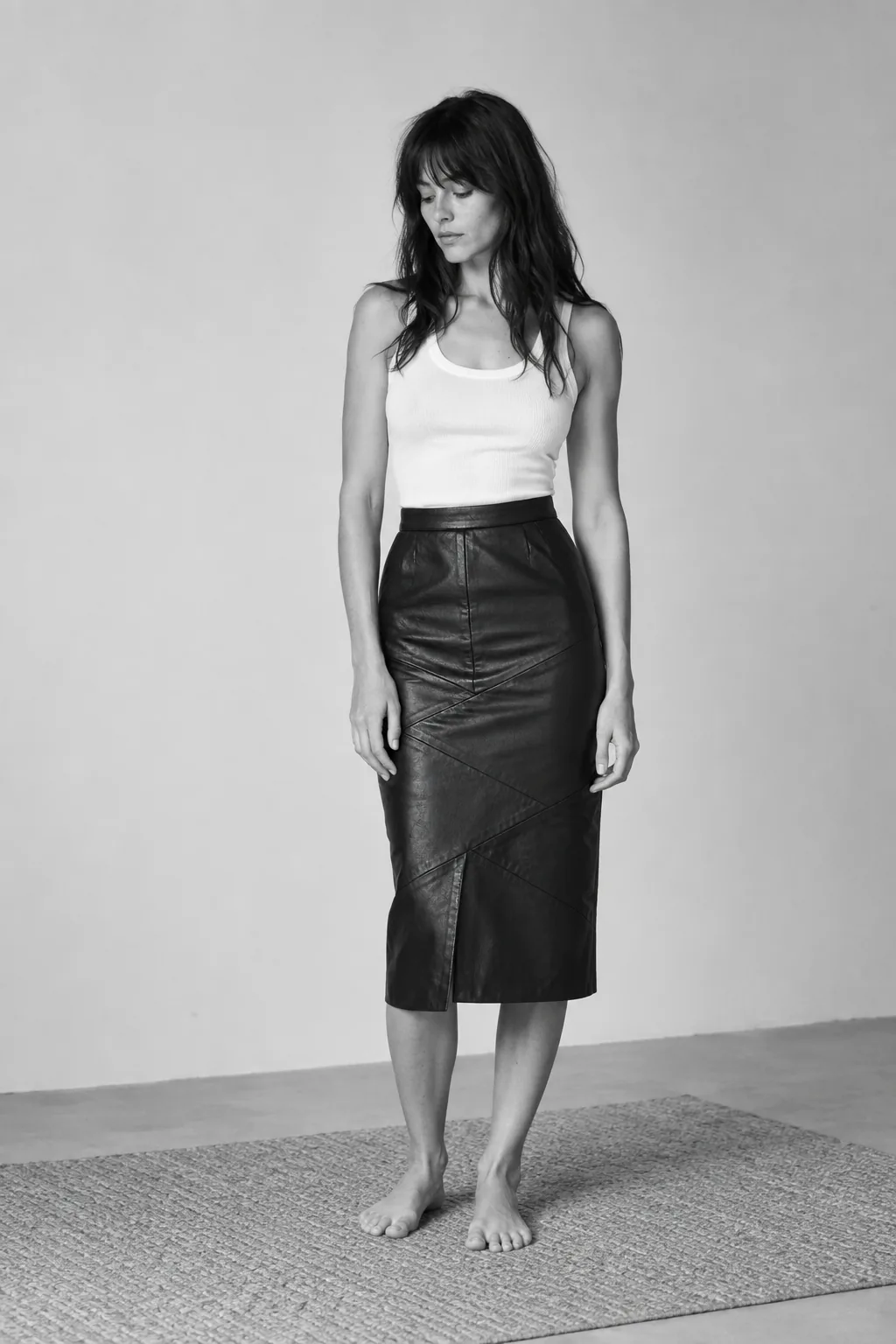
Recognition and variations
The pencil skirt gives a wardrobe a precise vertical line without requiring decoration. Its authority comes from cut, not formality alone: the right version can move between tailoring, knitwear, leather and evening texture while keeping the outfit composed.
As a Garment Archetype, the pencil skirt is a narrow, usually tailored skirt whose identity comes from its continuous line from waist or high hip to hem.
Silhouette and proportion
The skirt follows the hip and falls straight or slightly tapered. Waist height, hem position and the amount of ease determine whether the result feels sharp, relaxed or restrictive.
Functional wardrobe role
It creates a clean base for volume elsewhere: a generous knit, a strong shoulder, a long coat or a compact top. The narrow line can read professional, sensual or minimal depending on material and styling.
Material variants
Wool tailoring, cotton, denim, knit, leather and coated fabrics all produce valid versions. Each changes movement: woven tailoring holds a crease, knit follows the body and leather adds surface and weight.
Wardrobe role and The Relover Eye
How to style it
Use contrast to release the skirt from a single formal identity. Pair the narrow line with softness, volume or a direct flat shoe; let material decide how polished the rest of the outfit needs to be.
What it does in a wardrobe
A vertical anchor. It can replace a tailored trouser when the outfit needs more shape, or replace an evening skirt when the look needs less ceremony.
Choosing a good second-hand version
Waist and shaping
Darts, curved seams or knit structure should shape the waist and hip without diagonal drag lines. The waistband should sit flat and remain stable.
Ease and movement
A back or side vent, stretch content or carefully judged width makes walking and sitting possible. The skirt should return to its line after movement.
Material behaviour
Wool and dense cotton create a tailored column, knit gives a softer line, and leather needs enough suppleness to move without collapsing or forming deep permanent creases.
What a strong version shows
- Waist, hip and length measurements that match the intended wearing position.
- A straight centre-back seam and vent that lie closed when relaxed.
- Enough ease to sit and walk without strong horizontal pulling.
- Stable waistband, hem and zip with no twisting.
- For leather, an even surface with suppleness and no dry cracking at high-movement areas.
What to avoid
- A vent that pulls open while the skirt is standing still.
- Permanent seat shine, stretched hip areas or a rolling waistband.
- Diagonal drag lines from a cut that is too tight or poorly balanced.
- A hem altered without enough allowance to restore the original line.
- Dry, flaking or deeply creased leather around the seat, zip and hem.
Versions, brands and how to search
The pencil skirt is a shared tailoring archetype, not a house signature. These labels offer useful historical or construction references, but an excellent anonymous skirt can be just as relevant when its waist, hip and hem line are right.
The mid-century H-line is a key historical reference for the narrow, elongated skirt silhouette that shaped the modern pencil archetype.
Vintage Dior is rare; use the name to study proportion, then judge any candidate by its continuous line and movement.
Strong 1980s and 1990s skirt suits with a sharply engineered waist, sculpted hip and decisive narrow line.
Inspect linings, vents and high-tension seams closely. The dramatic cut only works when its structure remains intact.
Reliable Italian tailoring in wool, camel blends, cotton and leather, often with a quieter and more wearable pencil line.
Look for a stable waistband, sufficient walking ease and cloth that still recovers after sitting.
A rich second-hand source for polished 1980s and 1990s skirt suits, often in substantial wool and expressive colour.
Separate good cloth and cut from dated styling. A skirt can work beautifully even if the matching jacket does not.
Precise, restrained tailoring with refined fabrics and a clean column-like approach to the skirt.
Check that the apparent simplicity is supported by balanced darts, a flat zip and an undistorted hem.
Unsigned and boutique-made
Pencil skirts were widely made by dressmakers, workwear specialists and small boutiques, so unsigned examples are normal. A missing or unfamiliar label matters less than accurate measurements, enough walking ease, a stable waistband and a vent that closes cleanly.
Shop the drop
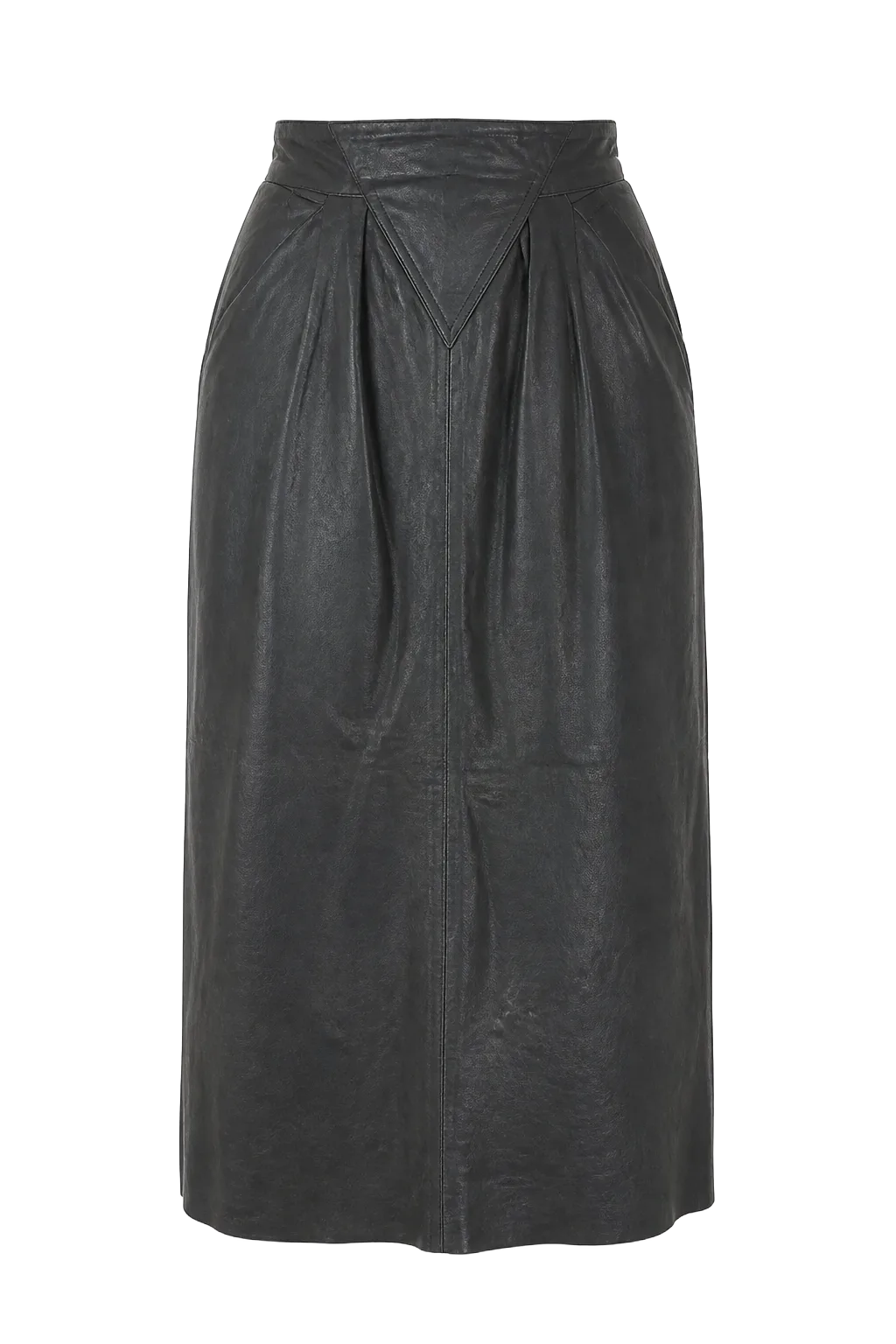
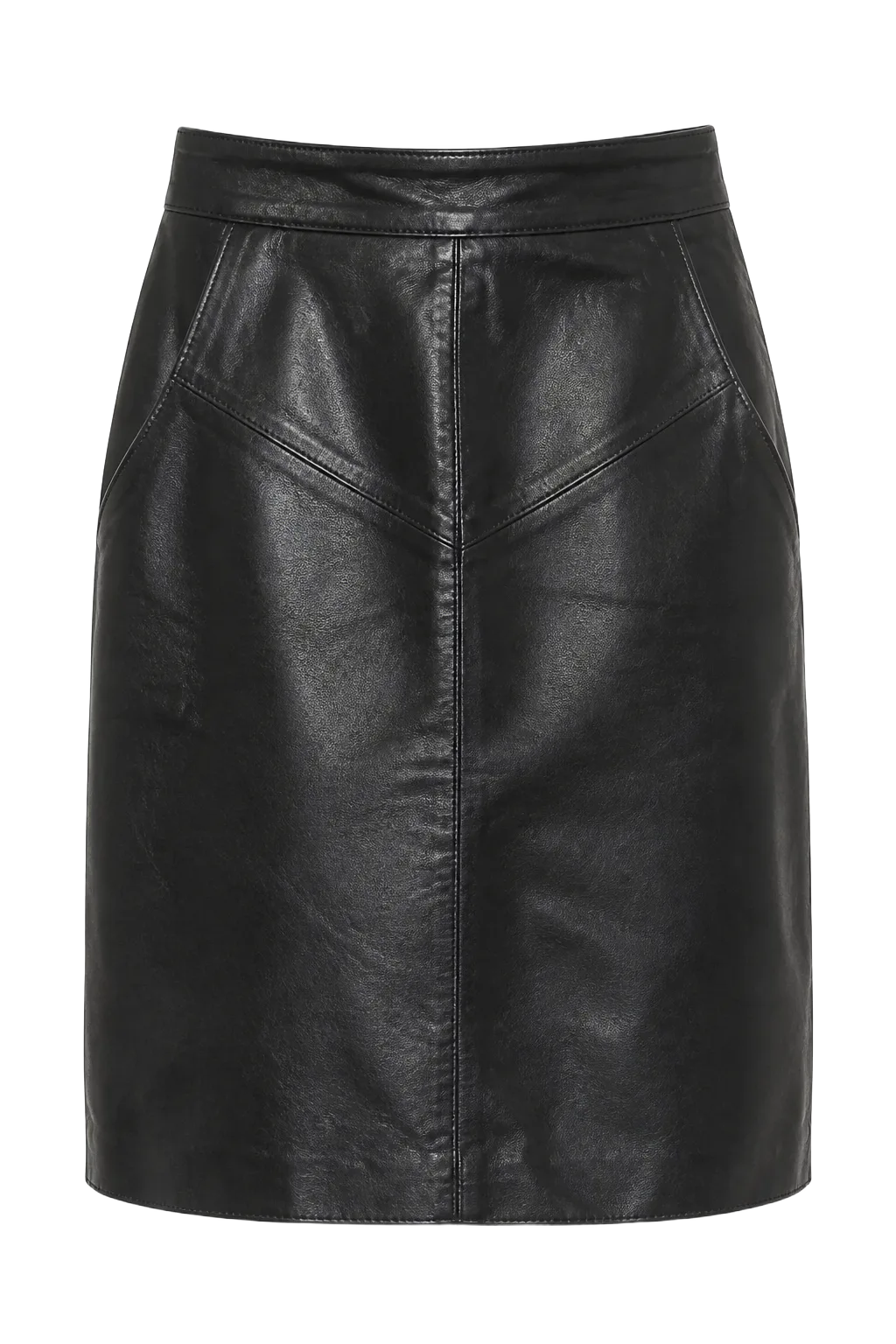
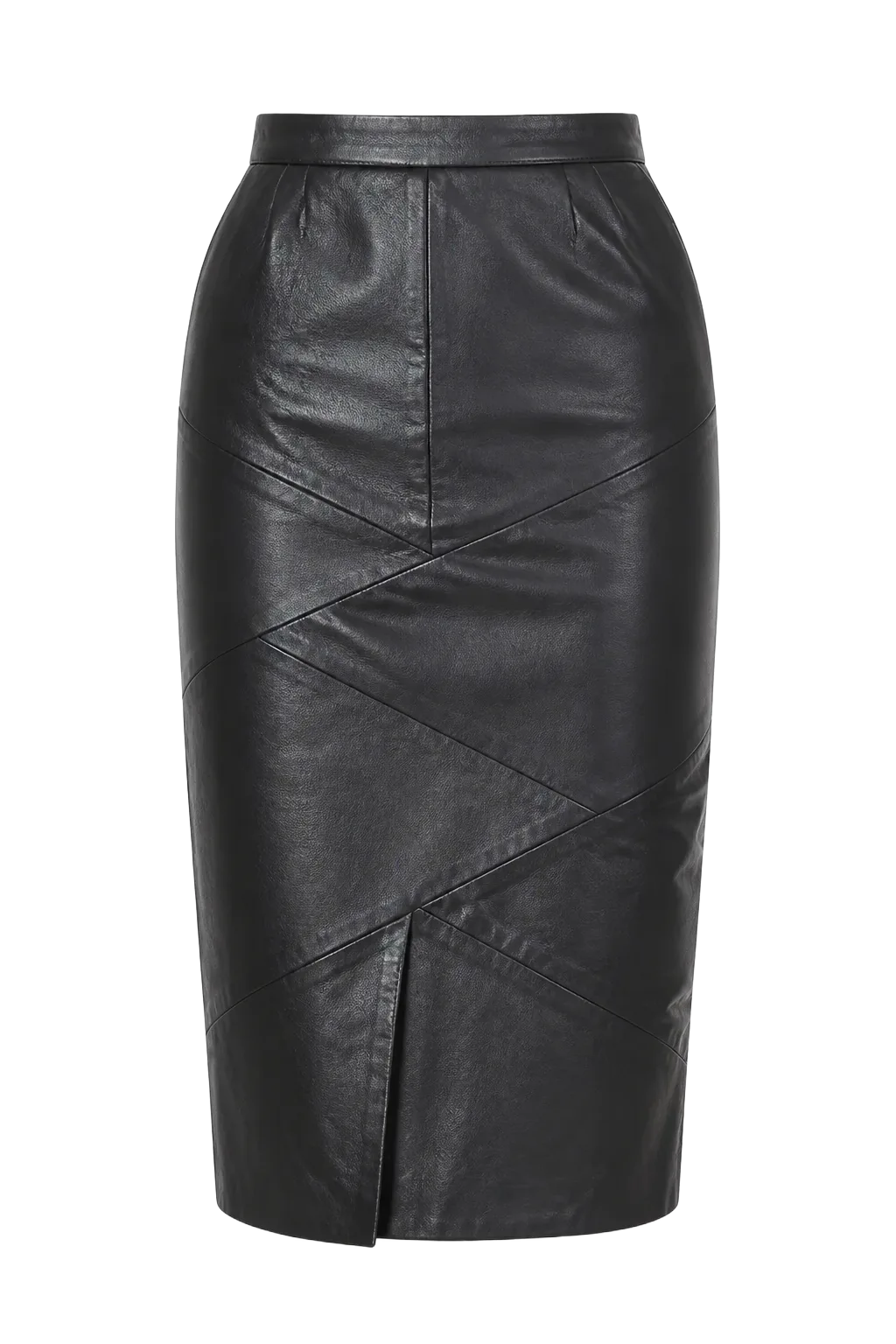
The Leather Pencil
A curated edit of real leather pencil and straight skirts chosen for everyday refinement and easy styling.
Questions, answered
Where should a pencil skirt end?
There is no single correct hem, but it should create an intentional relationship with the calf and shoe. Around the knee is brisk; below the knee is more elongated and often needs a vent.
How tight should a pencil skirt be?
Close enough to keep the line, with enough ease to sit and walk without the vent pulling open or the fabric forming strong horizontal lines.
What measurements matter most when buying second-hand?
Waist, hip, total length and hem width. Also ask for the vent length and fabric composition because both affect movement.
Is a leather pencil skirt still versatile?
Yes when the cut is clean and the leather is supple. Treat it as a textured neutral and balance it with simple knitwear, shirting or restrained tailoring.
Don’t miss a Drop
Two curated Relover Drops a month, with styling ideas for every edit. Sign up for early access to each new selection.
One more step: confirm your email
To receive Early Access emails, you need to confirm your subscription.
Look for the confirmation email from Relover and click the confirmation link. If you don’t see it, check your spam or junk folder.
Mark it as “Not spam” and add Relover to your contacts to make sure you get our emails :)
Related garment studies
Revival
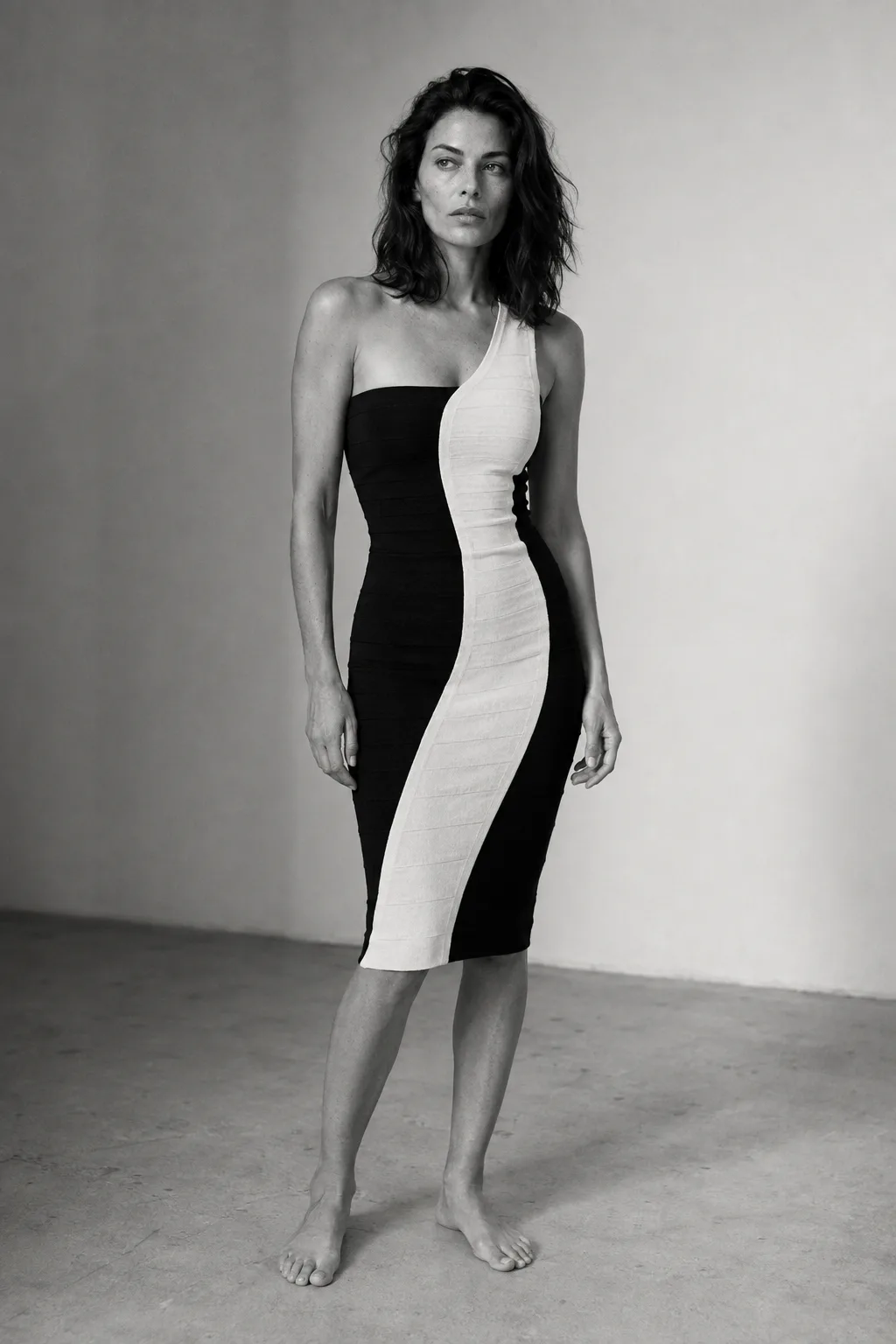
The bandage dress
A body-conscious dress built through tension, structure and a precisely controlled line.
Read the study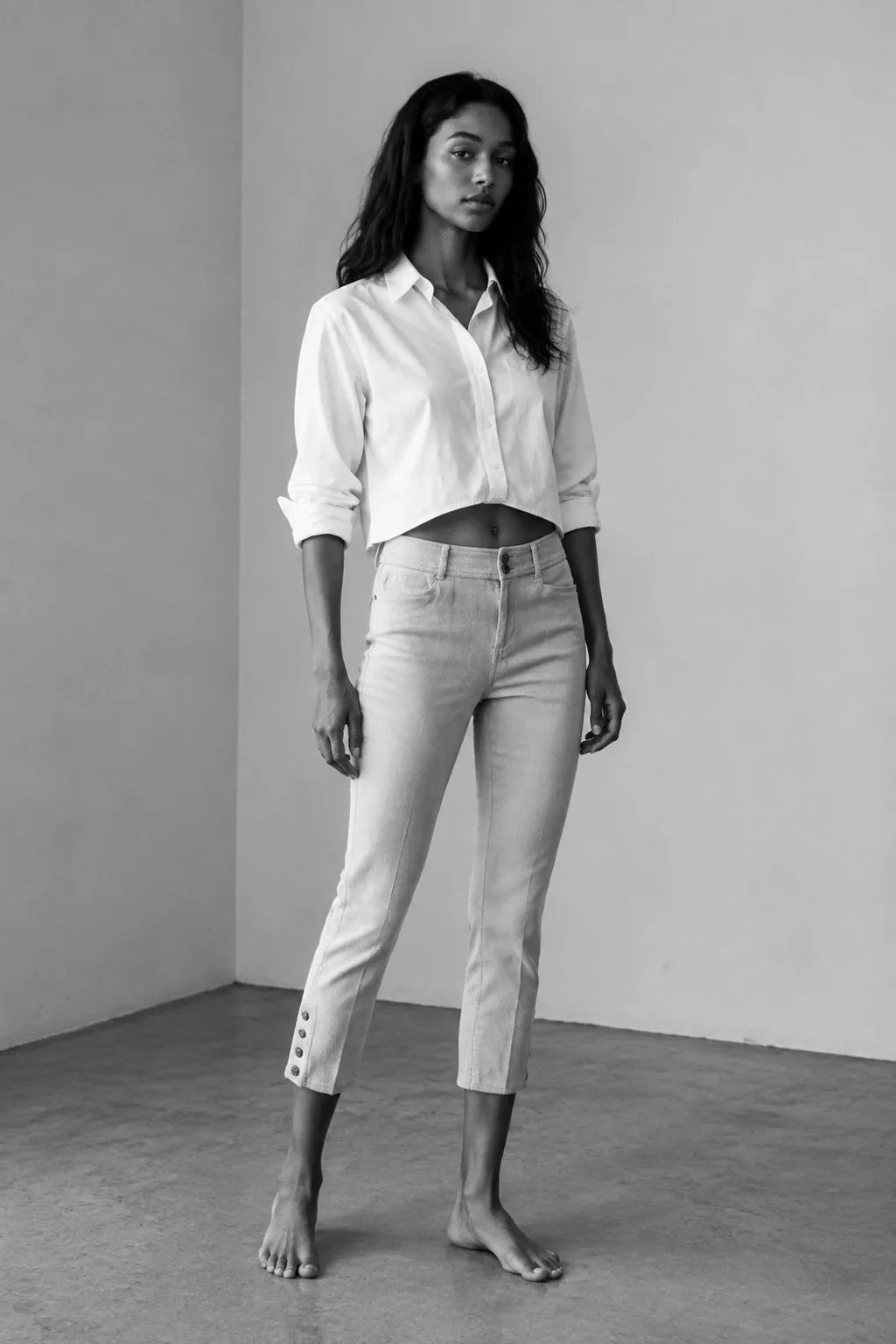
Revival
Capri trousers
The cropped trouser returning through rise, taper and the exact point where the hem stops.
Read the study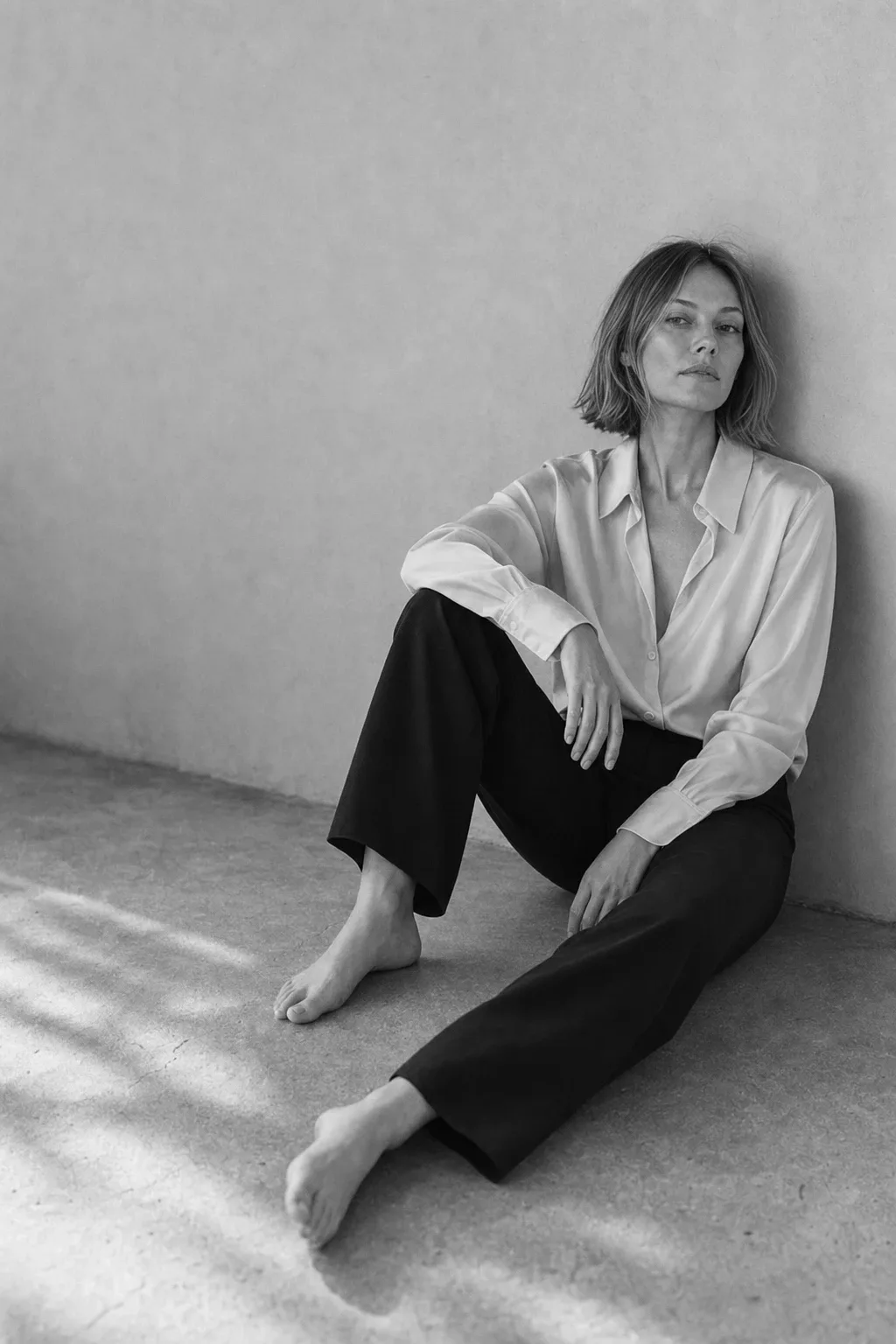
Enduring
The silk blouse
A fluid separate whose value rests in fibre, drape, cut and the way colour moves across the body.
Read the studyContext and relevance
The pencil skirt is Enduring because its value does not depend on a comeback. It remains useful wherever a wardrobe needs one clear, narrow line.
Why it persists
The silhouette is simple enough to absorb changes in waist height, hem length, fabric and styling while remaining recognisable.
Long-term wardrobe value
A well-cut neutral version can support work, dinner and day looks; a leather or textured version performs the same role with more visual weight.
Modern translation
The contemporary version benefits from a little ease, practical movement and less rigid styling. It should feel intentional rather than like an inherited office uniform.
Sources
- MoMA, Pencil Skirt in Items: Is Fashion Modern?
Museum source for the archetype's narrow tailored definition, movement and twentieth-century context.
- The Met, Christian Dior H-line, 1954 to 1955
Costume Institute record for Dior's H-line and its place in the mid-century silhouette shift.
- The Met, Mugler suit, spring/summer 1991
Costume Institute object record for Thierry Mugler tailoring from the early 1990s.