Revival
The chore jacket
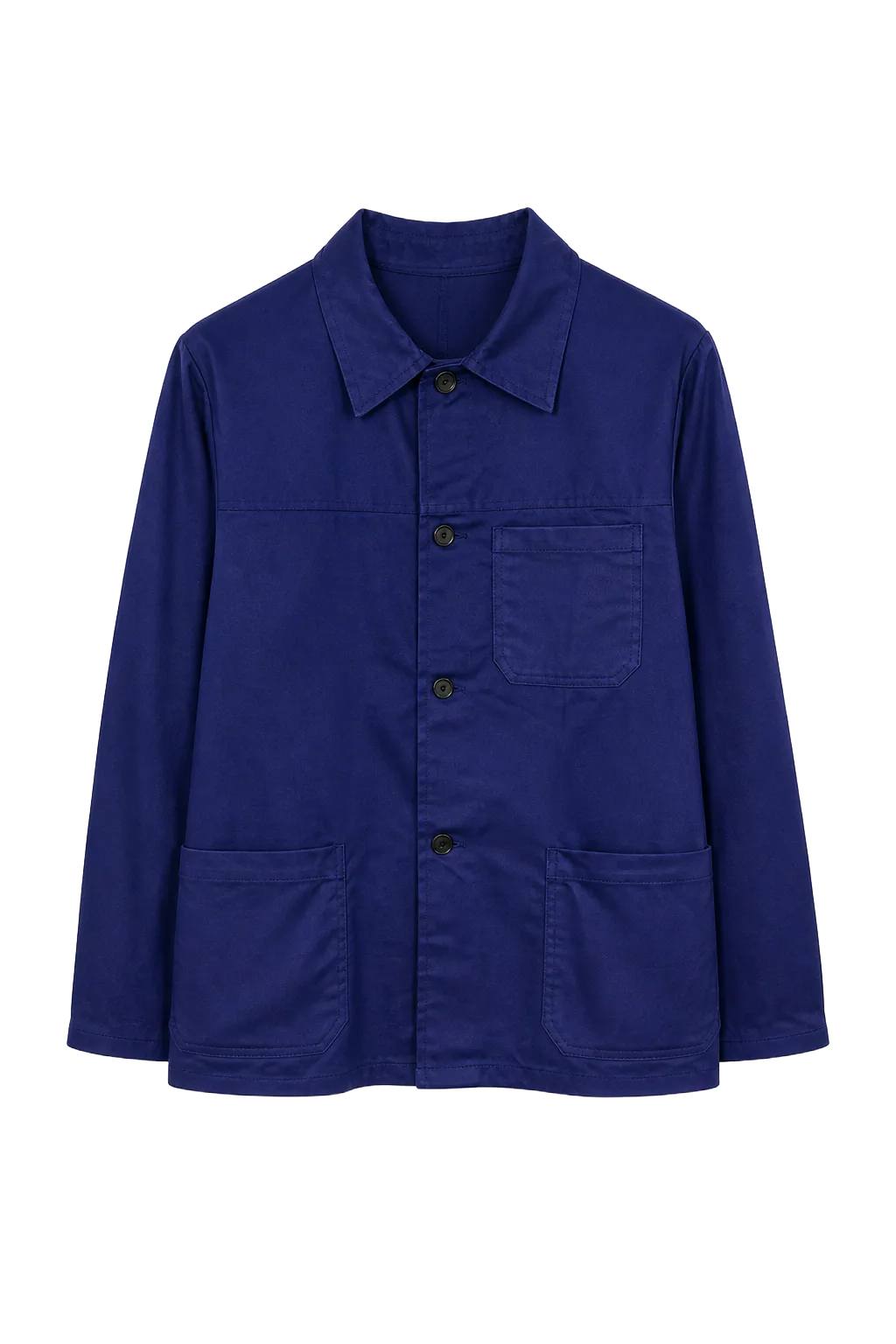
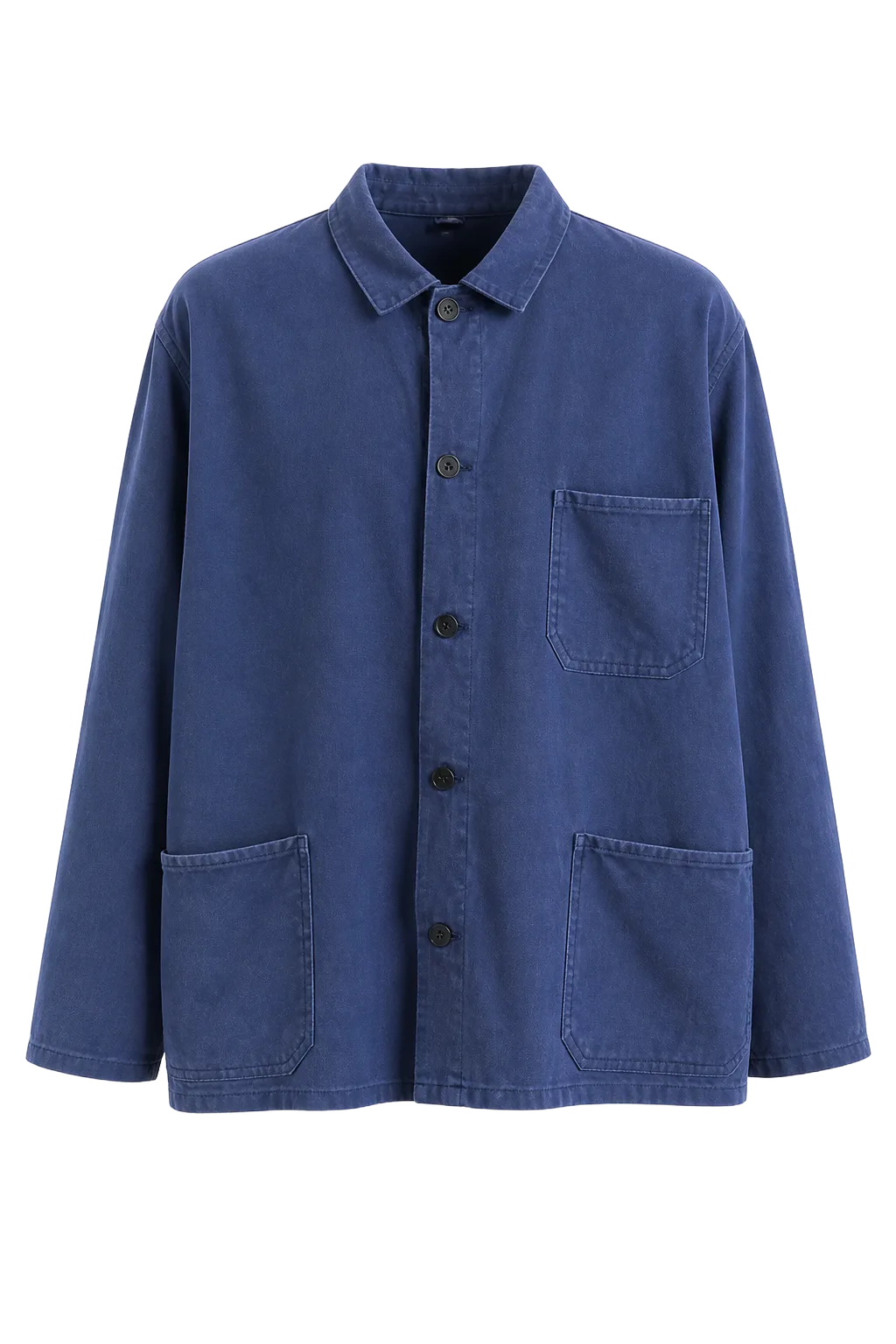
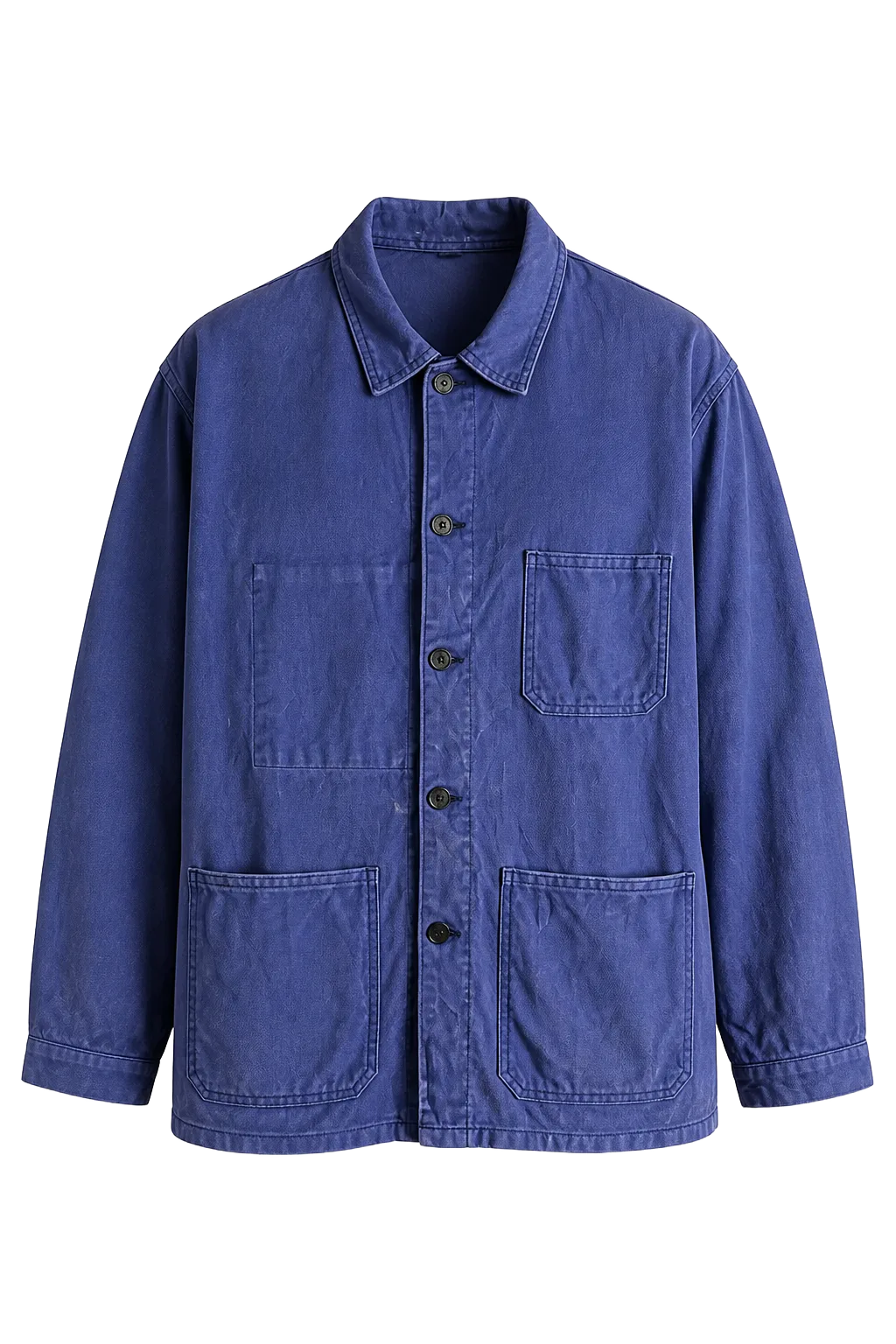
A chore jacket is defined by a straight, unstructured shape, practical patch pockets and hard-wearing cloth, while colour, collar, fabric and pocket arrangement can vary.

Why it matters
The chore jacket sits in a useful space between shirt, blazer and outerwear. Its construction is simple, but that simplicity is what makes proportion, cloth and wear so visible. A strong version can add structure without formality, texture without decoration and enough ease to work across several layers of a wardrobe. Second-hand examples are especially rewarding because cotton workwear often improves visually as it softens and fades. The important distinction is between wear that gives the jacket character and wear that has weakened the garment itself.
Form and function
As a Garment Archetype, the chore jacket is defined by practical construction rather than one maker, country or exact silhouette. Its recurring codes are a relatively unstructured body, button front, accessible patch pockets and cloth sturdy enough for repeated wear. Within that framework, length, collar shape, number of pockets, fabric and overall volume can vary considerably.
What makes it a chore jacket
The jacket should retain the straightforward logic of workwear. Large patch pockets usually organise the front. The body tends to hang cleanly rather than being shaped like tailoring, and the construction allows movement and layering without depending on padding or internal structure.
French bleu de travail is one important expression of the archetype, but not the whole category. Chore jackets and closely related work jackets developed across different workwear traditions, with local variations in fabric, pocket arrangement and proportion. Contemporary makers still use the same basic vocabulary of durable cotton, button fronts and functional pockets.
Proportion map
There is no single correct chore-jacket fit. Some versions are relatively neat, others relaxed or deliberately oversized. Some finish around the hip; others are longer or more cropped. The permanent test is whether the proportions work together and the jacket retains the ease, simplicity and functional character of the archetype.
Chest, shoulder, sleeve and body length should therefore be read together rather than judged against one ideal silhouette.
Material variants
Cotton twill, drill, canvas, herringbone, moleskin and corduroy all appear within the wider workwear family. French workwear maker Vetra documents moleskin, twill, herringbone and corduroy across its historical fabric vocabulary, and notes the later prominence of twill within French workwear.
The fabric changes how the jacket behaves. A dense moleskin can feel compact and substantial; twill may be lighter and more fluid; herringbone adds subtle surface; corduroy introduces more visible texture. None is automatically better. What matters is whether the cloth still has enough integrity to support the jacket.
The search language
- chore jacket
- chore coat
- work jacket
- French work jacket
- bleu de travail
- moleskin work jacket
- cotton twill work jacket
- vintage utility jacket
Brands worth knowing
A known workwear label can help with search and context, but it should never replace judgement of the individual jacket.
Founded in 1927, Vetra remains closely associated with French workwear and the bleu de travail. Its archive documents work jackets in moleskin, twill, herringbone and corduroy, as well as reinforcement methods such as felled seams and bar tacks.
Look beyond the label to fabric condition, pocket attachment, seams and measurements. Older and newer Vetra jackets can differ in fabric and proportion.
Lafont's workwear history traces back to a Lyon textile business opened in 1844. The Adolphe Lafont name was registered in 1896 as the company developed its professional-clothing identity.
A Lafont label can support provenance, but an age claim still needs evidence. Check label style, construction, cloth, repairs and measurements rather than assuming every blue work jacket is early vintage.
Unsigned and boutique-made
The chore jacket is especially suited to buying beyond famous names. A lesser-known French, European or industrial-workwear maker can produce a very strong jacket if the cloth, balance and construction are right. When the label gives little information, require better photographs and measurements. The garment itself has to do more of the proving.
Why it is back
The chore jacket has never entirely disappeared, but its fashion relevance has become more visible again. For spring 2026, Harper's Bazaar identified chore jackets among the season's notable outerwear directions, highlighting workwear-derived shapes and patch-pocket construction.
Earlier cycle
The jacket began as practical workwear: a layer designed around movement, pockets and durable fabric rather than decorative construction. Different workwear traditions produced their own versions. In France, the bleu de travail became one of the clearest visual references; contemporary workwear brands still describe the chore jacket through the same combination of tough cotton, button closure and functional pockets.
What changed
The contemporary return is less about reproducing a worker's uniform and more about using the jacket as an uncomplicated layer. It now appears comfortably alongside tailoring, dresses, silk, denim and cleaner wardrobe basics. The context has changed more than the garment itself.
Second-hand opportunity
The second-hand market is particularly strong for this archetype because the category spans branded French workwear, occupational clothing, vintage utility jackets and later fashion interpretations. That variety makes the search rewarding, but also makes construction and condition more important than terminology.
Staying-power judgement
The chore jacket itself has considerably more staying power than the current workwear cycle. What may date are exaggerated details or styling that relies too heavily on the fashion moment. A simple jacket with good cloth, useful pockets and coherent proportions can continue working long after the current revival becomes less visible.
Construction and material
Cloth and structure
A chore jacket should have enough body to hold its pockets and front line without needing tailoring structure. On a second-hand piece, fading alone is not a problem. What matters is whether the fabric still feels structurally sound around folds, cuffs, pocket corners and buttonholes.
Pockets, seams and stress points
Patch-pocket corners take repeated strain, so inspect them carefully. Loose stitching is often repairable. Fabric tearing away from the pocket attachment is more serious because the cloth itself has weakened. Well-executed reinforcement at seams and stress points can be a useful quality signal. Vetra, for example, documents felled seams, bar tacks and reinforcement layers within its workwear construction.
Wear, repair and condition
Chore jackets tolerate visible repair particularly well because patches and reinforcement are consistent with their functional history. Small holes, open seams, loose pockets or missing buttons may be manageable. Broad areas of brittle cloth, repeated fibre loss, mould or deep structural tearing are much harder to justify. The goal is not perfection. It is stable wear.
Shop the drop
The Worker's Layer
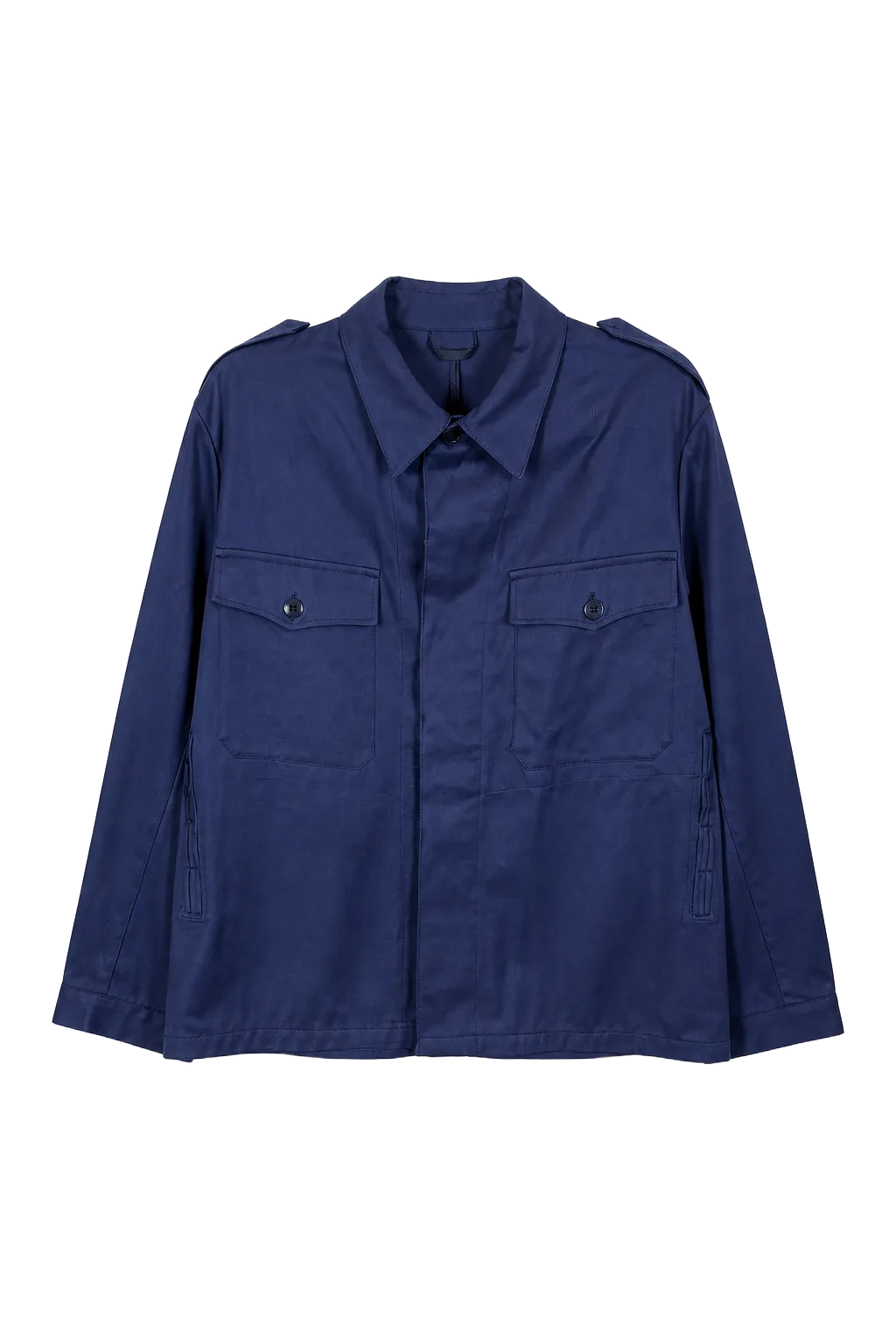
Paris on a weekday: a chore jacket worn under a coat all morning, then standing alone the moment it comes off. The same softened cotton twill works over a tee at breakfast and against silk by evening.
How to recognise a great second-hand version
What a strong version shows
- Fabric with enough remaining strength to support the pockets, collar and cuffs.
- A body that hangs coherently without severe twisting or distortion.
- Secure pocket corners and stable seams.
- Buttonholes that remain intact even if individual buttons have been replaced.
- Measurements for chest, shoulder, sleeve and body length rather than only a labelled size.
- Repairs that stabilise the jacket rather than conceal continuing damage.
What to avoid
- Broad areas of thinning or brittle fabric.
- Pocket corners pulling through the body cloth.
- Cuffs or collar edges that are disintegrating rather than simply faded.
- Strong twisting through the front or hem.
- Mould, persistent odour or unexplained deep staining.
- Seller claims about age, nationality or rarity that are unsupported by the visible garment.
How to wear it
How to style it
The chore jacket works because it is visually direct. Use it where you might otherwise reach for an overshirt, casual blazer or light jacket. Pair rough cotton with silk, fine knitwear or cleaner trousers; wear a lighter version like a shirt; or layer a more substantial one beneath a coat. The exact fit can change with the moment. The wardrobe logic does not.
What it does in a wardrobe
It is a transitional layer and a source of texture. It can make polished clothes feel less formal, give simple clothes more character and move easily between indoor and outdoor dressing. Different versions may look quite different while solving that same wardrobe problem.
Questions, answered
The name comes from the practical work, or chores, these jackets were designed to support. Historically, versions were worn as straightforward working layers with durable cloth and accessible pockets rather than as fashion jackets. The term now covers a broader family of workwear-derived jackets that retain that functional construction.
There is no single correct fit. Chore jackets can be relatively neat, relaxed or oversized. What matters is enough ease for movement or layering and a coherent relationship between chest, shoulder, sleeve and body length. The garment should still read as an uncomplicated, unstructured work jacket rather than forced tailoring. Current fit preferences can change from one fashion cycle to another.
A chore jacket is defined primarily by its workwear construction: a straightforward body, button front and prominent functional patch pockets. A denim jacket describes a jacket made from denim and often follows a more specific trucker-style construction with shaped panels, waistband and flap pockets. A chore jacket can itself be made from denim, so fabric alone does not decide the category.
There is no single best fabric. Cotton twill, drill, canvas, moleskin, herringbone and corduroy can all work when their weight and structure suit the jacket. For second-hand buying, fabric condition matters more than prestige: look for cloth that has softened or faded without becoming brittle, thin or unstable at stress points.
Often, yes, depending on fabric weight and lining. Lightweight unlined cotton versions can behave almost like overshirts in mild weather, while denser moleskin, canvas or heavier twill can work as more substantial transitional outerwear. The archetype is flexible because fabric weight can change without changing the basic construction.
Related garment studies
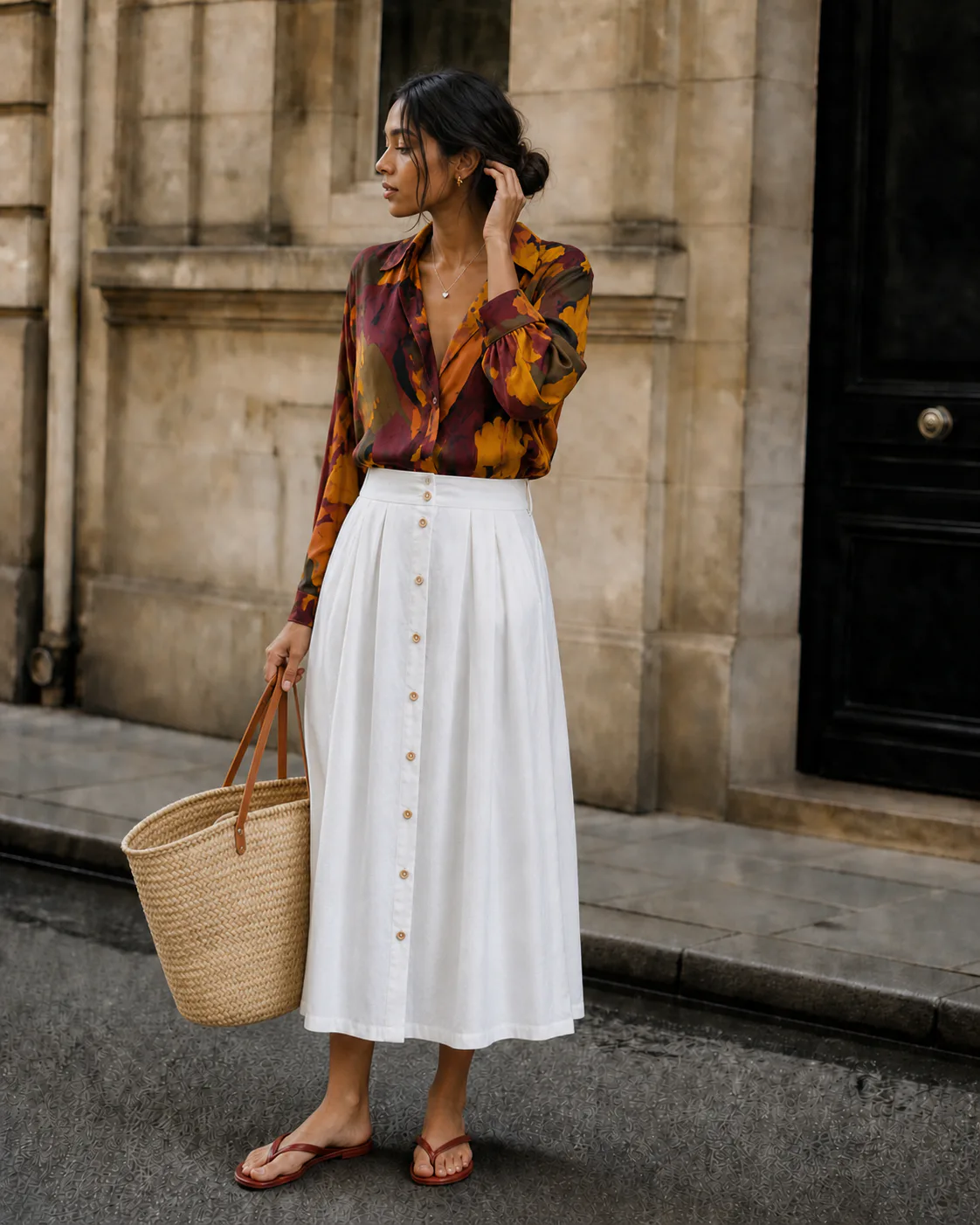
Enduring
The silk blouse
A fluid separate whose value rests in fibre, drape, cut and the way colour moves across the body.
Read the studySources
- Vetra, French workwear since 1927
Primary maker source for French workwear construction, fabrics, reinforcement and bleu de travail context.
- Vetra, Organic cotton twill workwear blazer
Primary maker source for twill, chore-jacket lineage and historical French workwear colours.
- Adolphe Lafont, 180 years of history
Primary maker history for Lafont's Lyon origins and the 1896 registration of the Adolphe Lafont name.
- Universal Works, Why is it called a chore jacket?
Contemporary specialist source for naming, common construction and cross-country workwear context.
- Harper's Bazaar, Spring jacket trends 2026
Evidence for the current 2026 chore- and workwear-jacket revival.
- The Worker's Layer, Relover
Primary source for Relover's current Drop interpretation, materials and styling logic.