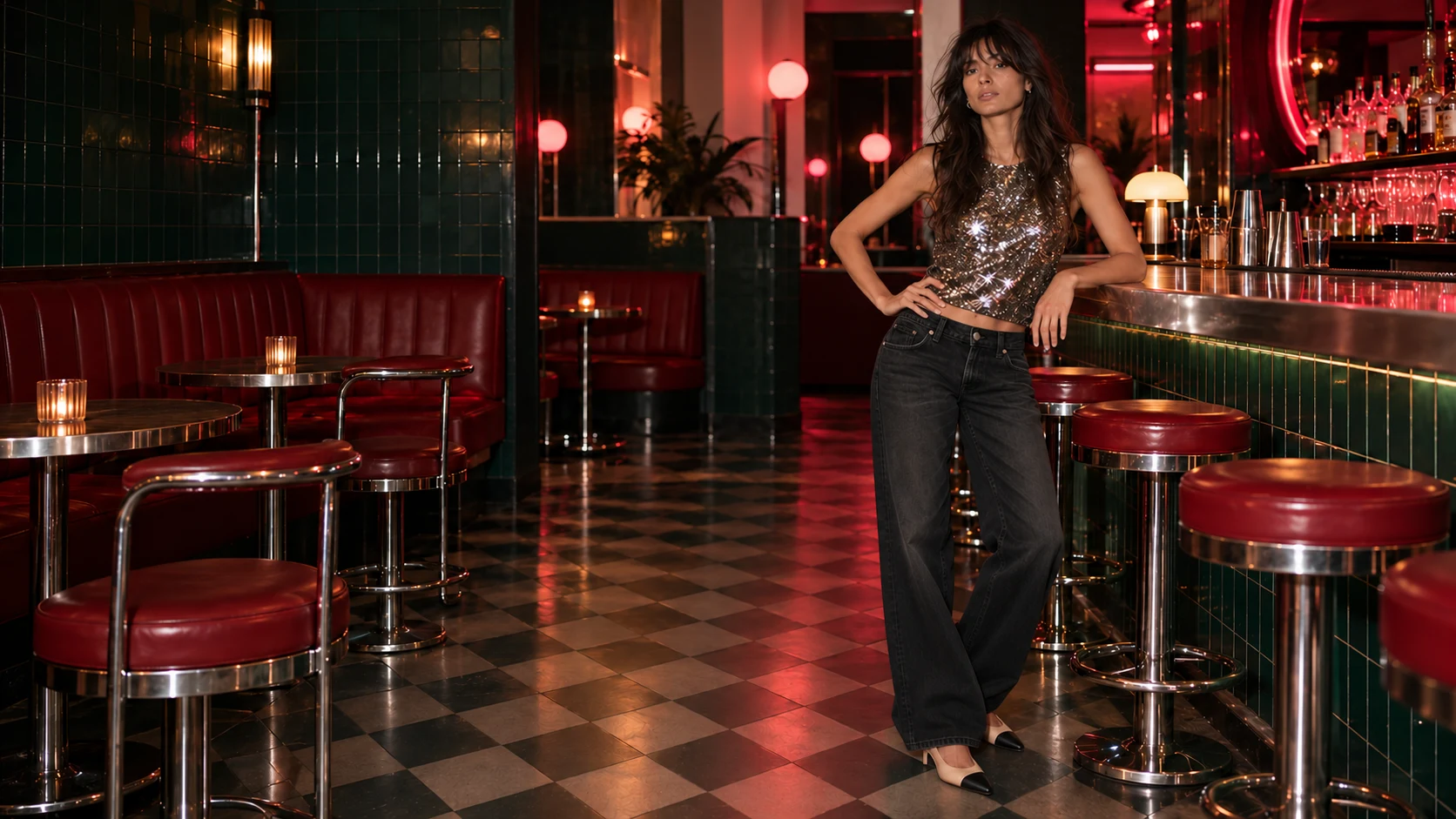
A sequin top brings texture and reflected light to a familiar silhouette. When buying vintage or second-hand, look beyond the sparkle: shape, comfort, secure embellishment and the condition of the fabric underneath determine whether it is worth wearing again.
Recognition and variations
The appeal of a sequin top is how its surface changes a simple shape. A camisole, a straight-cut shell or a loose blouse can each carry light differently, without needing a complicated silhouette.
Read the shape first
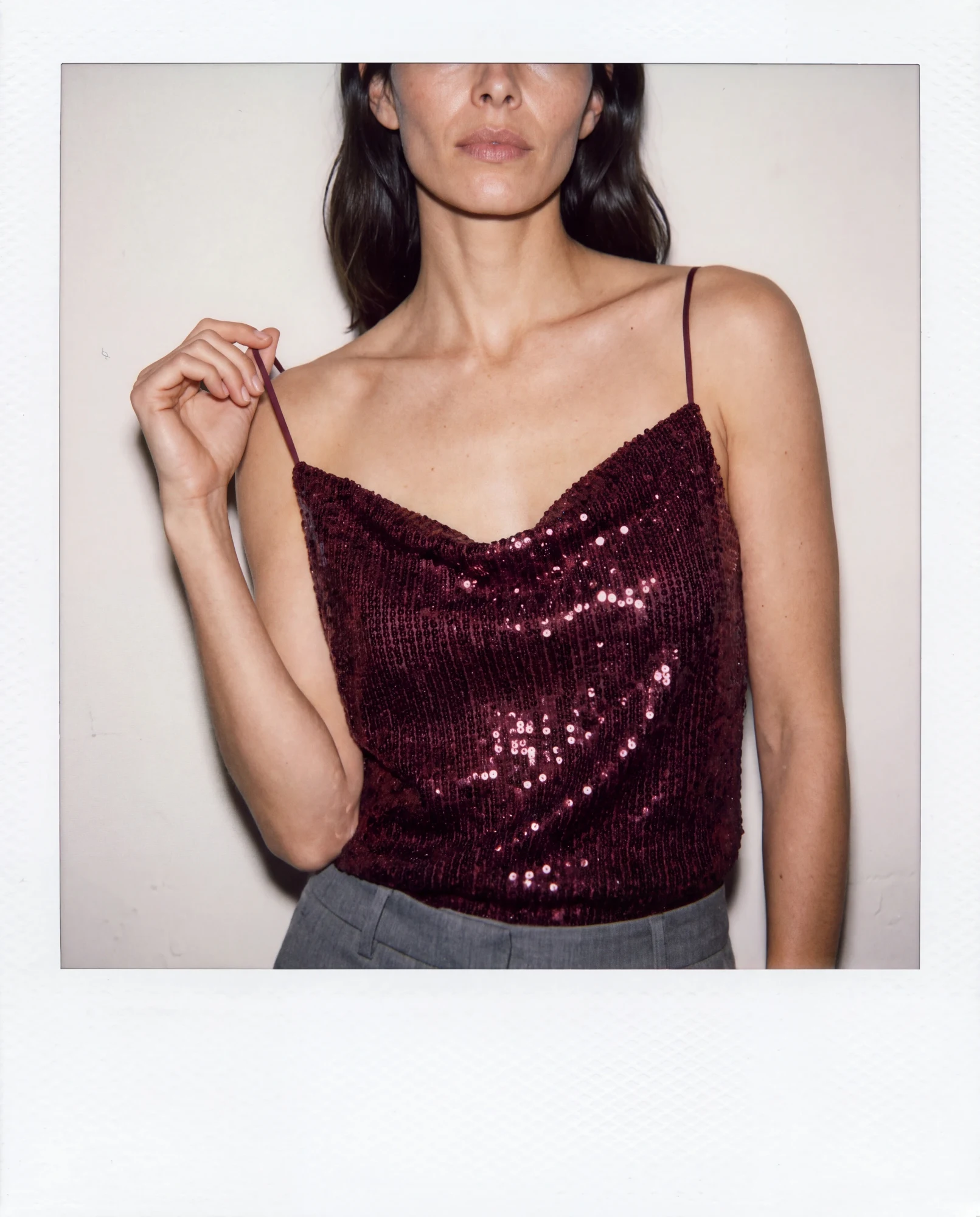
Camisoles and tanks: open shoulders, with narrow or wider straps. Check the neckline, armholes and where the straps place the top on the body.
Shells and boxy tops: simple, relatively straight shapes. Their proportions depend on shoulder width, body length and how the hem sits.
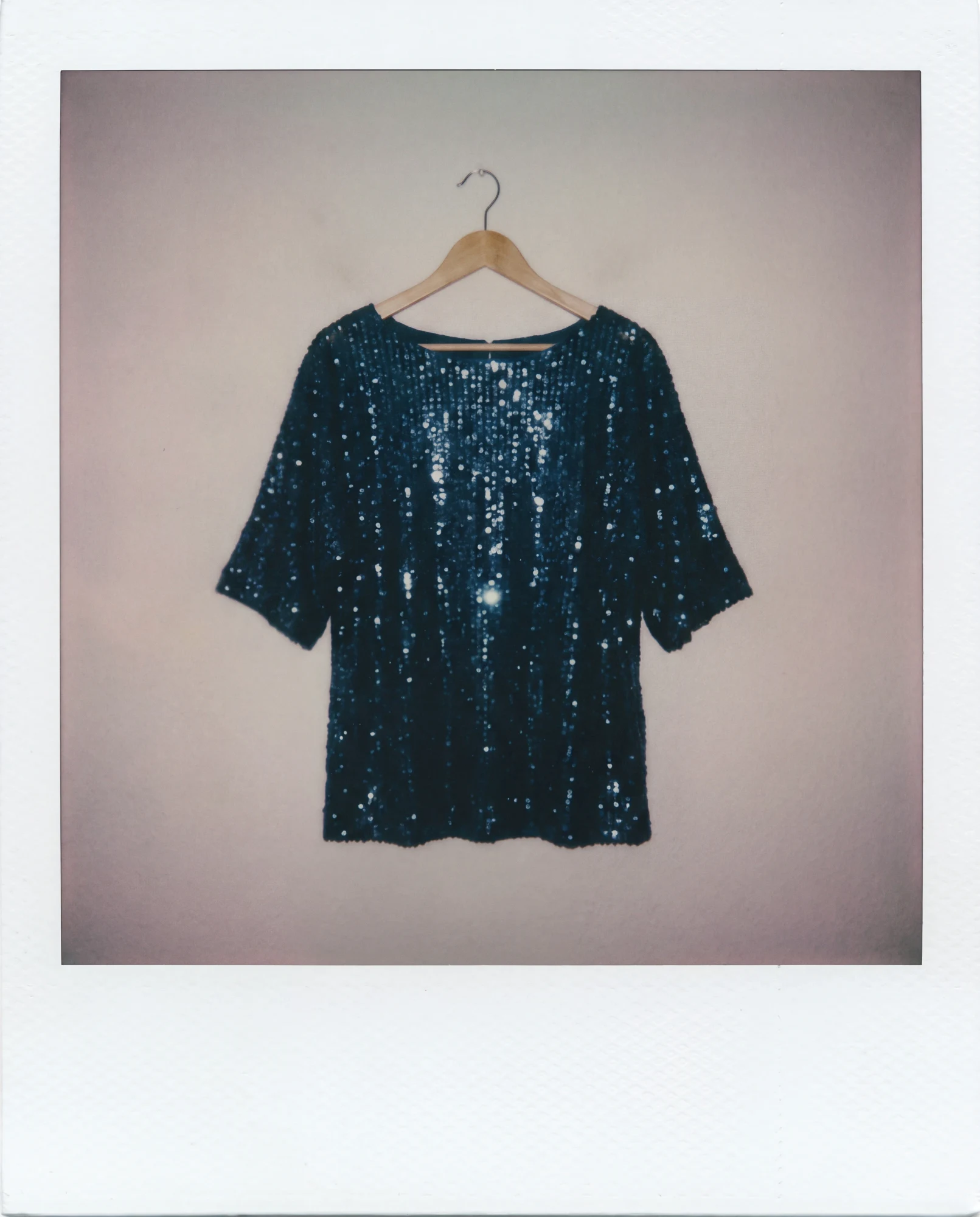
T-shirt shapes: a familiar short-sleeved outline with an embellished surface. Check sleeve length and armhole shape in the photographs and measurements.
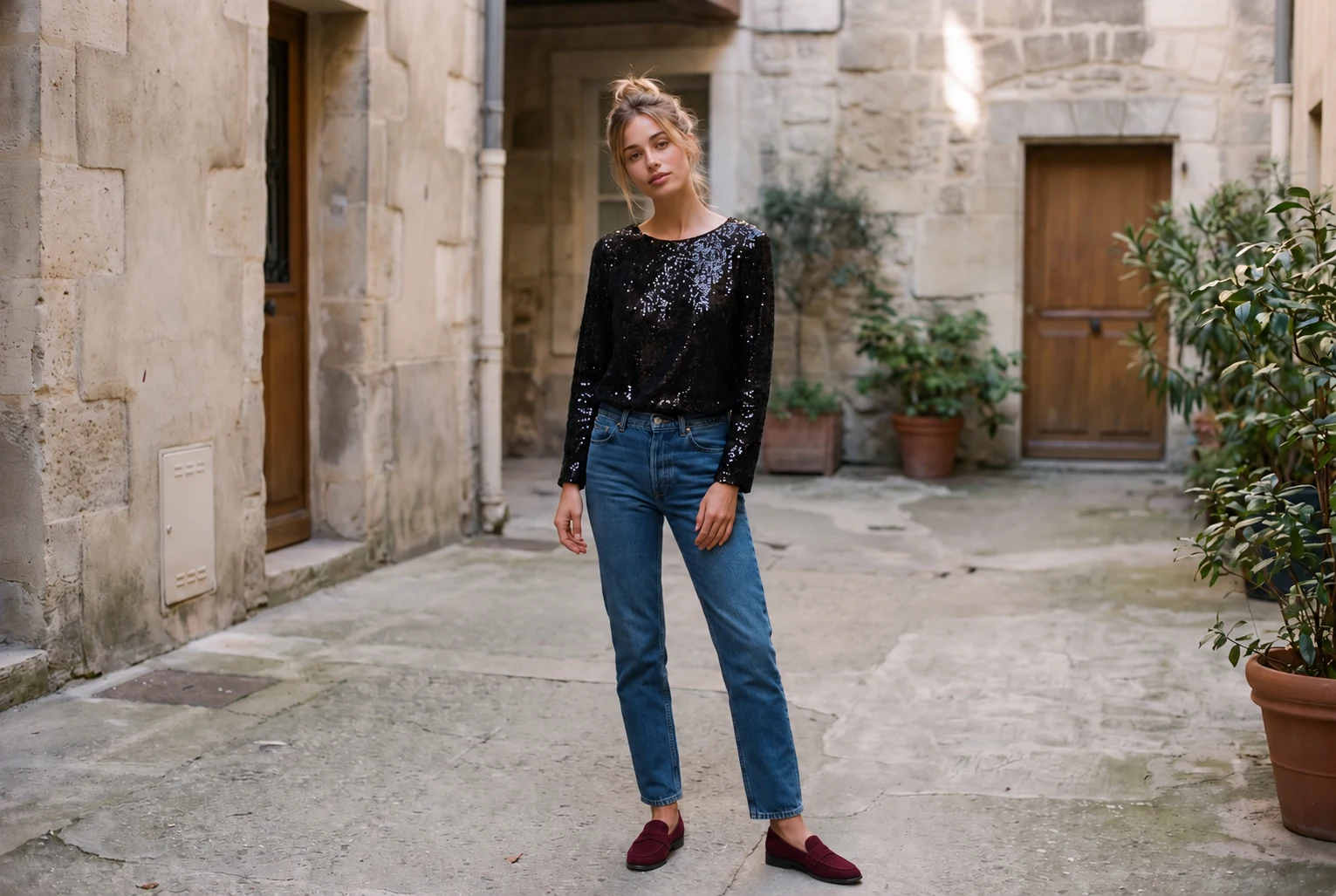
Blouses and long-sleeved tops: more coverage, with either a fluid or structured body. Consider sleeve volume alongside the density of the decoration.
Necklines create further variations: halter, high neck, scoop, V-neck and asymmetric forms can appear across different shapes. These descriptions overlap; they are useful ways to understand a piece, rather than a rigid classification.
Look at the surface
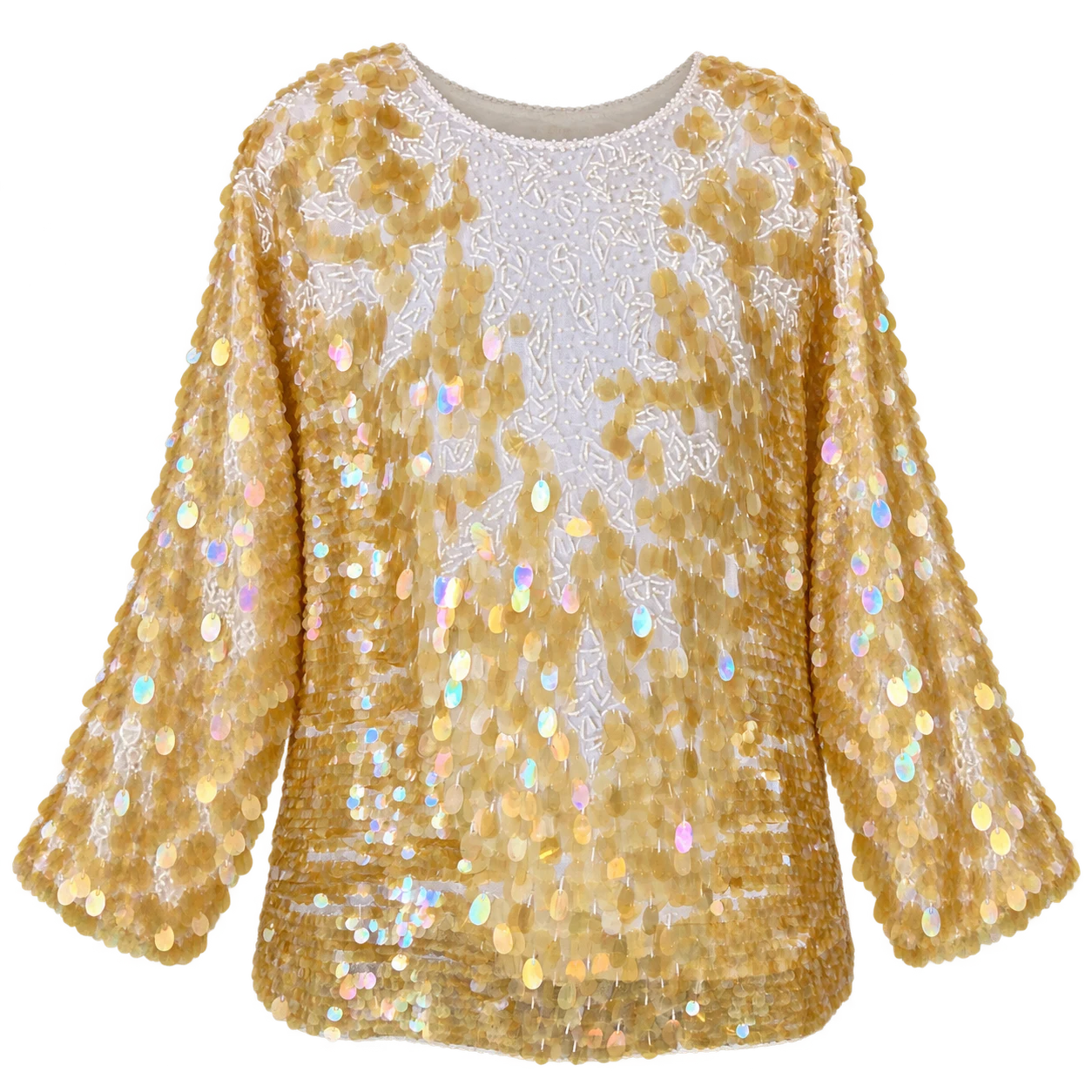
Small, closely arranged sequins can create a continuous shimmer. Larger or more widely spaced pieces make the individual decoration more apparent. Matte, tonal and high-shine finishes give the same silhouette a different character.
Beading, rhinestones and metallic fabric can also produce shine, but they are not interchangeable with sequins. A top may combine several techniques. Look closely rather than relying on a seller’s use of “sparkly” or “embellished”.
Wardrobe role and The Relover Eye
How to style it
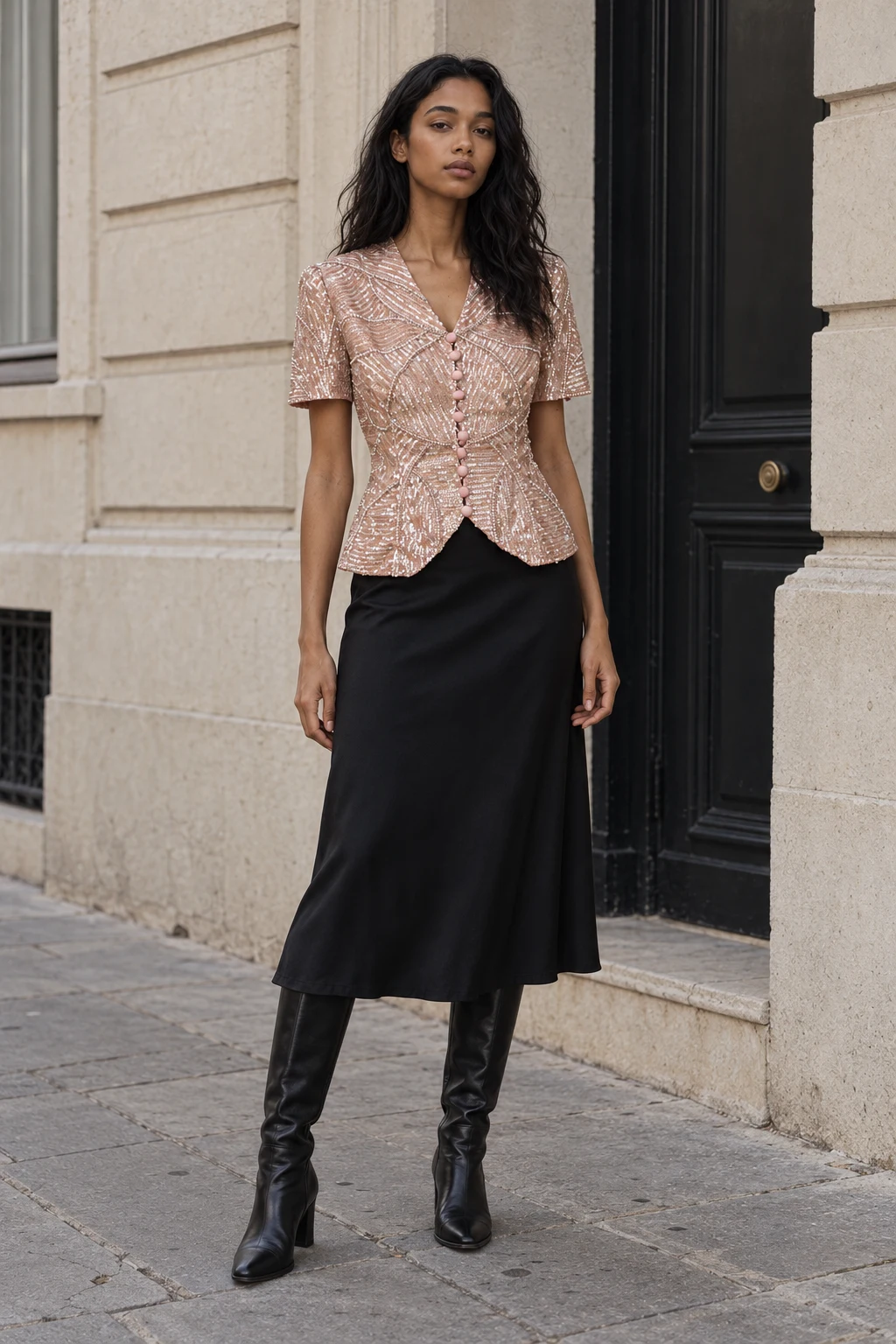
Give the surface room. A clear silhouette and restrained surrounding textures allow the top’s shape and movement to remain legible.
Consider where it ends on the body, how much volume it introduces and whether it sits comfortably beneath another layer. These proportions matter more than following one prescribed combination.
Don’t be afraid of originality. An unexpected colour combination or a distinctive silhouette can be the reason to choose the piece. Decide what you want to emphasise, then give it space within the outfit.
What it does in a wardrobe
This is a character piece: something that changes the mood of familiar clothes. Its value comes from how naturally it enters your wardrobe and how comfortable you feel wearing it.
Choose a version that belongs with what you already own, rather than one that requires several additional purchases to make sense.
Choosing a good second-hand version
Look underneath the decoration
Ask for a clear photograph of the inside and any composition label. The embellishment does not tell you what the supporting fabric is made from.
Check whether the body, lining and decoration appear to sit comfortably together. A photograph of the whole top hanging naturally can reveal more about its shape than a tightly cropped image of its sparkle.
Check the lining and inside finish
Look for photographs of the inside, especially the neckline, armholes and lining. Check whether embellishment extends beyond the fabric edges and whether the listing describes the lining material. If these details are not visible, ask the seller for an inside photograph or a description of the finish.
Find your fit
Start with the size and fit guidance provided by the seller. A professional vintage reseller may assign a contemporary size based on the garment’s measurements. If you are between sizes, want a particular fit or need more reassurance, compare the measurements with a top you already enjoy wearing. For camisoles, check whether the straps adjust.
Condition in perspective
Don’t dismiss a distinctive piece because of a small imperfection. A missing sequin or a minor seam repair may be manageable with help from your trusted seamstress. Understand the work involved, but leave room for a special find.
What a strong version shows
- Design with character: an unusual neckline, an expressive pattern or a detail that makes the piece memorable.
- Colour combinations you love: tonal shimmer, contrasting embroidery or unexpected colours that feel right for you.
- A cut that suits your preferences: consider the neckline, length, sleeve shape and how fitted or relaxed you want it.
- A place in your wardrobe: imagine it alongside clothes you already enjoy wearing.
- Visible finishing: look for clear photographs of the lining, edges and fastening, supported by the seller’s description.
- Condition in perspective: understand any imperfections and decide whether they meaningfully affect the piece.
What to avoid
- Poor finishing visible in photographs, such as fraying edges, exposed rough seams or a damaged lining.
- Generic designs whose only attraction is the sparkle.
- A cut or colour you do not actually like, bought simply because the label is desirable.
- Damage or alterations that require more work than you want to take on.
Versions, brands and how to search
Read the shape behind the name
Camisole describes a strappy shape; shell suggests a simple sleeveless body. Beaded sequin top describes a combination of decoration, while paillette is another term you may encounter for the reflective pieces. These distinctions help you read a listing and understand what makes one version different.
The Relover approach
At Relover, we bring distinctive vintage and second-hand pieces together in focused Drops. We look for the colour, cut and details that make a piece worth your attention, then show how it can work in a wardrobe. Different pieces, connected by a clear styling idea.
a vintage reference for tops combining patterned beadwork and sequins.
Look at the colour combinations, shape and arrangement of the decoration.
consider vintage embellished tops, including pieces carrying the Black Tie label.
Judge the individual cut and design rather than treating the name as a guarantee.
a contemporary reference for expressive sequins and colour on familiar top shapes.
a contemporary reference for unexpected colour combinations and decorative surfaces.
Look for the relationship between the embellishment and the silhouette.
Unsigned and boutique-made
Some of the most interesting finds come from small labels you may never have heard of, or carry no identifiable maker’s label at all. Give the design, cut, colour and finishing the same attention you would give a recognised name. An unfamiliar label can be part of the discovery.
Coming soon
Be first to discover our sequin top edit. Sign up to hear when it’s ready and get early access to two curated Relover Drops a month.
One more step: confirm your email
To receive Early Access emails, you need to confirm your subscription.
Look for the confirmation email from Relover and click the confirmation link. If you don’t see it, check your spam or junk folder.
Mark it as “Not spam” and add Relover to your contacts to make sure you get our emails :)
Questions, answered
Is a sequin top the same as a beaded top?
Not necessarily. Sequins and beads create different surfaces, although a garment can combine them. Inspect a close-up and read the description before assuming that “beaded”, “sequinned” and “embellished” mean the same thing.
How do I wash a vintage sequin top?
Follow the garment’s care instructions and any specific guidance from the reseller. If the label is missing or the materials are unclear, ask a cleaner experienced with embellished clothing before choosing a cleaning method.
Can a sequin top be altered?
Often there are options, but they depend on the garment and the change you want. Your trusted seamstress can assess the fit, explain what is practical and quote for the work. A small adjustment may help make a distinctive find your own.
Are a few missing sequins a reason to reject it?
Not automatically. Consider their location, how visible the gap is and whether the supporting fabric and surrounding stitching are sound. If repair matters to your decision, establish whether suitable replacements and skilled help are available before purchasing.
Does a silk label mean the top is better quality?
It provides information about fibre content, not a complete judgement of the garment. Read it alongside the condition, finishing, fit and care requirements. Do not assume it describes the material of the sequins themselves.
Related garment studies

Enduring
The silk blouse
A fluid separate whose value rests in fibre, drape, cut and the way colour moves across the body.
Read the study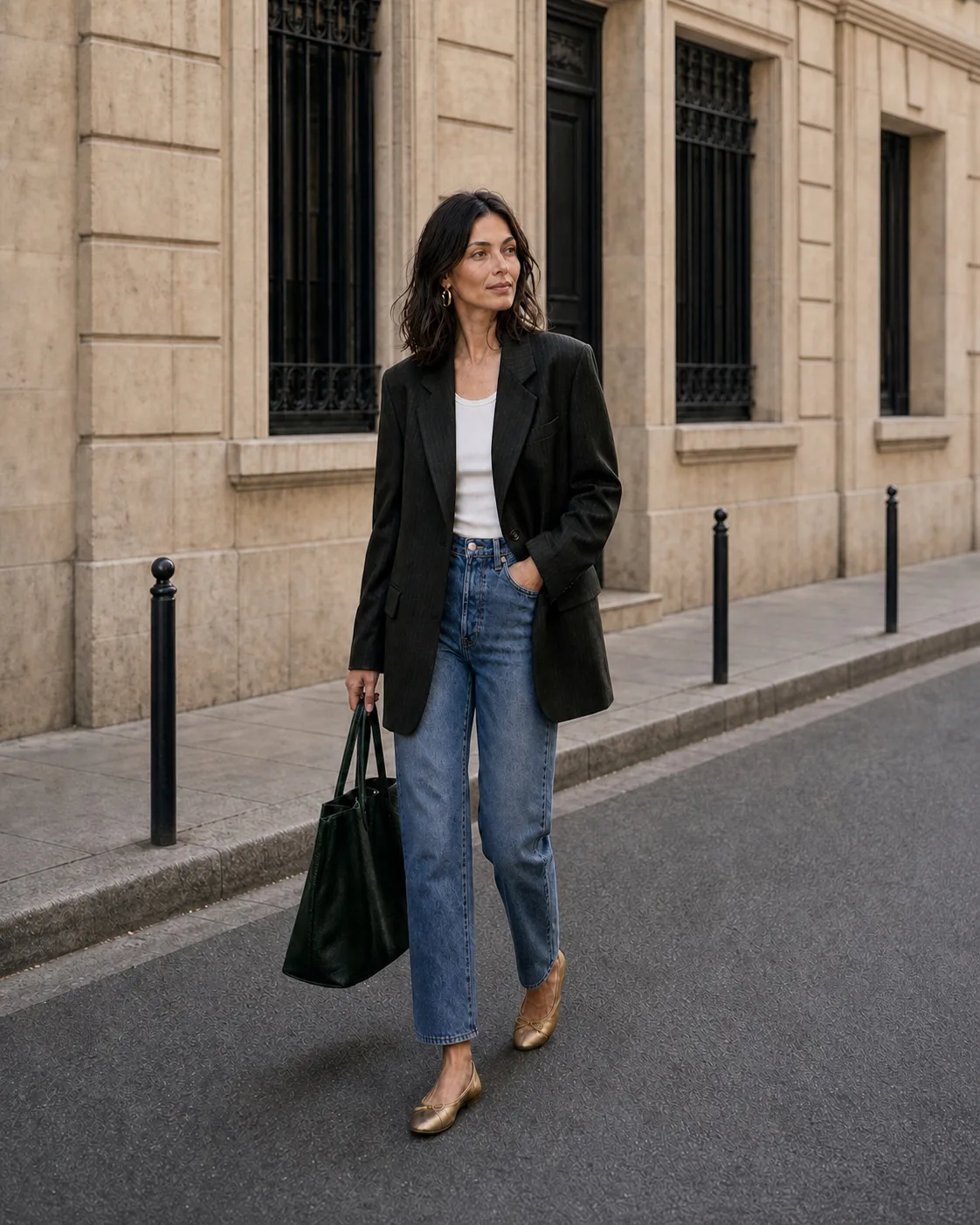
Revival
The 90s minimalist blazer
The quietly oversized tailored jacket whose authority comes from proportion, fabric and a deliberately restrained line.
Read the studyContext and relevance
Their association with embellished clothing long predates the contemporary top. London Museum documents beads, sequins, spangles and rhinestones decorating simple dress silhouettes in late-1920s London.
Sequins have more than one history
The Metropolitan Museum of Art holds an Elsa Schiaparelli evening blouse from winter 1938–39, decorated with coloured sequin embroidery. It offers a documented example of sequins used on a separate blouse, rather than only on a dress.
These examples establish historical references, not a shortcut for dating a second-hand listing. Similar decorative effects can appear in pieces made many decades apart.
Why the form endures
Our interest lies in the relationship between an expressive surface and a usable shape. A sequin top can change the character of clothes already in a wardrobe without requiring an entirely new way of dressing.